At Christmas Dinner, I Heard My Parents Giving My $350K Condo To My Sister’s Family Without Asking Me. I Clapped And Smiled. Then I Sold It Before New Year’s And Vanished. By Morning, My Phone Showed “79 Missed Calls.”
BLOG:
Part 1: The Knife Against the Glass
The first thing I noticed that Christmas Eve was the smell of cinnamon burning.
Not badly, not enough to set off the smoke alarm, but enough to leave a bitter edge under the warm scent of turkey, buttered rolls, and pine candles. My mother had been using the same red Christmas apron since I was in high school, the one with tiny embroidered reindeer on the pockets, and she kept rushing from the kitchen to the dining room as if the whole night were being filmed for a holiday commercial.
“Maris, move those serving spoons to the sideboard,” she said without looking at me. “Your sister needs room for the kids’ plates.”
My name is Maris Wren. I was thirty-six years old that Christmas, old enough to know better, apparently still young enough to believe my family would not make a life-altering decision for me while I sat eight feet away with cranberry sauce on my plate.
My younger sister, Talia, arrived late in a cream coat I knew she had not paid for herself. Her husband, Brenner, came in behind her carrying only a bottle of wine and the expression of a man who expected applause for showing up. Their two children blew through the foyer like tiny storms, dropping mittens and stepping on the ribbon my mother had carefully curled around gift baskets.
“Talia, honey, you made it,” Mom breathed, pulling her into a hug.
I stood beside the china cabinet holding a stack of dessert plates.
“Hi, Maris,” Talia said, barely turning her head. “Can you grab Ivy’s booster seat from the car? My hands are freezing.”
I looked at her empty hands.
Then I smiled, because smiling was easier than starting Christmas with a fight.
My father’s house sat in a quiet suburb north of Chicago, the kind of street where every porch had matching wreaths and every driveway was shoveled by noon. Inside, every room looked expensive but tense. The dining table glittered with crystal glasses, gold napkin rings, and the special white plates Mom only used when she wanted people to notice how much effort she had made.
I had brought a pecan pie from a bakery near my condo.
My condo.
That mattered, though I did not know yet how much.
It was a one-bedroom unit overlooking Lake Michigan, small but bright, with white walls, old oak floors, and a narrow balcony where I drank coffee even in November under a blanket. I had bought it at twenty-four after two years of eating cheap lunches and saying no to vacations. It had been ugly then. Cracked tile in the kitchen. A bathroom fan that sounded like a helicopter. Cabinets the color of wet cardboard.
I fixed it slowly.
One paycheck at a time.
Every raise became principal. Every bonus became a repair. Every Sunday afternoon I spent sanding, painting, measuring, cleaning, saving. It was not just a home. It was the first place in my life where no one could tell me I had taken up too much space.
At dinner, Dad sat at the head of the table in a green sweater my mother had bought him. He had already poured wine for everyone except me because he knew I drove myself.
“You’re still not drinking?” he asked.
“I have work early the day after tomorrow,” I said.
“It’s Christmas, Maris. Try being less rigid.”
Brenner chuckled. Talia gave him a look like he was clever.
I took a sip of ice water and let the glass cool my palm.
The meal started normally. Too normally, maybe. Dad asked Brenner about a job lead that did not seem to exist. Mom told Talia the kids were growing too fast. My aunt Lorna praised the turkey until Mom pretended not to be proud. My uncle asked me whether I was “still doing that finance thing,” even though I had been a senior operations director for four years.
Talia kept checking her phone under the table.
Brenner leaned toward her twice and whispered something that made her smile.
My mother caught my eye once, then looked away quickly.
That was the first clue.
I ignored it because families are full of tiny strange moments. A glance can mean anything. A whisper can be about a gift, a bill, a secret Santa mistake. I had trained myself not to assume the worst, because assuming the worst in my family usually made me the problem.
After dessert, Dad tapped his knife gently against his wine glass.
“Before we open presents,” he said, “your mother and I have an announcement.”
I set down my fork.
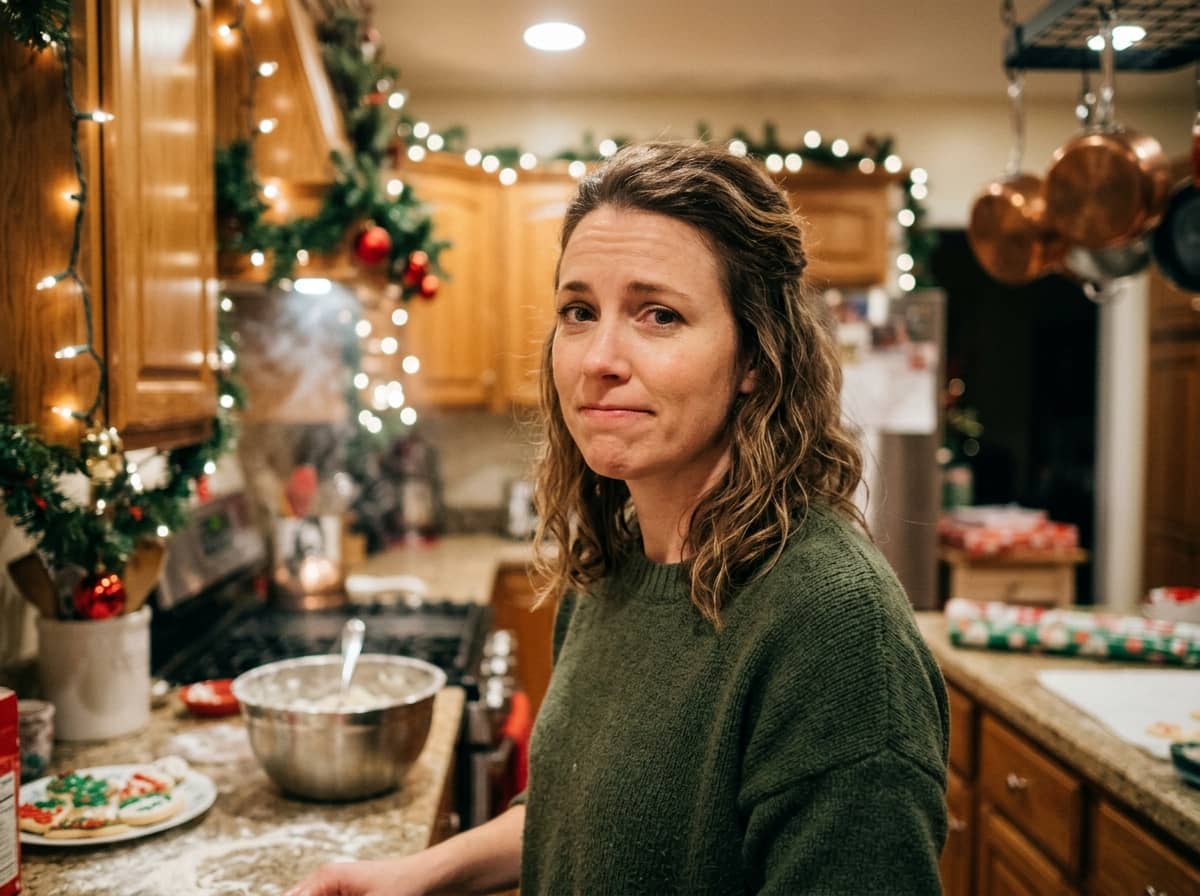
Mom folded her hands the way she did when she was about to say something she had rehearsed in the bathroom mirror. Her eyes swept the table. They landed everywhere except on me.
“We’ve been thinking about this for a while,” Dad said. “Talia and Brenner, with the kids growing up, they need more space. And since Maris has that little condo sitting right on the lake—”
Little.
He said “little.”
“—we’ve decided the best thing for the family is to transfer the condo to Talia and Brenner. They’ll move in by February. It’s the right thing to do.”
The room did not go silent. That is the lie people tell afterward. The room got louder. Aunt Lorna murmured, “Oh, how generous.” My uncle nodded like this made financial sense. Talia pressed her palms together like she was praying and whispered, “Thank you, Daddy.”
Brenner lifted his wine glass.
Mom finally looked at me.
I smiled.
I clapped three times, slowly, like a woman congratulating a magic trick she had already figured out.
“That’s wonderful,” I said.
Some gifts are not wrapped. They are unwrapped — and you finally see who was holding the scissors all along.
Part 2: The Lock on the Filing Cabinet
I drove home at 9:47 p.m. on Christmas Eve through streets glazed with salt and slush, the heater blasting, my hands steady on the wheel, my mind running numbers.
My condo was worth $350,000. I knew this because I had received a market appraisal four months earlier when I refinanced to a lower rate. The mortgage was paid off. Every cent. The title was in my name. My name only. No co-signers. No family trusts. No shared deed.
My father had announced he was giving away something he did not own.
And no one at that table — not one person — had asked me if I agreed.
I parked in my assigned spot in the underground garage at 10:22 p.m. I sat in the car for seven minutes with the engine off, watching the concrete wall, breathing until I could think clearly. Then I went upstairs, made chamomile tea, and opened my laptop.
The first thing I did was pull up the Cook County Recorder of Deeds website.
Clean title. Sole owner. No liens. No encumbrances.
The second thing I did was open my filing cabinet — the gray one in the hall closet, the one I kept locked because my mother once said a woman who locks things has something to hide and I decided she was right. I had things to hide. They were called boundaries.
I photographed every document: the original deed, the title insurance, the payoff letter from my lender dated March of that year, the refinance closing packet, the HOA ledger, my property tax receipts going back twelve years.
Then I emailed them all to myself and to my work address.
It took forty-one minutes.
Then I turned off my phone, drank my tea, and went to bed.
Panic is expensive. Preparation is free.
Christmas morning, my phone showed fourteen texts. Mom: “So glad we’re all on the same page .” Talia: “Brenner wants to know about parking. Can he get a second sticker?” Dad: “Call me when you get a chance. We should talk logistics.”
Logistics.
As if I were a warehouse and my home was inventory.
I did not reply. I showered, dressed in jeans and a black sweater, ate toast with peanut butter standing at my kitchen counter, and called my friend Dana Kessler. Dana was a real estate attorney with a small firm in Lincoln Park. We had been close since college. She answered on the second ring even though it was Christmas.
“Maris, what’s wrong?”
“My parents announced at dinner last night that they’re giving my condo to my sister.”
Silence. Then: “Your condo. The one you own. Free and clear.”
“Yes.”
“The one with your name on the deed.”
“Only my name.”
“And they announced this at dinner? Like a toast?”
“Like a toast.”
Dana exhaled. “Maris, they can’t do that. You know that, right? They literally cannot give away property they don’t own. This isn’t a legal question, it’s a reality question. It’s like me announcing I’m giving your car to my neighbor.”
“I know.”
“So what do you need from me?”
“I need to know how fast I can sell it.”
She paused.
“How fast do you want?”
“Before New Year’s.”
I heard her sit up. I heard her dog bark in the background. I heard her fiancé ask who was calling.
“I’ll make some calls,” she said. “There are cash buyers in this market. Lake views, paid off, one-bedroom in your building? I can get you offers by tomorrow night.”
“Do it.”
“Maris?”
“Yeah?”
“Are you okay?”
I looked out at the lake. A single boat light blinked in the gray distance.
“I’m making a decision,” I said. “That’s different from being okay.”
At 2:15 p.m. on Christmas Day, while my family was probably eating leftover turkey and imagining where Talia would put her shoe rack in my hallway, I was signing a limited power of attorney giving Dana authority to negotiate on my behalf. She sent three emails before dinner.
By the morning of December 26th, I had two cash offers.
One was for $338,000. The other was $347,500.
I took the second one. The buyer was a retired radiologist relocating from Scottsdale. He wanted a quick close. His proof of funds cleared within hours. Dana called the title company at 8 a.m. and scheduled the closing for December 30th.
Four days.
My phone buzzed again. Dad: “We should sit down this week and go over the timeline. Brenner wants to start painting in January.”
Painting.
In my condo.
That I built with my own two hands.
I set the phone face down on the counter and opened a new browser tab. I searched for one-bedroom apartments in Denver. Then Portland. Then Asheville, North Carolina, because a colleague once told me the mountains there made her forget she had ever been angry.
I bookmarked seven listings.
When someone plans your future without your consent, the kindest thing you can do — for yourself — is disappear from their blueprint.
But I was not ready to disappear yet. Because on the morning of December 27th, I found something in my filing cabinet that changed the entire shape of what my family had done to me.
Part 3: The Second Set of Keys
It was a manila envelope I had never opened.
It had been in the bottom drawer of my filing cabinet since October, wedged between old insurance paperwork and a folder of tax returns. My father had handed it to me at a Sunday brunch two months earlier and said, “Just some family estate documents. Put them somewhere safe. Don’t worry about reading them — it’s boilerplate.”
I had trusted him.
That morning, standing barefoot in my hallway with coffee going cold on the counter, I tore the envelope open.
Inside were three documents.
The first was a draft quitclaim deed — unsigned — transferring ownership of my condo from me to Talia Anne Wren-Hargrove. It had been prepared by a notary service in Schaumburg, dated September 14th. Three months before Christmas dinner.
The second was a letter from my father’s financial advisor addressed to both my parents, outlining a “family asset redistribution strategy.” The letter recommended transferring “underutilized real estate holdings held by unmarried dependents” into the names of “family members with dependents of their own” to “maximize generational benefit.” It listed my condo by address. It estimated the value at $340,000.
Unmarried dependents.
I was thirty-six years old, a senior operations director pulling $127,000 a year. I had bought this home at twenty-four with no help from anyone in my family. Not one dollar. Not one co-sign. Not one moving box carried up the stairs.
And their financial advisor had called me an unmarried dependent.
The third document was worse.
It was a printout of a text conversation between my father and Brenner. I did not know why it had been printed. Maybe for records, maybe for the advisor. The texts spanned August through November.
Brenner, August 19: “If we can get the condo by spring, I can use the equity to cover the business loan. Talia doesn’t need to know the details.”
Dad, August 20: “Agreed. We frame it as a family decision. Maris won’t fight it. She never does.”
Brenner, September 3: “What if she says no?”
Dad, September 3: “She won’t. She’s not built that way.”
I read that last line three times.
She’s not built that way.
My hands did not shake. My eyes did not sting. Something inside me went very still, the way a lake goes still before ice forms.
This was not a spontaneous family discussion at Christmas. This was a four-month plan. My father and my sister’s husband had conspired to take my home — the home I earned — and convert it into collateral for Brenner’s failing business. Talia was the cover story. The kids were the sympathy angle. And I was the path of least resistance.
She’s not built that way.
I photographed every page. I emailed the photos to Dana, to my personal cloud, and to a new email address I created that morning using a name no one in my family would recognize.
Then I called Dana.
“I found the paperwork,” I said. “They had a quitclaim deed drawn up in September. My father and Brenner planned this.”
Dana was quiet for five seconds. That was long for her.
“Maris, this isn’t just about your parents being presumptuous. If Brenner intended to leverage your property for a business loan without your knowledge or consent, that’s attempted fraud. The quitclaim was unsigned, but the intent is documented in those texts.”
“What do I do?”
“You close on December 30th as planned. You take your money. And then, if you want, we refer this to a fraud attorney. I know one. Her name is Pauline Ochoa. She’s in the Loop. She doesn’t lose.”
I wrote the name down.
I also did one more thing that morning.
I called my building’s management office and asked whether anyone had requested a copy of my unit’s entry codes or parking access in the last ninety days.
The property manager, a woman named Gloria with a voice like warm gravel, checked the records.
“Actually, yes,” she said. “A man called in November. Said he was your brother-in-law and needed temporary access to help you move furniture. We told him we couldn’t release codes without the owner’s written authorization.”
“Did he give a name?”
“Brenner Hargrove.”
I thanked Gloria. I asked her to flag my unit and deny all access requests from anyone other than me. She agreed immediately.
“Ma’am,” Gloria said before hanging up, “in twenty-two years of managing this building, I’ve learned one thing. When someone asks for your keys before you’ve offered them, they’ve already decided your door belongs to them.”
Trust is not a family heirloom. It is a contract. And mine had just been voided.
Part 4: The Closing and the Silence
December 30th. A Tuesday. Temperature: nineteen degrees. Wind off the lake at fourteen miles per hour. The title company’s office was on West Monroe Street, third floor, in a building that smelled like old carpet and fresh ink.
I arrived at 9:00 a.m. sharp.
Dana was already there, briefcase open, two copies of everything fanned across the conference table like a card dealer’s spread. The buyer’s attorney, a polite man named Stafford, nodded when I walked in. The retired radiologist from Scottsdale attended by phone. His voice was calm and pleased. He said he was looking forward to watching the lake freeze.
I signed thirty-one pages.
Each signature felt like setting down a stone I had been carrying without knowing it.
At 10:14 a.m., the wire transfer was confirmed. $347,500, minus closing costs and Dana’s fee, landed in my account at 10:47 a.m.
$331,040.
I stared at the number on my phone screen. Then I closed the app.
Dana walked me to the elevator.
“What now?” she asked.
“I have a U-Haul reserved at noon. My friend Casey is helping me load. I’ve already boxed most of it.”
“Where are you going?”
“Asheville. I rented a furnished apartment near the River Arts District. Month to month. I’ll figure it out from there.”
Dana hugged me. She was not a hugger. She held on for four seconds, which for Dana was a soliloquy.
“Call Pauline Ochoa in January,” she said. “What your father and Brenner did — the quitclaim, the texts, the access request — Pauline will know what to do with it.”
“I will.”
“And Maris?”
“Yeah?”
“You are built exactly the right way.”
I loaded the U-Haul in three hours. Casey and I hauled boxes, my grandmother’s rocking chair, my books, my kitchen supplies, and a single framed photograph — me at twenty-four, holding a set of keys, standing in front of a condo that looked like it needed everything.
I left behind one item: a Christmas card from my mother, still sealed, sitting on the kitchen counter next to the key I had left for the new owner.
By 4:00 p.m. I was on I-65 heading south with everything I owned packed behind me and a thermos of black coffee in the cupholder.
My phone was off.
I drove through Indiana as the sun set in a stripe of copper and gray. I stopped for gas in Louisville, bought a sandwich from a Subway inside a truck stop, and sat in the parking lot eating it while snow began to fall.
I turned my phone on at 11:00 p.m. while parked at a rest stop outside Knoxville, Tennessee.
Seventy-nine missed calls.
Twenty-three from Mom. Nineteen from Dad. Fourteen from Talia. Nine from Brenner. Six from Aunt Lorna. Five from numbers I did not recognize. Three from my uncle.
Forty-six text messages.
Mom: “Maris, where are you? The building manager says you moved out???”
Dad: “CALL ME NOW.”
Talia: “What did you do??? Mom is hysterical. This was supposed to be handled!!!”
Brenner: “Maris, we need to talk. This is a misunderstanding.”
Dad, again, at 9:38 p.m.: “You had no right to sell that condo without discussing it with us first.”
I read that one twice.
No right.
To sell my own property.
That I bought. That I paid for. That I fixed. That I owned.
I turned the phone off again.
I drove through the Smoky Mountains in the dark, through fog so thick my headlights looked like two hands reaching into nothing. The roads curved and climbed. The air smelled like pine and wet earth and the kind of cold that makes your lungs feel brand new.
I arrived in Asheville at 2:17 a.m. on New Year’s Eve.
I parked in front of a small brick building on a quiet street three blocks from the French Broad River. The apartment was on the second floor. The landlord had left the key under a ceramic frog by the door, exactly as promised.
Inside, it was warm. A space heater hummed. The furniture was simple — a blue sofa, a wooden table, a bed with a white quilt that smelled like lavender.
I sat on the sofa.
I did not cry.
I did not celebrate.
I sat in the silence of a room that belonged to no one’s plan but mine, and I breathed.
Running is not always retreat. Sometimes running is the first honest thing you have done in years.
Part 5: The Reckoning That Arrived by Registered Mail
January passed quietly.
I started a remote consulting contract through a former colleague in Charlotte. The pay was less than my old salary, but the work was steady, and I did it from a desk I placed by the window overlooking a row of bare sycamore trees that would bloom in spring. I joined a gym. I bought a used bicycle. I found a coffee shop called Dobra Tea where they served you in ceramic bowls and no one asked if you were okay.
I was okay.
On January 14th, I called Pauline Ochoa.
She was exactly as Dana had described: precise, unhurried, and the kind of calm that came from having won arguments most people did not even know how to start. She listened to my full account. I emailed her every document. She called me back the next day.
“Here’s what we have,” Pauline said. “Your father commissioned a quitclaim deed to transfer your property without your knowledge. Your brother-in-law attempted to gain physical access to your unit under false pretenses. Text messages between them confirm intent to leverage your equity for a business debt without your consent. None of these actions were authorized by you. The quitclaim was never signed or filed, so the transfer never occurred, and your subsequent sale was entirely lawful.”
“So they can’t come after me?”
“They can be upset. They can call you names. They can send you letters. But legally, they have no claim. You sold your own property. What they attempted, however, is a different matter.”
Pauline laid out the options.
A formal cease-and-desist letter to my father and Brenner, documenting the attempted unauthorized transfer and the fraudulent access request. A report to the Illinois Department of Financial and Professional Regulation if Brenner held any professional license connected to his business dealings. And, if I chose, a referral to the Cook County State’s Attorney for review of the attempted fraud.
“I don’t want to send anyone to jail,” I said.
“You don’t have to. But a cease-and-desist with documented evidence is a mirror. It forces people to see what they did, in writing, with their own words quoted back. Most people who are confronted with their own texts in a legal document become very quiet, very fast.”
I authorized the letter.
It was sent on January 22nd by registered mail to my father’s home and to Brenner’s business address.
The calls stopped.
Not gradually. Not one by one. They stopped completely, the way a faucet stops when someone finally finds the valve.
My mother sent one final text on January 25th: “You’ve broken this family.”
I did not reply.
I thought about it for a long time, standing on the sidewalk outside my apartment while the mountains held the last pink light of the day. I thought about what it means to break something that was already fractured in places no one wanted to look. I thought about the word “family” and how it can be the warmest room in the world or the room where you are smallest.
I decided the text did not require an answer because it was not a question. It was an accusation dressed as grief, and I had spent thirty-six years accepting blame for things I did not do.
In February, Dana called with news. Brenner’s business — a contracting company that specialized in mid-range kitchen renovations — had filed for Chapter 7 bankruptcy. Without my condo equity to cover his debts, the creditors had come. His two remaining commercial clients pulled their contracts. His bonding company dropped him.
Talia filed for legal separation in March.
My father called me once, in April. I let it go to voicemail.
“Maris,” he said. His voice was thinner than I remembered. “I want you to know I understand now that I was wrong. I should have asked you. I should have never assumed. I hope you’re well.”
He did not apologize.
He said he understood he was wrong. That is not the same thing. Understanding is observation. Apology is accountability. But it was the closest he had ever come, and I noted it the way you note a crack in the ceiling — visible, watched, not yet repaired.
I did not call him back.
By summer, the sycamores outside my window were full and green. I rode my bicycle along the river path three mornings a week. I had a small circle — a neighbor named Ruth who grew tomatoes on the fire escape, a coworker named Jude who sent me reading recommendations every Friday, and Casey, who visited from Chicago in June and cried when she saw how peaceful I looked.
“You look like yourself,” she said.
“I think I finally am,” I said.
I kept a journal. Not every day. Just when something mattered. One entry, written on a Tuesday in May, said this:
They told me I wasn’t built to fight. What they meant was I wasn’t built to fight them. They were right. I was built to leave. And leaving — calmly, legally, completely — was the most powerful thing I have ever done.
Sometimes the bravest thing a person can do is not slam the door. It is to walk through it quietly, lock it behind you, and never hand over the key.
What you build with your own hands belongs to you. Not to the people who watched you build it. Not to the ones who showed up only when it was finished. And certainly not to anyone who planned to take it while you were still sitting at their table, smiling, holding a fork, trusting them with the one thing you should have trusted only to yourself.
Your life.
Some debts are not owed in dollars. They are owed in dignity. And when the bill comes due, the ones who tried to steal yours will find that the only account that’s empty is their own.
Names and identifying details have been changed. This is a dramatized story and personal reflection shared for entertainment and educational purposes only. Any resemblance to real people is coincidental.
Read Christmas Eve Everything and other true-to-life family dramas. For perspective on situations like this, see family dynamics.
