My Husband Ignored His Pregnant Wife’s ER Call and Stayed With His Mistress—By Midnight , His Entire Empire Was Falling Apart
I was thirty-four weeks pregnant, lying in an emergency room with monitors strapped to my belly, when my husband read my text and chose not to call back. He was too busy celebrating the grand opening of his new restaurant with the young woman he told everyone was “just staff.” But while he smiled for cameras, the records I had quietly saved for months were finally reaching the right hands. By midnight, the man everyone feared had learned that silence does not protect secrets forever.
Part 1 — The Call He Refused to Answer
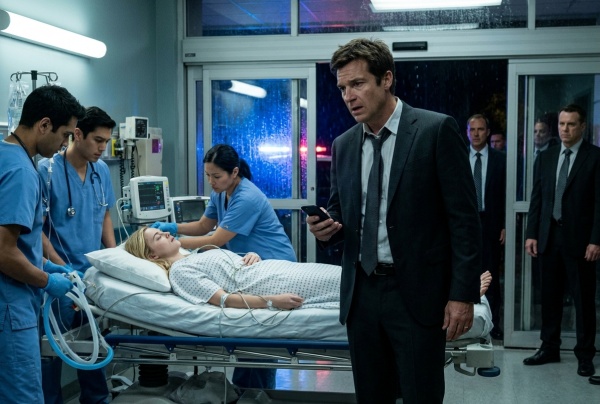
At 6:12 on a Thursday evening, I called my husband from the emergency room at Northwestern Memorial Hospital in Chicago. My hands were shaking so badly I nearly dropped the phone, and the nurse had just told me they needed to run more tests because my blood pressure was dangerously high. I was thirty-four weeks pregnant, terrified, and alone under fluorescent lights that made everyone look like ghosts.
My husband’s name was Vincent Moretti, though most people in Chicago knew him as Vince. He owned restaurants, lounges, valet companies, and enough “private security” contracts to make men lower their voices when he entered a room. Newspapers had called him an alleged organized crime figure for years, but no one ever proved enough to keep him in court for long.
To me, he was simply the man who once held my hand on a Navy Pier Ferris wheel and promised I would never have to face anything alone. By the time I called from the ER, that promise had become one more expensive thing he liked owning but never used. I watched his name glow on my screen as the call rang once, twice, six times.
Then it went to voicemail.
I called again.
No answer.
I texted: Vince, I’m at the ER. Something is wrong with the baby. Please call me.
The message showed as delivered. Then, a minute later, read. He had seen it.
He did not call back.
My name is Claire Moretti, though I was born Claire Donovan on the South Side of Chicago. I was thirty-two years old, a former art teacher, and married to a man everyone feared except the woman who had once believed fear was the same as protection. For seven years, I lived inside Vince’s world of private dining rooms, black SUVs, whispered favors, and envelopes no one explained.
At first, he made that world feel romantic. He sent roses to my classroom, drove me along Lake Shore Drive at midnight, and looked at me like I was the only honest thing he had ever touched. My mother warned me that charm could be a locked door with gold paint on it. I thought she was being dramatic.
She was being accurate.
The nurse came back and asked if there was someone she could call for me. I almost said no because pride is strange that way. Even when you are afraid, even when you are in a hospital bed with monitors attached to you, you can still feel embarrassed that your own husband is too busy to care.
“My sister,” I said finally. “Call my sister.”
Maggie arrived twenty-three minutes later in running shoes, work slacks, and the expression of a woman ready to fight the entire hospital if necessary. She was a Cook County assistant state’s attorney, sharp as broken glass and twice as dangerous to men who underestimated her. When she saw me, her face softened for exactly one second.
Then she looked at my phone.
“Did you call him?”
“Twice.”
“And?”
I swallowed. “He read the text.”
Maggie’s jaw tightened. “Where is he?”
I knew exactly where he was.
Vince was at the opening night of Bellarosa, his newest Italian restaurant in River North. The mayor’s people were there, half the city’s nightlife crowd was there, and so was a twenty-six-year-old hostess named Alessia Romano who had been standing too close to my husband for months. Vince said she was “family from the old neighborhood,” which was funny because his old neighborhood had a way of producing beautiful women whenever his marriage became inconvenient.
A doctor came in and explained what they were watching for. My blood pressure was not improving. There were concerns about preeclampsia, possible fetal distress, and the need to move quickly if things changed. He spoke carefully, the way doctors do when they are trying not to frighten you while making sure you understand.
I nodded like I was calm.
I was not calm.
Inside my belly, my son moved once, slowly, and I placed both hands over him as if I could hold him in place by love alone. Maggie reached for my phone and asked, “Can I text him?”
“No,” I whispered.
“Claire.”
“No. If he can ignore my call from the ER, let him.”
Maggie looked at me for a long moment. Then she sat beside the bed and took my hand. “Okay,” she said. “Then tonight, we stop pretending.”
At 7:04 p.m., my phone buzzed.
Not from Vince.
From Alessia.
The message said: He’s busy. Stop embarrassing him tonight.
I stared at the words until they blurred.
Then another message came.
He has a real family here. You should know when to stay quiet.
Maggie saw my face change.
“What is it?”
I handed her the phone.
She read the messages once. Then again. Then she looked at me with the professional stillness I had seen in courtrooms. “Claire,” she said quietly, “please tell me you saved everything.”
I laughed once, but it came out wrong.
“Maggie,” I said, “I’ve been saving everything for six months.”
That was the first time I said it out loud.
And by nightfall, it would be the sentence that cost Vince Moretti everything.
Part 2 — The Wife Who Kept Receipts
Six months before the ER, I found the first envelope in the locked drawer of Vince’s home office. I was not snooping, at least not at first. I was looking for my prenatal insurance paperwork because the OB’s office needed updated information. The drawer was not supposed to open, but the old brass lock had always been cheap, and the key sat in a ceramic bowl beside his cufflinks.
Inside were two things that did not belong together: my insurance documents and a stack of cash banded in amounts of $10,000. There were also handwritten notes with initials, dates, and percentages. I stared at them for several seconds before my body understood what my mind already knew.
Vince’s world was not just mysterious.
It was dangerous.
When I asked him about the envelope, he smiled in a way I had learned to hate. Not angry. Not scared. Amused. “Claire, sweetheart, you don’t need to worry about business.”
“I’m your wife,” I said.
“And that’s why I keep the ugly parts away from you.”
At the time, that sounded almost protective if you were tired enough, pregnant enough, and lonely enough to want protection more than truth. But the ugly parts had not stayed away from me. They had paid for my house, my car, my medical insurance, and the nursery furniture I had been arranging with shaking hands.
After that, I started paying attention.
There were restaurant invoices that did not match deliveries. Payroll records with names I never saw at any location. Checks from shell vendors. Security contracts that cost more than the buildings they were supposed to protect. It was not my job to understand every crime, and I was careful not to become part of one.
So I did what Maggie had taught me years earlier, back when she was still in law school.
I documented.
I took photos of papers I found in shared spaces. I saved texts. I forwarded threatening voicemails to a secure email account. I kept copies of bank statements, property documents, and anything with my name on it. I did not steal. I did not hack. I did not lie.
I preserved what entered my life.
That distinction mattered.
Vince believed fear made people stupid, but fear had made me organized. I kept a binder hidden in a storage box labeled Christmas Lights in the basement. Inside were printed emails, screenshots, photographs, account statements, medical records, and a list of dates when Vince did not come home.
The affair with Alessia was easier to prove than the money.
A lipstick-stained glass in his office after midnight.
A hotel charge at the Langham on a night he said he was in Milwaukee.
Photos from Bellarosa’s staff party where her hand rested on his chest like it had lived there.
I did not confront him about her because I already knew how that conversation would go. He would call me emotional, suspicious, ungrateful. He would remind me that I had not worked since the pregnancy became difficult. He would say I liked the house in Lincoln Park well enough when his money paid for it.
Men like Vince do not argue to find truth.
They argue to regain control.
The first real threat came after I asked to see our joint tax return before signing it. Vince placed the papers in front of me and tapped the signature line. “Don’t start acting like Maggie,” he said.
I looked at him. “What does that mean?”
“It means not everything needs a courtroom.”
He was smiling, but his eyes were cold.
I did not sign.
The next day, my credit card stopped working. Two days later, the housekeeper told me Vince said she no longer needed to come because “Claire has too much time anyway.” Then he moved half the money from our joint account into an account I could not access. He did not need to hit me to make the walls feel smaller.
Financial control has its own fingerprints.
I called a family law attorney named Dana Whitfield, recommended by a woman from my prenatal yoga class who said quietly, “She helped me leave a powerful man.” Dana’s office was on LaSalle Street, with glass walls and a receptionist who did not blink when I said my husband might be laundering money through restaurants. Dana listened without drama, took notes, and asked very specific questions.
Then she said, “Your first priority is safety. Your second is not signing anything you don’t understand. Your third is protecting your child.”
“My child,” I repeated.
She did not say your husband’s child.
She said your child.
That mattered.
Dana told me not to make accusations online, not to threaten Vince, not to hide assets, and not to take documents from places I had no lawful access to. She explained that divorce, financial misconduct, and possible criminal activity were different lanes, and crossing them carelessly could hurt me. I needed to be precise.
So I became precise.
By the time I ended up in the ER, Dana already had copies of everything relevant to the divorce. Maggie knew where the binder was. My OB knew stress at home was contributing to my blood pressure. A social worker at the hospital had given me a card with domestic violence resources because control is not always loud enough for neighbors to hear.
Still, part of me hoped Vince would answer when I called.
That is the humiliating truth.
Even after the money, the affair, the fear, and the silence, I hoped the words ER and baby would reach whatever human part of him still belonged to us. Instead, he read my text and let Alessia answer for him.
That was not neglect.
That was a choice.
And choices, even for men like Vince Moretti, have consequences.
Part 3 — Opening Night at Bellarosa
While I was in a hospital bed, Vince was standing under warm lights at Bellarosa, shaking hands with aldermen, liquor distributors, and men who wore tailored suits like armor. The restaurant had red leather booths, brass fixtures, and framed black-and-white photos of Sicily that Vince probably chose because they made crime look like heritage. Outside, photographers snapped pictures of guests pretending not to know why everyone important had shown up.
Alessia stood beside him in a black silk dress, smiling like she had earned the place at his side. She was young, but not stupid. That was the part I had learned from watching her. She knew when to laugh, when to touch his arm, when to disappear before wives arrived.
That night, she did not disappear.
She took my place.
At 7:39 p.m., Bellarosa’s official Instagram account posted a story. Vince was cutting a ribbon while Alessia stood close enough that her shoulder touched his. The caption said: Family makes it all possible.
Maggie saw it before I did.
She did not show me at first.
Then Alessia sent another message.
He doesn’t need stress right now. Think about the baby for once.
I read that sentence three times.
Think about the baby.
I was in the ER thinking about nothing else.
The nurse came in to adjust the monitor and saw my face. “Do you feel safe at home?” she asked.
The question was quiet.
Not dramatic.
Not judgmental.
Just enough.
I looked at Maggie, then back at the nurse. “No,” I said.
Once I said it, the air changed. A hospital social worker came in. Security was notified discreetly. My chart was updated so no one could get information without my consent. The nurse asked if my husband was allowed back if he arrived.
I said, “Not without asking me first.”
That was the first boundary of the night.
It would not be the last.
At 8:11 p.m., Dana called me back. Maggie had already texted her. I told Dana about the ER, the ignored calls, and Alessia’s messages. Dana did not gasp. Good attorneys rarely do.
She said, “Forward everything. Do not respond. We will file first thing in the morning unless circumstances require emergency action tonight.”
“What could happen tonight?”
“If he tries to access you at the hospital, if he threatens you, or if there is financial movement we can verify.”
Financial movement.
That phrase stuck with me because at 8:26 p.m., my phone alerted me to a login attempt on my personal bank account. Then another. Then a password reset request for the email I used with my attorney. Someone was trying to get in.
I showed Maggie.
Her face went still.
“Did Vince know this email?”
“No.”
“Did Alessia?”
“No.”
Maggie stood up. “I’m making calls.”
She did not use her office for personal revenge. That is not how law works, no matter what people imagine from TV. But she did know how to contact the right agencies when there were potential threats, financial tampering, and a pregnant woman in a hospital bed receiving messages from her husband’s mistress.
At 8:48 p.m., Dana called again. “Claire, I need your permission to request an emergency protective filing related to marital assets and communication. We may also need to notify appropriate authorities regarding suspicious access attempts.”
“Yes,” I said.
The word came out before fear could stop it.
At 9:03 p.m., Vince finally called.
I stared at his name on the screen while the monitor beeped beside me.
Maggie asked, “Do you want to answer?”
I almost said no.
Then I looked at the nurse, who nodded toward the call recording policy posted near the intake desk. Illinois has strict rules about recording conversations, and I was not about to create a legal problem for myself. Instead of recording, I put the phone on speaker with Maggie and the nurse present as witnesses.
“Claire,” Vince said.
His voice was controlled, but there was tension underneath.
“I’m at the hospital,” I said.
“I know. Alessia told me you were upset.”
Upset.
Not sick.
Not in danger.
Upset.
“I’m being monitored for complications,” I said. “I told you something was wrong with the baby.”
There was a pause.
Then he said, “You picked a hell of a night for this.”
The nurse’s face changed.
Maggie closed her eyes like she was physically restraining herself from speaking.
I felt something inside me detach.
“I didn’t pick it,” I said. “My body did.”
Vince lowered his voice. “Listen to me carefully. Do not start drama with my business tonight. Do not talk to anyone about things you don’t understand. When I get there, we are going to handle this privately.”
“No,” I said.
Silence.
“What did you say?”
“I said no. You are not coming into my room unless I allow it. You are not handling my medical emergency as a reputation problem. And you are not using Alessia to send me messages while I’m in the ER.”
His voice turned cold. “Claire, don’t forget who you’re married to.”
I looked at Maggie.
She was already writing that down.
“I remember exactly who I’m married to,” I said. “That’s why I’m done.”
I hung up.
At 9:22 p.m., hospital security noted that Vince Moretti was not permitted into my room without my consent.
At 9:41 p.m., Dana submitted emergency documents electronically.
At 10:06 p.m., Maggie received a call from a colleague confirming that separate investigators had already been looking into Bellarosa’s funding.
And at 10:38 p.m., while Vince stood in his new restaurant pretending he still controlled the night, federal agents walked through the front door.
Part 4 — By Nightfall, Everything Fell Apart
The next morning, every local news station had the same footage. Bellarosa’s red awning glowed under camera lights while agents carried out boxes of records. Vince was not dragged away dramatically like in a movie. He walked out beside his attorney, jaw tight, saying nothing while reporters shouted questions.
The headlines were careful.
Federal Agents Execute Search Warrant at River North Restaurant Connected to Businessman Vincent Moretti.
Not mafia boss.
Not criminal kingpin.
Not guilty.
America has laws about what can be said before a conviction, even when everyone in town thinks they know the story.
But social media was not careful.
By breakfast, the internet had turned Vince into a meme. Photos of him and Alessia from opening night spread beside screenshots of her standing under the Family makes it all possible caption. People love a public fall, especially when the man falling built his life on making others feel small.
I did not post.
I did not comment.
I was still in the hospital, still pregnant, still trying to keep my blood pressure stable. My victory, if you could call it that, was not watching Vince lose face. It was watching my son’s heartbeat continue on the monitor.
That was the only sound I cared about.
Dana arrived at my hospital room at noon with a folder and coffee she had cleared with the nurse first. She looked like she had slept less than I had. “Emergency orders were granted in part,” she said. “Temporary restraints on moving certain marital assets. Communication through counsel. We are filing for divorce today.”
I nodded.
The word divorce did not feel like failure anymore.
It felt like oxygen.
“What about the investigation?” I asked.
“That is separate,” she said. “You cooperate truthfully if contacted. You do not speculate. You do not try to manage it.”
I almost smiled.
“I’m done managing him.”
“Good,” Dana said. “Because managing powerful men is how women disappear inside their lives.”
Vince tried to send flowers that afternoon.
Huge white roses.
My favorite, once.
The card said: We need to talk. For our family.
Maggie picked it up, read it, and looked at me.
“Trash?”
“Trash,” I said.
The nurse took the flowers away because hospitals have seen every version of apology wrapped in cellophane.
Alessia called once from a blocked number. I did not answer. She left a voicemail crying that she had not known Vince was “in that much trouble” and that he had told her I was unstable, spoiled, and using the pregnancy to control him.
I saved the voicemail.
Then I stopped listening.
There is a point where other people’s awakening is not your responsibility.
Vince’s mother, Rosaria Moretti, arrived at the hospital at 3:15 p.m. wearing black, as if mourning the reputation before the trial had even begun. Security stopped her at the desk because she was not on the approved visitor list. She called Maggie instead.
Maggie put the phone on speaker.
“Claire needs to stop this,” Rosaria said.
Maggie’s eyebrows lifted. “Stop what?”
“Destroying her husband.”
Maggie looked at me.
I spoke clearly enough for Rosaria to hear. “Vince ignored my calls from the ER. Alessia texted me while I was being monitored for pregnancy complications. Someone tried to access my bank account and legal email. If his life is falling apart, he should look at the choices that built it.”
Rosaria was quiet for a moment.
Then she said, “You enjoyed the life he gave you.”
I closed my eyes.
That sentence used to shame me.
Now it clarified everything.
“I lived in the house,” I said. “I did not consent to the lies that paid for it.”
Rosaria hung up.
Maggie whispered, “That was beautiful.”
“No,” I said. “It was overdue.”
That evening, the doctor decided to keep me overnight again. My blood pressure was better but not safe enough to send me home. My son was still stable, and every stable hour felt like a blessing I was afraid to name too loudly.
At 8:00 p.m., I watched the Chicago skyline turn gold from the hospital window.
Somewhere across town, Vince was losing lawyers, allies, bank access, and the illusion that fear could keep everyone loyal. Bellarosa’s opening night had become evidence. Alessia’s messages had become part of a court filing. His silence from the ER had become the final fact I needed to stop protecting him.
By nightfall, the man people called untouchable had learned what every controlling man eventually learns.
Power is not the same as loyalty.
Fear is not the same as love.
And a wife who has been quiet is not the same as a wife who has nothing to say.
Part 5 — What He Lost, What I Saved
My son was born three weeks later by emergency C-section on a rainy Monday morning. He weighed five pounds, nine ounces, small but fierce, with dark hair and the loudest cry I had ever heard. I named him Michael James Donovan, after my father and Maggie’s middle name, and gave him my maiden name before anyone could turn him into a Moretti legacy.
Vince was notified through attorneys.
He was not in the delivery room.
That was not revenge.
That was peace.
Labor, surgery, and recovery are not stages for men to perform regret. My body had already carried enough stress because of him. My son deserved his first breath to happen in a room where no one was managing Vince Moretti’s pride.
The divorce took fourteen months.
The criminal investigation took longer.
I will not pretend I understood every legal filing, every financial tracing issue, or every sealed motion. What I understood was simpler: Vince had built a kingdom out of fear, favors, and money that did not all belong where he said it did. When the right people finally opened the books, the shine came off quickly.
Some charges were filed.
Some matters were settled.
Some people cooperated.
Some vanished from the social circles that had once pretended Vince was just a successful hospitality entrepreneur with excellent security.
Bellarosa closed within six months.
Two other restaurants were sold.
The Lincoln Park house went on the market under court supervision.
The black SUVs disappeared one by one, replaced by legal bills, frozen accounts, and men in suits who no longer laughed at Vince’s jokes.
I did not walk away rich.
That surprises people who want every story to end with a mansion and poetic justice. I walked away with a fair share protected through court orders, child support based on verified income, and enough distance to breathe. More importantly, I walked away with my name clean, my son safe, and every document proving I had tried to protect myself legally.
That was enough.
Vince requested parenting time after Michael was born. The court handled it carefully, with safety considerations, structured communication, and boundaries that did not depend on Vince’s mood. I followed the order exactly because my son deserved stability, and I deserved not to live as if every exchange were a negotiation with power.
At first, Vince hated the co-parenting app.
He said it made him feel like a criminal.
I did not respond to that.
The app was not punishment.
It was a record.
Records were the one thing Vince had never respected until they started respecting me back.
Alessia disappeared from Chicago before Michael’s first birthday. Someone told me she moved to Miami. Someone else said she was cooperating. I did not ask. I had no interest in turning the woman who texted me from my husband’s restaurant into the center of my healing.
She was not the reason my marriage ended.
She was the light that exposed the room.
Two years later, I moved into a smaller condo in Evanston, three blocks from Lake Michigan. It had old hardwood floors, drafty windows, and a nursery painted soft green instead of the expensive blue Vince had chosen for the Lincoln Park house. Maggie helped me carry boxes while Michael sat in a playpen chewing on a rubber giraffe like he was supervising the move.
I started teaching art again part-time at a community center.
The first day back, I watched eight-year-olds argue over glitter glue and nearly cried from gratitude. There was nothing glamorous about tempera paint on my jeans or a sink full of dirty brushes. But it was honest. After years inside Vince’s polished world, honest felt luxurious.
Michael grew into a joyful, stubborn little boy.
He loved trucks, blueberries, and throwing socks behind furniture for reasons only he understood. He had Vince’s dark eyes, which hurt at first. Then one morning he looked at me over a bowl of oatmeal and said, “Mama, I made a moon,” pointing to a blob of yogurt on the table, and all I saw was my child.
Not Vince.
Mine.
People sometimes ask if I regret marrying him.
That question is too simple.
I regret ignoring my instincts. I regret mistaking secrecy for strength. I regret letting luxury convince me I was safe. But I do not regret my son, and I will not build a life where his existence is tied to shame.
One afternoon, nearly three years after the ER, I saw Vince outside the courthouse after a status hearing. He looked thinner, older, less polished. The expensive confidence was gone, replaced by something quieter and harder to read.
He asked if we could talk for two minutes.
I said, “Through the app if it’s about Michael.”
“It’s not,” he said.
“Then no.”
He looked at me like he was seeing someone he used to own in a house he no longer had keys to.
“I did love you,” he said.
Maybe he expected tears.
Maybe he expected anger.
I felt neither.
“I know,” I said. “But you loved control more.”
Then I walked away.
That was the closest thing to closure I ever got.
The night Vince ignored my call from the ER, he thought he was choosing business, reputation, and the woman standing beside him under restaurant lights. He thought my fear would wait for him. He thought I would still be there when he was ready to explain.
He was wrong.
By nightfall, agents were in his restaurant, lawyers were in motion, and the life he built on silence had started collapsing under the weight of its own paperwork. But the real ending was not his public fall. It was my private decision in a hospital bed to stop protecting a man who could read the words ER and baby and still not call back.
Today, Michael is four.
He knows his father in a structured, age-appropriate way. He knows his mother as the woman who packs his lunch, kisses scraped knees, teaches him colors, and tells him every night that love should never make you afraid to ask for help.
Sometimes, when I drive past River North, I remember Bellarosa’s red awning.
It is a different restaurant now.
New name.
New owners.
New people laughing under warm lights, unaware that one night, a man who thought he was untouchable lost everything because he ignored the one call he should have answered.
And I remember myself in that ER bed.
Afraid.
Pregnant.
Shaking.
Finally honest.
Vince Moretti lost his restaurants, his money, his reputation, and the wife who had kept his secrets longer than he deserved.
But I saved what mattered.
My son.
My name.
My life.
And the truth.
