My Husband Cheated With My Best Friend—Then the Man I Saved Helped Me Destroy Their Lies Legally
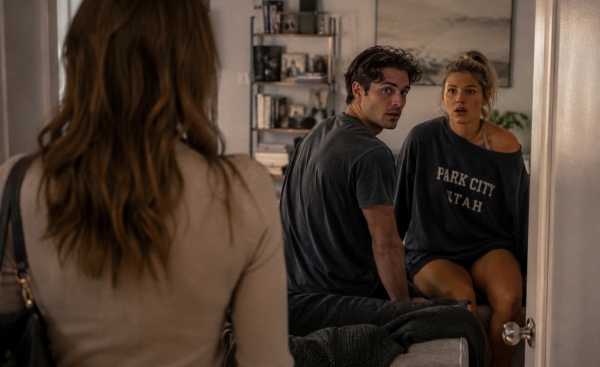
I walked into my own apartment and found my husband with my best friend, wearing my sweatshirt like she belonged there. They thought I would fall apart quietly, but the man I once saved handed me something more powerful than revenge…
Part 1: The Night I Saved a Stranger
I met Vincent Moretti on a rainy Thursday night in Brooklyn, long before I knew his name could make grown men lower their voices. I was finishing a double shift at St. Catherine’s Medical Center, running on vending machine coffee and a granola bar I had eaten six hours earlier. The emergency room was packed, the kind of packed where every chair was full and every nurse looked like she was one rude comment away from walking into traffic.
Around 11:40 p.m., paramedics rushed in with a man in his late sixties, gray-haired, broad-shouldered, and bleeding through a white dress shirt that probably cost more than my monthly car payment. He had been pulled from a black SUV after a collision near Atlantic Avenue. The driver had minor injuries, but the older man had taken the worst of it.
He was conscious when they rolled him in. Barely. His hand gripped the rail of the stretcher, and his dark eyes moved around the room like he was trying to memorize every face before the lights went out.
“Stay with me,” I told him, pressing gauze against the wound near his ribs.
He looked at my badge. “Ava.”
“That’s right,” I said. “And you’re going to keep breathing for me, okay?”
He tried to smile. “Bossy.”
“Alive people can complain about my attitude later.”
That made one of the paramedics laugh, but I wasn’t joking. His blood pressure was dropping, his breathing was shallow, and the room had shifted into that sharp, focused silence that happens when everyone knows seconds matter. I had been an ER nurse for nine years, and I knew the look of a body deciding whether to stay.
We worked on him for what felt like forever. Doctors came in, orders flew, machines beeped, and I kept talking to him because sometimes people need a voice to hold onto. I told him about the rain outside, about how terrible hospital coffee was, about how he owed me a complaint if he survived.
At one point, his hand caught my wrist.
“Tell my son,” he whispered.
“No,” I said firmly. “You can tell him yourself.”
His eyes narrowed. Even half-conscious, he looked offended by being denied a dramatic last line. “You always talk to patients like this?”
“Only the stubborn ones.”
He survived.
I didn’t think much of it afterward, not because it didn’t matter, but because saving people was my job. Some patients sent cards. Some sent flowers. Most disappeared back into their lives, which was exactly how it should be.
Three days later, a man in a charcoal suit appeared at the nurses’ station with a bouquet of white lilies and an envelope.
“I’m looking for Ava Bennett,” he said.
I raised my hand slowly. “That’s me.”
He handed me the flowers. “Mr. Moretti wanted you to have these.”
I looked at the card.
For the woman who refused to let me make a dramatic exit. — V.M.
Inside the envelope was a handwritten note, not money, not anything inappropriate. Just a thank-you and an invitation to dinner at a restaurant in Carroll Gardens called Luna Nero. I nearly threw the invitation away because I didn’t accept gifts from patients beyond flowers and cards, but my coworker Denise snatched it from my hand and gasped.
“Ava,” she whispered. “Do you know who Vincent Moretti is?”
“A grateful patient?”
She looked around, then lowered her voice. “People say he used to run half the docks in Red Hook.”
I stared at her. “What does that mean?”
“It means his family name is in articles you don’t read unless you want your FBI agent to get curious.”
I laughed because it sounded ridiculous. I was a nurse from Queens with student loans, a used Honda Civic, and a husband who forgot to put his socks in the hamper. I did not move in circles where men like Vincent Moretti mattered.
Still, curiosity is a dangerous thing when mixed with exhaustion.
That night, I Googled him.
The search results were a strange blend of restaurant reviews, old newspaper photographs, charity gala mentions, and articles using phrases like “alleged organized crime ties” and “never convicted.” There were pictures of Vincent younger, standing outside an Italian social club in a dark suit. There were pictures of him older, cutting ribbons at community events and donating money to children’s hospitals.
I closed the laptop and told myself I had done my part. I saved his life. End of story.
My husband, Ryan, came home after midnight smelling like whiskey and expensive cologne. He worked in event sales for a hotel group in Manhattan and was always “networking,” which seemed to involve more rooftop bars than actual work. I used to tease him about it before teasing started turning into questions.
“Flowers?” he asked, dropping his keys into the ceramic bowl by the door.
“A patient.”
He read the card and raised an eyebrow. “V.M.?”
“Vincent Moretti.”
Ryan went still for half a second, then laughed. “Seriously?”
“You know him?”
“Everybody knows of him.”
That was the first time I noticed something strange in Ryan’s face. Not fear exactly. Interest.
“Don’t make it weird,” I said.
He smiled and kissed my forehead. “You save one mysterious Italian millionaire and suddenly I’m not allowed to be impressed?”
“He’s a patient. That’s all.”
But Ryan kept asking about him for days. Had Moretti said anything? Was he really as scary as people said? Did he offer me anything else? Could the restaurant invitation be useful for networking?
That last question annoyed me.
“Networking for what?” I asked while folding scrubs on our bed.
Ryan shrugged. “People like that know people.”
“People like that also get written about in federal investigations.”
He laughed. “You watch too many crime shows.”
Maybe I did.
Or maybe I was the only one in our apartment still capable of being cautious.
At the time, my best friend, Melissa, told me I was overreacting. She and I had been inseparable since sophomore year at NYU, back when we both had bad highlights and thought cheap wine from a bodega counted as sophistication. She was maid of honor at my wedding, godmother to the baby I miscarried two years later, and the first person I called when my marriage felt like a room with no windows.
“Ryan is ambitious,” she said one night over takeout pad thai. “That’s not a crime.”
“No, but sometimes he looks at people like they’re ladders.”
Melissa smiled carefully. “Maybe because he grew up with nothing. You know how much he wants more.”
I did know.
I also knew wanting more can become a hunger that eats whatever is standing closest.
Back then, I thought Melissa was defending him because she believed in my marriage.
I didn’t know she was defending her own secret.
Part 2: The Betrayal in My Own Apartment
Ryan and I had been married six years when my life cracked open on a Sunday afternoon.
It was late October, cold enough that the radiators in our Brooklyn apartment had started clanking like ghosts in the walls. I had picked up an extra shift that morning, then got sent home early because the hospital census dropped. On the subway back, I bought a cinnamon latte and a small pumpkin candle from a street vendor because I wanted to surprise Ryan with a quiet afternoon together.
That sounds pathetic now, but marriage can make you hopeful in small, embarrassing ways. You start believing one good afternoon might patch months of distance. One shared dinner might soften a hard silence.
When I opened our apartment door, I knew something was wrong before I saw anything.
There were two wine glasses on the coffee table.
Ryan didn’t drink wine unless someone else chose it.
Then I heard laughter from the bedroom.
A woman’s laugh.
Familiar.
My body moved before my mind did. I walked down the hallway with my purse still on my shoulder and the paper coffee cup burning my palm. Our bedroom door was half-open, and through the gap I saw Ryan sitting on the edge of our bed, shirt unbuttoned.
Melissa stood in front of him wearing my gray NYU sweatshirt.
For a moment, none of us moved.
There is a special kind of silence that only betrayal can make. It is thick, almost physical. It fills your ears so completely that even your heartbeat sounds far away.
Melissa saw me first.
“Ava,” she whispered.
Ryan jumped up. “Ava, wait.”
I looked at the bed. At her bare legs. At his wedding ring on the nightstand beside my grandmother’s lamp. At the sweatshirt I had worn through flu seasons, snowstorms, and the worst week of my life after the miscarriage.
I did not scream.
I wish I had. Screaming would have made sense. Instead, I set the latte carefully on the dresser because some ridiculous part of me didn’t want coffee on the rug.
“How long?” I asked.
Ryan rubbed both hands over his face. “It’s not what you think.”
That sentence should be illegal in the state of New York.
Melissa started crying. “Ava, I’m so sorry.”
I looked at her. “How long?”
She wrapped her arms around herself. “Three months.”
Ryan shot her a look.
And there it was. Not one mistake. Not one drunken night. A season. A schedule. A hidden relationship blooming in the same months I had been working overtime to pay down our credit cards.
“Three months,” I repeated.
Ryan stepped toward me. “We didn’t mean for it to happen.”
“No one ever means to fall onto someone else’s mouth repeatedly for twelve weeks.”
His face hardened. “Don’t be cruel.”
I laughed then. Once. Sharp and ugly.
Cruel.
I had walked in on my husband and my best friend in my bedroom, and he was worried about my tone.
Melissa tried to come closer. “Please let me explain.”
I stepped back so fast she froze. “Do not touch me.”
Her face collapsed, and for one second I saw the girl from college who held my hair back when I had food poisoning after a terrible campus party. I saw the woman who sat beside me in the doctor’s office when I lost the pregnancy Ryan couldn’t handle talking about. I saw every birthday, every secret, every late-night phone call.
Then I saw her in my sweatshirt.
And that old friendship died without ceremony.
I packed a bag while Ryan followed me from room to room, switching between apology and defense like he was trying on jackets. He loved me, he said. He was confused. Melissa understood parts of him I didn’t. I had been distant. I worked too much. I made him feel judged.
I stopped at the bathroom sink and looked at him in the mirror.
“You brought her into our bed.”
He looked down.
“I know.”
“No,” I said. “You know that I found out. That’s not the same as knowing what you did.”
I left with two pairs of scrubs, jeans, my passport, and the framed photo of my grandmother that sat on my nightstand. I did not take my wedding album. I did not take the candle. I did not take the sweatshirt.
I checked into a hotel near the hospital for $214 a night, which made me nauseous because I knew exactly how many hours I had to work to afford it. I sat on the bed under fluorescent lighting and watched Ryan’s calls stack up on my phone. Melissa sent one message.
I never wanted to hurt you.
I stared at it for a long time.
Then I blocked her.
For the next week, I moved through life like a woman underwater. I worked. I slept badly. I cried in the hospital supply closet between traumas. Denise brought me soup in a paper bowl and said nothing, which was the kindest thing anyone could have done.
On Thursday, as I was leaving my shift, a black town car waited near the curb.
The driver stepped out.
“Ms. Bennett?”
I froze.
He held up both hands politely. “Mr. Moretti asked me to deliver this.”
It was another envelope.
No flowers this time.
Inside was a card with a phone number and one sentence.
If you ever need a door opened legally, call. — V.M.
I should have been alarmed.
Instead, I was too tired to be anything but angry.
I called the number from the sidewalk outside the hospital.
Vincent answered on the second ring.
“Ava,” he said, like he had been expecting me.
“How did you know I needed anything?”
He was quiet for a moment. “Your husband came to my restaurant last night.”
My stomach tightened. “What?”
“With a woman who was not you.”
The sidewalk seemed to shift beneath my shoes.
Vincent continued, “He used my name at the bar, implied he knew me personally, and tried to impress people who are not worth impressing. The woman laughed too loudly. They spoke carelessly.”
“What did they say?”
Another pause.
“When people betray someone who saved my life,” Vincent said, “I pay attention.”
I closed my eyes. “I don’t want trouble.”
“Good,” he said. “Trouble is expensive.”
“I mean it. I don’t want anyone threatened. I don’t want anything illegal. I’m not that person.”
His voice softened, and for the first time, he sounded less like a rumor and more like an old man who had nearly died under hospital lights.
“I know exactly who you are,” he said. “That is why I called a lawyer before I called anyone else.”
Part 3: The Man People Feared
I met Vincent Moretti at Luna Nero two nights later.
The restaurant sat on a quiet corner in Carroll Gardens, all dark wood, white tablecloths, and candles that made everyone look like they had secrets. The hostess knew my name before I said it. She led me to a private table in the back where Vincent sat with a cup of espresso and no visible security, though I had the feeling several people in the room were aware of every breath I took.
He stood when I approached.
That surprised me.
Men like Ryan stood when there was something to gain. Vincent stood like respect was muscle memory.
“Ava,” he said. “Thank you for coming.”
“I almost didn’t.”
“I would have thought less of you if you came too easily.”
He looked better than he had in the ER, though thinner. His gray hair was neatly combed, and his suit was tailored without being flashy. There was a scar near his jaw I hadn’t noticed before, pale against olive skin.
Before I sat down, I said, “I need to be very clear.”
He nodded.
“I don’t want revenge if revenge means violence, intimidation, threats, or anything that could put my nursing license or my freedom at risk.”
A faint smile touched his mouth. “You think I invited you here to offer a scene from a bad movie.”
“I don’t know what you are.”
“No,” he said. “You know what newspapers wrote.”
“And are they wrong?”
He looked at his espresso for a moment. “They are incomplete.”
That was not comforting.
But he didn’t dodge the question entirely. He told me he had been born in Bensonhurst, built businesses in neighborhoods where banks wouldn’t lend, and spent decades being accused of things he was smart enough not to discuss with a nurse in a restaurant. He also told me he had granddaughters, arthritis in his left hand, and a foundation that quietly paid medical bills for families who didn’t make headlines.
“I have done things I am not proud of,” he said. “I have also learned that the cleanest punishment is the truth delivered to the right desk.”
I sat with that sentence.
Then he slid a folder across the table.
I did not touch it.
“What is this?”
“Information your attorney may find useful.”
“I don’t have an attorney.”
“You do now, if you want one. Her name is Caroline Voss. She handles divorce, financial disputes, and men who think charm is a legal strategy.”
Despite everything, I almost smiled.
Vincent tapped the folder. “Your husband and Ms. Harper spoke at my bar. They discussed moving money. They discussed your apartment lease. They discussed a plan to make you look unstable so he could avoid paying what he owed.”
My hands went cold.
“What money?”
Vincent’s eyes sharpened. “That is the question.”
Ryan and I were not rich. We rented a one-bedroom apartment, had two used cars between us, and carried about $19,000 in credit card debt from medical bills, furniture, and Ryan’s endless “business networking” expenses. But we did have one thing: a joint savings account with $38,600, mostly from my overtime and a small inheritance from my grandmother.
I had not checked it since leaving.
I opened my banking app with trembling fingers.
Balance: $4,218.77.
For a few seconds, I forgot how to breathe.
Vincent said nothing.
That silence was better than sympathy.
Ryan had moved over $34,000.
My money. My grandmother’s money. The money I had saved while skipping vacations, cutting coupons, and working night shifts until my feet went numb.
I called Ryan from the table.
He answered immediately. “Ava, thank God. Can we talk?”
“Where is the money?”
Silence.
Vincent watched me carefully.
Ryan sighed. “I moved some funds temporarily.”
“Thirty-four thousand dollars is not some funds.”
“It’s our money.”
“It was my inheritance and my overtime.”
“We’re married, Ava. You can’t just decide everything is yours because you’re mad.”
Mad.
That word again.
Men like Ryan loved calling women mad because it made theft sound like weather.
“I’m calling a lawyer,” I said.
His voice changed. “Ava, don’t be stupid.”
Vincent’s eyes lifted at that.
I put the call on speaker and set the phone on the table.
Ryan continued, “You don’t want this getting ugly. You’re emotional, and if you start making accusations, people are going to ask questions about your state of mind. Melissa is worried about you too.”
I looked at Vincent.
He leaned back in his chair, expression unreadable.
“Is she?” I asked.
“Yes,” Ryan said. “She thinks you need help.”
There it was.
The plan, spoken plainly enough to hang itself.
I ended the call.
For the first time that week, I did not cry.
Vincent pushed the folder closer. “Caroline Voss will meet you tomorrow morning at nine.”
“I can’t afford a high-powered divorce lawyer.”
“You can afford one who likes winning.”
“I don’t want charity.”
“Good. It isn’t charity. It is a referral.”
“Why are you helping me?”
He looked toward the front window, where rain blurred the streetlights. “Because when I was bleeding in your hospital, you did not ask whether I deserved saving.”
I didn’t know what to say to that.
So I opened the folder.
Inside were printed screenshots, dates, names, and a note from the restaurant manager about Ryan and Melissa’s conversation. There was also a list of financial steps Caroline recommended: freeze certain accounts if legally permitted, document all transfers, preserve messages, avoid public accusations, and communicate through counsel.
It was not glamorous.
It was not violent.
It was better.
It was strategy.
The next morning, I met Caroline Voss in her Midtown office overlooking Lexington Avenue. She was in her fifties, wore red glasses, and had the energy of a woman who had never once been impressed by a man raising his voice.
She reviewed the bank transfers and said, “Your husband thinks betrayal is a personality trait. We are going to explain that it has consequences.”
“What kind?”
“Legal ones,” she said. “The satisfying kind.”
Within days, Caroline filed for divorce, requested temporary financial restraints, and sent Ryan’s attorney a letter so cold it could have preserved organs. She made it clear that if Ryan attempted to smear my mental health without evidence, we would respond with documentation, witnesses, and, if necessary, sanctions.
Ryan called me eleven times that night.
I did not answer.
Melissa emailed from a new address.
Ava, I think you’re being influenced by dangerous people. Ryan is scared. Please don’t ruin his life.
I forwarded it to Caroline.
She replied six minutes later.
Do not respond. People ruin their own lives. We invoice them for the paperwork.
I printed that email and taped it inside my locker at work.
For morale.
Part 4: They Thought I Would Break Quietly
Ryan’s first mistake was underestimating Caroline.
His second was underestimating me.
His third was thinking Vincent Moretti needed to break the law to be dangerous.
The danger of a man like Vincent was not that he sent men in dark suits to threaten people in parking lots. At least, not in my story. The danger was that he knew every accountant, attorney, restaurant owner, union rep, hotel manager, retired detective, and charity board member in three boroughs—and he knew which ones still valued the truth.
Within two weeks, Ryan’s carefully polished image started cracking.
The hotel group where he worked opened an internal review after a vendor complained about inflated invoices tied to events Ryan managed. I had nothing to do with that complaint. Vincent claimed he had nothing to do with it either, though the way he stirred his espresso when he said so made me suspect the complaint had simply found its way to the correct inbox.
Caroline told me not to ask questions I didn’t need answered.
So I didn’t.
Then came the apartment issue.
Ryan had tried to pressure our landlord into removing me from the lease, claiming I had abandoned the home and was “unstable.” Unfortunately for him, our landlord’s wife had been treated at St. Catherine’s the year before. I had been her discharge nurse.
When Caroline sent the landlord proof that I was still paying half the rent and had left because of marital misconduct, the entire tone changed.
“Take your time, sweetheart,” Mrs. Lombardi told me over the phone. “And don’t let that man make you feel crazy. Men have been trying that since before indoor plumbing.”
I laughed for the first time in days.
Melissa, meanwhile, tried to control the social circle.
She told mutual friends I had become paranoid. She said I was being manipulated by a “criminal family.” She hinted that I had exaggerated what I saw in the bedroom because my grief from the miscarriage had never healed.
That one hurt the most.
Not because people believed her.
Because she knew exactly where to cut.
For two days, I considered posting everything online. Screenshots. Bank transfers. Hotel receipts. Every ugly detail. I wanted to burn the bridge while they were standing on it.
Caroline stopped me.
“Do you want justice,” she asked, “or do you want comments?”
I hated that question because the answer was obvious.
Justice.
So we waited.
The hearing for temporary financial relief was held in Manhattan family court on a bright November morning. Ryan arrived in a navy suit, looking tired but handsome, with Melissa sitting two benches behind him in a cream coat I had helped her pick out at Macy’s. Seeing them together in public still made my stomach twist.
Vincent did not attend.
He said courtrooms made him nostalgic, which was the least comforting joke I had ever heard.
But Caroline was there.
And she was enough.
Ryan’s attorney tried to paint the money transfer as a normal marital decision. Caroline calmly presented statements showing the funds originated mostly from my inheritance and documented overtime deposits. She also presented Ryan’s texts admitting he had moved the money because he “didn’t trust Ava not to do something emotional.”
The judge looked over his glasses.
“Mr. Bennett, moving marital funds without disclosure during separation is not a good look.”
Ryan’s face reddened.
Then his attorney implied my connection to Vincent Moretti raised concerns.
Caroline smiled.
It was not a warm smile.
“Your Honor, my client saved Mr. Moretti’s life in a hospital emergency room while performing her duties as a registered nurse. Mr. Bennett, however, attempted to use Mr. Moretti’s name socially at a bar while dining with the woman with whom he was having an affair. If counsel wishes to discuss questionable associations, I am prepared.”
Ryan’s attorney sat down.
The judge ordered a portion of the transferred funds returned pending final division and warned both parties against harassment, reputational attacks, or financial gamesmanship.
Outside the courtroom, Ryan grabbed my arm.
Not hard enough to injure me, but hard enough to remind me of the man he became when charm failed.
Caroline’s voice snapped behind me. “Remove your hand.”
He did.
Melissa rushed up beside him. “Ava, please. This has gone too far.”
I looked at her for the first time in weeks.
She looked smaller than I remembered. Not physically, but morally. Like every excuse had drained color from her.
“You wore my sweatshirt,” I said.
Her eyes filled with tears. “What?”
“In my bedroom. You wore my sweatshirt.”
She looked down.
“I could maybe understand weakness,” I said quietly. “I could maybe understand loneliness. But you wanted to stand inside my life while helping him destroy it.”
Ryan scoffed. “Destroy it? You’re being dramatic.”
I turned to him. “You stole money.”
“I moved money.”
“You tried to make people think I was unstable.”
“You are acting unstable.”
Caroline stepped forward, but I held up a hand.
“No,” I said. “Let him talk.”
Ryan realized too late that Caroline’s phone was in her hand, recording openly in accordance with what she said was permissible in that setting. His face changed.
I smiled slightly. “You should be careful, Ryan. People are listening now.”
That was the moment he understood what had really changed.
It wasn’t that Vincent Moretti had entered the story.
It was that I had stopped being alone.
The fallout came slowly, then all at once.
Ryan’s employer placed him on leave after the invoice review found enough irregularities to make executives nervous. Melissa lost clients at her boutique PR firm when word spread—not from me, but from people she had lied to—that she had helped smear a nurse after sleeping with her husband. Their glamorous little romance did not do well under fluorescent lighting.
They moved in together briefly.
Then they broke up.
Of course they did.
Relationships built on betrayal often starve when there is no one left to betray.
Ryan tried to come back once.
It was December, two weeks before Christmas. I was staying in a small studio sublet in Park Slope, eating soup from a deli container and watching snow stick to the fire escape. He buzzed from downstairs.
I did not let him up.
He called from the sidewalk.
“I miss my wife,” he said.
I looked out the window and saw him below, coat collar turned up, hair dusted with snow. For one dangerous second, I remembered the man who proposed to me under the lights at Bryant Park. The man who cried when our first pregnancy test turned positive. The man I had loved before ambition and cowardice hollowed him out.
Then he said, “We can still fix this if you stop letting Moretti poison you.”
And just like that, the memory died.
“Vincent didn’t sleep with Melissa,” I said. “Vincent didn’t drain the account. Vincent didn’t call me unstable. You did.”
Ryan was quiet.
“I loved you,” I said. “That was never the problem. The problem was you thought my love meant I would keep absorbing whatever you did.”
“I made mistakes.”
“No,” I said. “You made plans.”
I hung up.
Then I blocked him too.
Part 5: The Regret They Earned
The divorce was finalized eight months later.
I got back most of my inheritance, a fair division of the remaining assets, and the freedom to rebuild without Ryan’s debts clinging to me like smoke. Caroline negotiated every line with surgical precision. By the end, Ryan looked less like a charming victim and more like a man discovering that consequences had excellent documentation.
Melissa sent one final letter through a mutual friend.
I didn’t read it.
That surprised people. They expected me to want closure, but closure is not always hidden inside another person’s apology. Sometimes closure is deciding you no longer need to hear how the knife felt in the hand that held it.
Vincent remained in my life, though not in the way gossip would have preferred.
I did not become some mob princess. I did not move into a penthouse or start wearing diamonds bought with mysterious money. I remained Ava Bennett, ER nurse, renter, coffee addict, woman who still bought store-brand cereal when it was on sale.
But every few weeks, I had dinner at Luna Nero.
Vincent would sit across from me with espresso, ask about my work, complain about his physical therapy, and lecture me about overcooked pasta. He never asked for medical favors. I never asked for illegal ones.
One evening, after the divorce was final, he invited me to a charity dinner for St. Catherine’s pediatric wing. I almost declined because I owned exactly one formal dress, and it was from a wedding I no longer wanted to remember. Vincent told me that courage did not require a new wardrobe, but if I wanted one, his granddaughter knew a boutique that gave discounts to nurses.
I bought a dark blue dress with my own money.
At the dinner, Vincent stood at the podium in front of donors, doctors, local officials, and people who pretended not to wonder which stories about him were true. He spoke briefly about second chances. Then he mentioned me.
“A nurse named Ava Bennett saved my life when I was too stubborn to admit I was dying,” he said. “She did not ask who I was. She did not ask what people said about me. She simply did what was right. That is the kind of person this hospital produces, and that is the kind of person this city needs.”
People turned to look at me.
I hated attention.
But that night, I did not shrink from it.
Afterward, a woman approached and introduced herself as the director of a community health nonprofit in Queens. She asked if I had ever considered helping design emergency care outreach programs for immigrant and low-income families. I said I was only a nurse.
She smiled. “Only?”
Six months later, I accepted a part-time role with her organization while keeping my hospital shifts. The work was exhausting and meaningful. We taught families how to recognize stroke symptoms, helped uninsured patients find clinics, and organized health fairs in neighborhoods where people delayed care because they feared the bill more than the illness.
For the first time in years, my life felt like it belonged to me.
Ryan’s life changed too.
He lost his job after the internal review. I heard he moved to New Jersey to work for a smaller company, then left that position after a few months. He emailed once from a new address, saying he hoped I was happy and that he regretted “how everything unfolded.”
How everything unfolded.
As if betrayal were laundry.
I deleted it.
Melissa tried to rebuild her reputation online with posts about accountability, healing, and “owning your truth.” Maybe she meant it. Maybe she didn’t. Either way, her truth no longer had access to me.
The strangest thing about surviving betrayal is that the anger eventually gets boring.
At first, I fed on it. Anger got me out of bed. Anger helped me answer attorney emails, review bank statements, and sign paperwork without collapsing. Anger reminded me I had been wronged when loneliness tried to rewrite the story.
But after a while, anger became heavy.
So I put it down.
Not for Ryan.
Not for Melissa.
For myself.
A year after the day I found them, I returned to the apartment we had shared to collect the last of my things. Ryan had already moved out, and the landlord planned to renovate. The rooms were empty except for dust outlines where furniture used to be.
In the bedroom, I stood where I had stood that Sunday afternoon.
There was no wine glass now. No sweatshirt. No husband scrambling for excuses. Just sunlight through the blinds and the distant sound of traffic on the avenue.
I expected to cry.
I didn’t.
I walked to the closet and found one thing left behind on the top shelf: the pumpkin candle I had bought that day. Still wrapped in a paper bag. Still unused.
I took it with me.
That night, I lit it in my new apartment in Astoria, a one-bedroom with crooked floors and a view of the elevated train. The scent filled the room slowly, cinnamon and clove and smoke. I sat on the couch with a bowl of pasta and watched the lights from passing trains move across the wall.
My phone buzzed.
A message from Vincent.
Dinner Sunday? My granddaughter says you work too much. I told her this is obvious.
I smiled.
Only if the pasta isn’t overcooked, I replied.
His answer came quickly.
In my restaurant? Never insult me again.
I laughed out loud.
Not the polite laugh I used to give Ryan’s clients.
A real one.
The kind that leaves no room for ghosts.
People sometimes ask if Vincent Moretti made Ryan and Melissa regret everything.
The answer is yes.
But not in the way people expect.
He did not send anyone to threaten them. He did not break kneecaps or whisper warnings in dark alleys. He did something far more devastating to people who survive on image and manipulation.
He helped me bring the truth into daylight.
He connected me with a lawyer who knew the law better than Ryan knew excuses. He made sure the right people saw the right documents. He reminded me that power does not always look like revenge; sometimes it looks like a woman sitting calmly in court while the people who betrayed her realize she kept receipts.
Ryan regretted losing control.
Melissa regretted losing the version of herself she sold to everyone.
And I?
I regretted only one thing.
That I spent so long mistaking endurance for love.
I thought being a good wife meant staying quiet when I was lonely. I thought being a good friend meant forgiving little betrayals before they grew teeth. I thought being strong meant carrying pain gracefully so no one else felt uncomfortable.
I know better now.
Strength is not silence.
Forgiveness is not access.
And love without respect is just a beautiful room with no air.
Vincent once told me that every person has two reputations: the one people discuss and the one their choices build when no one is applauding. Ryan had the first kind. Melissa did too. For a while, I envied them because they knew how to look good in every room.
Now I would rather be the woman who can sleep at night.
The woman who saved a stranger because it was her job.
The woman who lost a husband and a best friend, then found herself standing stronger in the wreckage than she had ever stood in the marriage.
The woman who learned that sometimes the most feared man in the room is not the one who teaches you revenge.
Sometimes he is the one who quietly hands you a lawyer’s card and says, “Do it properly.”
And sometimes, doing it properly ruins them more completely than revenge ever could.
