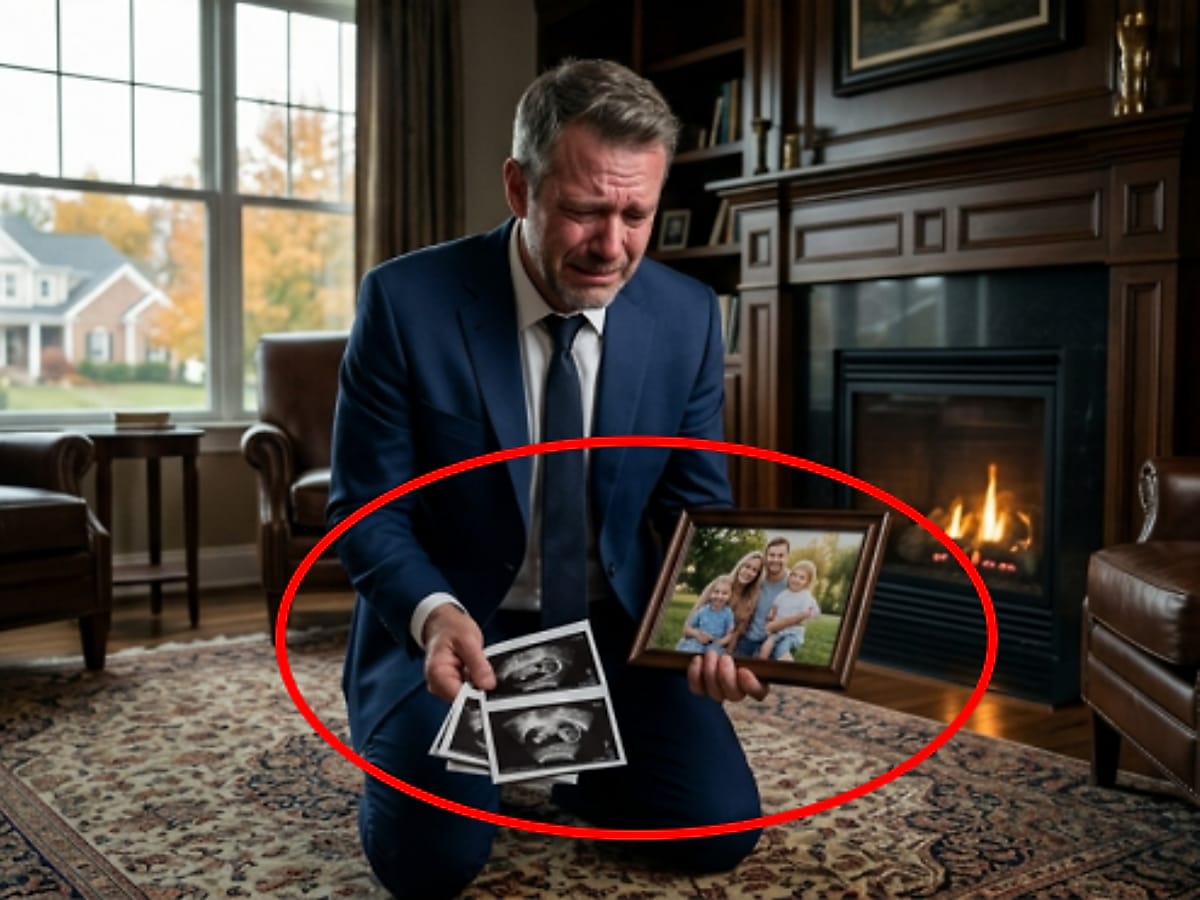
Part 1: The Comfortable Life I Threw Away
I used to think the worst thing a man could do was betray his wife. I was wrong. The worst thing a man can do is betray his wife, then convince himself he is still somehow a good man.
My name is Daniel Harper. For fifteen years, people in our part of Ohio would have called my life settled, maybe even enviable. I owned a three-bedroom house, made payments on a Ford F-150, ran Saturday practices for my son’s Little League squad, and stood over a grill every Fourth of July like it was a sacred duty.
Nobody looking at me from a distance would have guessed anything was wrong.
Emily was the center of everything at home. She kept track of appointments, remembered school spirit days, and never once forgot to call my mother, even on the years I completely blanked. She made our house feel like a shelter, and somehow I convinced myself that shelter equaled dull.
We raised two kids together. Mason, twelve, was tall for his age, a little clumsy in that middle school way, and endlessly fascinated with baseball stats. Lily, eight, was loud, fearless, and torn between becoming a vet or running the entire country someday.
If anyone had asked whether I loved them all, I would have answered instantly. And I would have meant every word.
That is the part that still eats at me now. Loving them never once stopped me from doing the things that eventually tore our family apart.
The affair began the way these things usually do, one small line crossed, followed by a ready excuse. Her name was Vanessa Cole, an accountant at the same manufacturing plant where I supervised the floor. She laughed easily at my jokes, noticed when I got a haircut, and made me feel interesting instead of just tired.
At first it was only lunch together. Then texts after quitting time. Then drinks at a bar in Columbus following some regional meeting, where I told myself loneliness excused everything and she told me I finally deserved attention.
I knew exactly what I was doing wrong, every single time. I knew it deleting messages, inventing excuses about staying late, watching Emily glance up from folding laundry and ask why I smelled different. Knowing never once made me stop.
Vanessa gave me the opposite of what Emily gave me. Emily kept our life running smoothly. Vanessa asked questions about the dreams I’d buried years earlier.
That kind of attention becomes dangerous once a man starts feeling sorry for himself. Suddenly selfishness looks like survival, and betrayal starts to feel like finally choosing yourself for once.
For six months I lived split down the middle. In one version of my life, I packed lunches, sat beside Emily during Christmas Eve service, and helped Lily glue together a shoebox model of the Grand Canyon. In the other, I met Vanessa at cheap motels along the highway, told myself constantly this would be the last time.
Then, on a wet Thursday in March, my phone rang while Vanessa was crying on the other end. I sat parked outside a Home Depot, waiting on curbside mulch Emily had ordered for the flower beds. Her voice shook so hard I could barely follow her words.
“Daniel,” she said, “I’m pregnant.”
For a second the whole world shrank down to rain hitting my windshield. People pushed orange carts through the lot outside, completely unaware that my life had just cracked open. My very first thought wasn’t joy or guilt.
It was simply, I’ve been caught.
I asked if she was certain. She said three separate tests had already confirmed it, and a doctor’s appointment was booked. Then came the line that changed everything.
“It’s your son.”
I still can’t fully explain why I believed her that fast. Maybe I needed the affair to mean something bigger than weakness. Maybe a baby made betrayal feel less like a choice and more like destiny.
Vanessa told me she planned to keep him, that motherhood had always been her dream, that raising a child alone terrified her. She said if I truly loved her, I’d do the right thing.
People love that phrase when they want desire dressed up as virtue.
I drove home that evening with mulch in the truck bed and a secret sitting heavy in my chest. Emily stood in the kitchen stirring chicken noodle soup because Lily had a sore throat. Mason sat at the table doing homework, tapping a pencil like a metronome.
“Long day?” Emily asked.
Looking at her tired, familiar face under the kitchen light, I nearly confessed everything right there. Part of me wanted to drop to my knees and ask her to hate me less than I deserved. But cowardice knows how to hide quietly, and it survived that night too.
“Yeah,” I said. “Long one.”
For two weeks after that, I drifted through my own house like something already gone. Vanessa texted nonstop, baby names, doctor visits, nursery ideas pulled from Pinterest. She spoke about “our son” so naturally the phrase eventually settled into my brain uninvited.
Emily noticed my distance immediately, of course. She had known me since I was twenty-seven, back when I still had hair worth complaining about and ambitions big enough to embarrass me.
One night, after the kids were asleep, she found me standing motionless in the garage. The smell of motor oil and old grass hung in the air. Wrapping her cardigan tighter, she asked, “Daniel, are you having an affair?”
The bluntness stung, not because it was unfair, but because it left no graceful exit.
I turned away, rubbing both hands over my face.
“Emily,” I said, “I messed up.”
She didn’t scream right away. That silence hurt worse. She just stood there, like her body was refusing what her ears had just heard.
“How long?” she asked.
I told her six months. I left out the baby at first, some pathetic part of me hoping confession could arrive in gentler pieces.
But Emily always knew when there was more.
“What else?” she asked.
I remember the hum of that old garage fridge. I remember a spider web hanging above Mason’s outgrown soccer cleats. I remember thinking silence might make the truth disappear if I waited long enough.
“She’s pregnant,” I said. “She says it’s mine.”
Emily sat down on the step leading indoors. She didn’t cry, and somehow that made me feel even smaller. Color drained from her face, but her eyes never left mine.
“She says?” Emily repeated.
I nodded.
“And you believe her?”
I wanted to claim confusion, uncertainty, complication. Men like me often mistake complication for innocence.
“Yes,” I said. “I think so.”
That moment cost me my wife, though nothing legal had happened yet. Something inside her simply shut, like a door closing on a house that used to belong to me too.
She stood slowly. “Then you need to leave.”
I spent that night at a Hampton Inn off I-71, in a room smelling faintly of carpet cleaner and stale coffee. Vanessa called three times. I let them all ring out. Emily didn’t call once.
The next morning Mason sent me a single line: Mom said you’re staying somewhere else.
I stared at those words until my eyes burned. Every reply I typed felt either too small or too honest. Eventually I settled on, I love you, buddy. We’ll talk soon.
He never responded.
Within a week, everyone knew something had shifted. In small towns, gossip travels through school pickup lines and church hallways and produce aisles at Kroger. Nobody said a word directly, but eyes lingered on me a half second too long.
Vanessa asked me to move into her apartment near downtown Dayton, above a bakery that baked cinnamon rolls every morning. She promised it would feel romantic, starting fresh while saving toward a real house together.
I told her I needed time. She said babies don’t wait around for men to feel ready. Then she cried, and I packed a bag anyway.
The first night there she lit candles and made spaghetti from a jarred sauce. She spoke about our future like it was already decided. If the baby was a boy, she wanted to name him Noah, because it meant rest.
Rest. I nearly laughed at how cruel that word felt in that moment.
My phone stayed face down on her table. Emily texted only about practical matters, school schedules, bills, custody days. Her politeness cut deeper than anger ever could have.
Vanessa noticed me watching the phone. “You can’t stay half in that old life,” she said.
“That life is my family.”
She placed a hand over her stomach, still flat at that point. “This is your family too.”
Desperate to still believe some honorable version of myself existed, I chose the baby, or really, the story Vanessa had built around him. I told myself I was finally stepping up.
Deep down, though, I understood I was only stepping farther from the people who had trusted me first.
Part 2: The Family I Chose to Lose
The first time I saw my kids after the move, we met at a Panera Bread halfway between the old house and Vanessa’s apartment. Emily wanted neutral ground, and honestly, that embarrassed me even as I understood exactly why.
Mason kept his cap pulled low. Lily clutched a stuffed rabbit and refused to let go of Emily’s hand. When I reached to hug them, Lily stepped behind her mother instead.
That single step hurt worse than any shouted insult could have. I had once taught that little girl to ride her bike in our own cul-de-sac. Now I had somehow become something she needed shielding from.
Emily looked worn but composed, her hair cut shorter, which somehow made her feel even further away. She handed me Lily’s allergy medicine and a folder with Mason’s baseball schedule.
“Two hours,” she said. “Please don’t make this harder on them.”
I wanted to tell her she still looked beautiful, wanted an apology large enough to reverse time. Instead I just nodded like a stranger accepting paperwork.
Inside, Mason picked at his turkey sandwich across from me. Lily colored so hard on a kids menu that the crayon snapped in half. I tried the usual questions, school, friends, baseball, anything ordinary.
Finally Mason looked up. “Is it true?”
I knew exactly what he meant, but I made him say it anyway, still holding onto cowardice. “Is what true?”
“That you got some lady pregnant.”
Lily’s crayon froze mid stroke. My chest tightened. Around us, people ordered soup and iced tea, oblivious that lives could unravel this quietly.
“Mason,” I said carefully, “adult relationships get complicated.”
He stared back with a disgust no twelve-year-old should carry. “That’s what people say when they don’t want to admit they messed up.”
I had nothing to offer him. He was twelve years old and already more honest than I’d managed to be in months.
Lily whispered, “Are you getting a new kid?”
I shut my eyes briefly. “No one could ever replace you two.”
“But you left,” she said.
Three words, no shouting behind them, just plain truth.
After that visit, I sat parked outside for twenty minutes before heading back to Vanessa’s. My knuckles ached against the wheel. For the first time I wondered if doing right by one child meant becoming a monster to the two I already had.
Vanessa was waiting when I got home, having ordered tiny gray sneakers online with white laces, no bigger than my palm.
“Aren’t they precious?” she asked.
Looking at those shoes, something twisted inside me. I wanted the joy fathers are supposed to feel when new life arrives.
Instead I felt trapped.
Over the following months my life split neatly into calendars and legal paperwork. Emily filed for separation first, then divorce. Documents landed at Vanessa’s address, and watching my marriage reduce to case numbers made me physically ill.
We split bank accounts, bills, custody time, and furniture. Emily kept the house, obviously best for the kids, and I agreed since it felt like the least I owed. My tools, clothes, and boxes of photographs went into a storage unit costing $89 a month.
Each box felt like evidence against me. Mason’s kindergarten Father’s Day card. Lily’s hospital bracelet. A framed beach photo from South Carolina, both of us barefoot and sunburned, laughing like nothing could ever touch us.
Vanessa disliked when sentiment crept in. She said dwelling on the past hurt her and the baby, claimed Emily was manipulating the kids to punish me, insisted I stop letting guilt steer everything.
At first I defended Emily. Then Vanessa cried, and I softened every time, since she had mastered turning my guilt into something that supposedly wounded her.
Her pregnancy consumed everything. She wanted a bigger place, a new SUV, a baby shower, and legal assurance I’d appear on the birth certificate. She reminded me constantly that Ohio law took paternity seriously, and children deserved proper support.
She wasn’t wrong about that principle in general. Support matters. Fathers owe responsibility.
But responsibility built on a lie is really just another form of harm.
I once suggested a paternity test before the birth, trying to frame it as practical rather than suspicious. Vanessa’s expression shifted instantly, telling me I’d stepped somewhere forbidden.
“You think I’m lying?” she said.
“No, I just think given everything—”
“Given everything?” she snapped. “You mean given that I ruined your perfect little life?”
“That’s not what I said.”
“But that’s what you mean.”
She cried for an hour straight, warning that stress could hurt the baby, that demanding a test proved I never really loved her.
So I dropped it entirely.
That remains one of my deepest regrets. Not because a test alone would have saved everything, but because delayed truth becomes a weapon eventually. The longer a lie survives inside a family, the more damage it learns to cause.
Her baby shower happened in July, held at a community center her cousin rented for $250. Blue balloons, plastic tablecloths, footprint cupcakes, and a banner reading Welcome Baby Noah decorated the room. Vanessa wore a fitted dress and posed with my hand on her stomach for every photo taken.
Her relatives treated me like a groom, joking about sleepless nights and promising fatherhood would keep me young. I smiled until my cheeks hurt.
No one from my side showed up. My parents said they couldn’t celebrate something built on Emily’s and the kids’ pain. My mother cried on the phone, insisting she still loved me but no longer recognized my decisions.
Emily obviously wasn’t there either. Mason had a baseball tournament that same weekend, and Lily had a dance recital. I missed both, since Vanessa insisted the shower was “for our son” and claimed my absence would humiliate her otherwise.
That night Mason texted me a video of his double to left field, nothing written alongside it, just footage.
I watched it hiding in Vanessa’s bathroom, shower running so she wouldn’t hear me crying. My son had glanced toward the stands after reaching second base, clearly searching for someone who wasn’t there. I replayed it until my phone dropped to 4%.
The divorce finalized that September. We stood under fluorescent courthouse lights while a judge asked routine questions in a flat, practiced tone. Emily wore a navy dress I’d bought her years earlier for an anniversary dinner in Cincinnati.
When the judge declared the marriage dissolved, Emily exhaled like she’d been holding her breath for months straight. I hoped she’d look at me.
She didn’t.
Outside, I followed her toward the parking lot. “Emily,” I said.
She paused near her minivan without turning.
“I’m sorry.”
She finally faced me, sadness etched deep enough to nearly break me. “I believe you’re sorry, Daniel. I just don’t think you understand what for.”
“I lost control.”
“No,” she said quietly. “You made choices. Repeatedly. That’s different.”
Cold wind swept the lot, carrying wet leaves and exhaust fumes. Standing there in my suit, divorced at forty-three, about to have a child with another woman, I was still somehow shocked at how permanent consequences could feel.
Two weeks later, Vanessa’s labor began.
Her water broke at 3:18 in the morning. She shook me awake, panicked and sweating. I drove her to Miami Valley Hospital with the hazards flashing despite empty roads.
Labor stretched fourteen hours. I fed her ice chips, answered her family’s texts, and tried not to think about watching Emily deliver Mason and Lily years earlier, back when I felt young, terrified, and grateful.
This time I felt like a man standing at a cliff’s edge, unsure whether the ground would even hold.
Noah arrived at 5:47 p.m., seven pounds, two ounces. Dark hair, furious cry, tiny fists opening and closing against the air. The nurse placed him into Vanessa’s arms, and she sobbed instantly.
Then she looked toward me. “Meet your son.”
I stepped closer, and for a moment nothing else in the world existed. Just a baby, innocent, warm, alive.
Whatever mistakes brought him here, he’d committed none of them himself. I brushed his cheek with one finger, shame and tenderness colliding somewhere inside my chest. “Hi, Noah,” I whispered.
Paperwork followed quickly. Birth certificate forms. Insurance details. Acknowledgment of paternity.
I hesitated with the pen hovering above the page.
Vanessa noticed instantly, her eyes sharpening. “Daniel.”
Noah slept nearby in his bassinet, making small helpless sounds. Emily’s old question echoed in my head. And you believe her?
I signed anyway.
That signature didn’t just put ink on paper. It sealed a lie I had chosen to inhabit fully. For a while, I convinced myself that loving Noah enough might make sense of everything else I’d wrecked.
Part 3: When the Story Started Splitting Open
For weeks after Noah’s birth, sleep became a rumor. Vanessa recovered slowly, and the baby cried nightly between midnight and 4 a.m. I relearned how infants can strip grown adults of every ounce of control.
I warmed bottles, changed diapers, paced circles through the apartment while the bakery downstairs began prepping dough before dawn. Cinnamon mixed with formula and pure exhaustion in the air. Sometimes I studied Noah’s tiny face, searching for myself somewhere in it.
People always claim newborns resemble everybody and nobody at once. That excuse became my favorite. When Vanessa’s aunt insisted he had my nose, I laughed too loudly and let the comfort settle in.
Doubt crept in quietly at first.
A doctor mentioned Noah’s blood type during a checkup, and something nagged at me. I searched charts online late one night, then closed the browser, ashamed of becoming the kind of man who researched biology while his girlfriend slept beside him.
Then a coworker named Marcus pulled me aside one afternoon. He’d worked there ten years and typically kept out of other people’s business out of respect. That day he looked genuinely uneasy.
“Dan,” he said, “I really don’t want to get involved.”
Whenever someone opens with that line, they already are.
“What’s going on?”
He glanced toward the break room. “Before things got serious with you two, Vanessa was seeing somebody from shipping.”
My stomach dropped instantly. “Who?”
“Tyler Grant.”
I knew Tyler. Twenty-nine, loud, charming, and he’d left the company around the same time Vanessa announced her pregnancy. Word around the plant said he’d moved to Nashville chasing something new, usually code for running from something old.
“You’re certain?” I asked.
Marcus sighed. “I’m certain they were involved. Timing, I couldn’t tell you.”
I thanked him, but my own voice sounded distant to me. The rest of that shift I walked past machines pounding and hissing while replaying every argument Vanessa had ever won against me using tears.
That evening, once Noah finally slept, I brought it up. Vanessa folded tiny onesies on the couch, some forgettable reality show flickering behind her. Her expression went blank the second Tyler’s name left my mouth.
“Who told you that?”
“That’s not an answer.”
She tossed a onesie toward the laundry basket. “That was before you.”
“Before me, or overlapping with me?”
“Why bring this up now?”
“Because I signed legal documents based on what you told me.”
She stood, shaking with anger. “Unbelievable. I gave birth to your child, and you’re listening to factory rumors?”
“Is there any chance Noah isn’t mine?”
The question hung there like smoke refusing to clear.
She didn’t answer right away.
That silence told me more truth than she had in nearly a year combined.
I felt the floor tilt beneath me. “Vanessa.”
She started crying, though this time it didn’t move me quite the same way. I’d watched those tears close too many doors already. She claimed confusion, said Tyler meant nothing, said dates blurred together.
Dates rarely blur when a child’s paternity hangs in the balance. They only blur when the truth becomes inconvenient.
I told her I wanted testing. She refused outright, reminding me I’d already acknowledged paternity legally, that abandoning a scared baby wasn’t something I could just walk away from.
That word, abandon, landed exactly where she aimed it. My own children already believed I’d abandoned them once.
But something inside me had shifted permanently. Guilt can weaken a man, sure, but enough guilt eventually makes him desperate for one clean, undeniable truth. I called an attorney the next morning.
His name was Robert Klein, a family law attorney working near the courthouse, wire rim glasses, careful sentences that somehow made things feel serious and survivable at once. I told him the whole ugly version, as much as I could say without choking on it.
He leaned back. “You signed an acknowledgment of paternity?”
“Yes.”
“You’re listed on the birth certificate?”
“Yes.”
He tapped his pen against a legal pad. “Then this isn’t a simple home kit situation. You need real legal guidance before acting. Paternity laws differ by state, deadlines matter, and courts prioritize the child’s best interest above almost everything.”
I felt like I’d swallowed rocks. “So even if he isn’t biologically mine…”
“You could still hold legal responsibility unless paternity gets properly challenged and the court agrees to it.”
I stared out his window at flags hanging along the downtown street, ordinary people feeding parking meters, unaware someone upstairs was learning exactly how expensive a lie could become.
Robert advised documentation, patience, avoiding public accusations, staying civil. He said twice not to punish the child for adult failures.
I understood why he repeated it. Noah hadn’t asked for any of this.
But his innocence didn’t erase the damage already spreading. It only made carrying that damage harder.
When Vanessa received notice about the court-ordered test, she exploded, calling me cruel, unstable, obsessed with my ex-wife. She claimed Emily had turned me against her, absurd considering Emily barely spoke to me those days.
Then Vanessa did something I never expected. She contacted Emily directly.
I found out when Emily called me for the first time in months, voice frozen solid. “Why is that woman telling me I’m the reason you’re abandoning your own baby?”
I closed my eyes. “Emily, I’m sorry, she never should have reached out to you.”
“What is happening, Daniel?”
I admitted there were questions surrounding paternity.
Silence stretched between us.
Then Emily laughed once, without any humor behind it. “So you destroyed our family for a baby who might not even be yours.”
Hearing it stated so plainly made the truth unbearable.
“I don’t know yet,” I said.
“No, Daniel. You didn’t know back then either. That was always the problem.”
She hung up on me.
After that, Mason stopped texting entirely. Lily spoke only during scheduled calls, answers shrinking down to yes, no, school’s fine.
I attended games and events whenever I could, standing at the edge of crowds like someone without a country to belong to. Emily never explicitly told me to stay away.
She didn’t need to say it out loud.
One cold Saturday in November, I went to Mason’s fall scrimmage. Parents cradled coffee cups with both hands, breath visible in the gray morning air. Mason pitched two solid innings, striking out four batters clean.
Afterward I approached him near the dugout. “You looked great today.”
He shoved his glove into the bag. “Thanks.”
“I’ve been trying to reach you.”
“I know.”
I swallowed hard. “Mason, I’m still your father.”
He turned toward me then, eyes red rimmed. “Then why did you treat us like we were optional?”
I had no defense ready. A decent father would have had one. I had absolutely nothing.
“I made a terrible mistake.”
“You keep saying that like it happened once.” His voice cracked apart. “It happened every single day.”
He walked off, cleats clicking against the concrete.
Testing finally happened in December, ordered by the court despite Vanessa’s fury, though she had no choice but to comply. At a clinic, a technician swabbed both my cheek and Noah’s.
Noah was almost three months old by then. He smiled that week for the first time, a sudden gummy grin appearing while I made some ridiculous face at him. I hated how much I loved him already.
That admission still feels difficult, but it’s completely true. I loved the baby sitting in my arms while fearing whatever truth waited inside an envelope somewhere. Part of me wanted him to be mine and not mine simultaneously.
If he was mine, the wreckage at least had a center holding it together. If not, I’d burned my own family down over someone else’s secret entirely. Either answer promised pain.
Results arrived two weeks before Christmas.
Robert called first. I sat parked outside a gas station, coffee gone cold, snow gathering on the windshield glass. His gentle tone told me everything before words even followed.
“Daniel, the test excludes you as biological father.”
Those words didn’t land instantly. They seeped in slowly, like cold water flooding a room. Excludes you.
“Are you sure?”
“Yes.”
I stared blankly at the dashboard. The truck still smelled like coffee, road salt, and the pine air freshener Lily once picked out, insisting my truck smelled like “old man.”
Robert kept talking through next steps, filings, timelines. I heard barely any of it. Something inside me was quietly collapsing in on itself.
Back at the apartment, Vanessa was waiting. She’d gotten the same call. Her face was swollen from crying, but no performance remained inside it this time.
“I’m sorry,” she said.
I stood in the doorway, snow melting off my coat. “Who is his father?”
She looked down at the floor.
“Vanessa.”
“Tyler,” she whispered.
There it was, one name, five letters, the man whose absence had somehow become my responsibility.
I laughed, not from humor, just because my body needed some release. “You let me sign his birth certificate.”
“I thought he was yours.”
“No,” I said. “You hoped he was.”
She cried harder, insisting Tyler had blocked her number, that fear had driven her decisions, that I seemed stable, kind, ready.
Ready. As though my marriage and children had simply been resources available for her spending.
I packed a bag that same night. Vanessa begged me to stay through Christmas at least. Noah slept in his crib wearing tiny reindeer pajamas. I stood over him a long while.
He wasn’t my son biologically. But he was a baby who knew my voice, who’d fallen asleep against my chest, who quieted whenever I hummed that same off-key lullaby I once sang to Lily.
Leaving felt cruel. Staying felt like disappearing entirely from myself.
I whispered, “I’m sorry, little man.”
Then I walked out the door.
Part 4: Paying for a Truth I Should Have Demanded Sooner
I spent that Christmas alone in a rented room behind a retired couple’s house in Kettering, just a twin bed, a microwave, and a window facing an old wooden fence. Mr. and Mrs. Alvarez charged $650 a month and quietly pretended not to notice how broken I looked coming home each night.
Emily kept the kids Christmas morning. I saw them later that afternoon, though Mason refused entirely. Lily stayed forty five minutes, mostly because Emily gently encouraged her to.
I gave her a Lego set, a purple winter coat, and a book about national parks. She thanked me politely, like a child addressing a distant relative. When offered hot chocolate, she said she wasn’t hungry.
Before leaving, she glanced around my small rented room. “Do you live here now?”
“For now.”
“Where’s the baby?”
I sat on the bed’s edge. “Noah isn’t my baby, sweetheart.”
Her forehead wrinkled with confusion. “But you said he was.”
“I thought he was.”
She looked at me the way no eight-year-old should ever have to look at a parent. “You believed her over Mom?”
That question cracked something wide open inside me.
I wanted to explain shame, denial, manipulation, adult confusion. But she was eight years old.
So I gave her the only answer that actually mattered. “Yes. And I was wrong.”
She nodded slowly, hugging the Lego box tighter. “Mom cries in the laundry room.”
I covered my face with one hand.
“She thinks we don’t hear her,” Lily added quietly.
When Emily arrived to collect her, we walked toward the driveway together, snow crunching beneath our shoes. Emily left the engine running, warm exhaust fogging the cold windshield.
“Thank you for bringing her by,” I said.
Emily just nodded.
I wanted to mention the test results, though I suspected Vanessa had already spread the news somehow. Still, I told her plainly. “Noah isn’t mine.”
Her face barely shifted. Maybe her shock reserves were already spent completely.
“I know,” she said.
“I’m sorry.”
“You keep saying that.”
“I don’t know what else to say.”
She glanced past me toward the tiny room I was renting, then back to my face. “Maybe stop hunting for the right words and start becoming someone your kids can trust again.”
Then she drove off.
That single sentence became the first genuinely useful instruction I’d received in over a year.
By January, Robert filed the necessary paternity motions. None of it moved quickly or painlessly. Every step reminded me that signatures carry weight, deadlines matter, and courts aren’t built for cleaning up emotional wreckage efficiently.
Vanessa fought it initially, claiming I was the only father Noah had ever known, that biology shouldn’t erase months of caregiving. Part of me actually agreed, which somehow made everything feel worse.
Eventually Tyler was tracked down in Tennessee, and a court-ordered test confirmed him as Noah’s biological father. Vanessa’s tone shifted then, not from newfound morality, but because she’d finally found someone else to hold accountable.
I wish I could claim victory in any of it. I felt none. There’s no winning in proving a child belongs to someone else once you’ve already lost your own children in the process.
The court eventually released me from future obligations, though not before thousands of dollars disappeared from accounts I couldn’t afford to drain. Legal fees piled onto a credit card carrying 22% interest. I sold my motorcycle, canceled every subscription, and picked up weekend overtime shifts whenever possible.
Every dollar spent felt like tuition for a lesson I never should have needed in the first place.
Vanessa moved that spring, relocating near her sister in Indianapolis, according to Marcus. Tyler reportedly ended up paying child support after his own court battle, though I never confirmed the details myself.
I never saw Noah again after that.
Some nights I wondered whether he’d remember me in some wordless way, the smell of my jacket, the rhythm of my walk, that terrible lullaby I sang. Then I reminded myself children heal best when adults stop dragging them through adult confusion.
Missing him remained complicated. I had no legal claim to him, but grief doesn’t check paperwork before settling in.
Still, the deeper grief belonged to my own family.
Mason and Lily didn’t return simply because the truth surfaced eventually. That’s something worth understanding clearly. Being deceived never erased what I’d already done before deception entered the picture.
I had still cheated. Still lied repeatedly. Still moved out. Still missed games, recitals, bedtime routines, and countless ordinary Tuesdays children remember far longer than parents assume.
For months afterward, I tried too hard, sending lengthy apology texts Mason ignored completely. I bought gifts Lily never asked for. I left voicemails for Emily that sounded closer to begging than actual accountability.
Eventually Emily told me to stop entirely.
We met at a coffee shop near her office, exposed brick walls, $6 lattes on the menu. She looked stronger than the last time I’d truly looked at her, not happier exactly, but steadier in a way that no longer required my presence.
“You’re overwhelming them,” she said.
“I’m trying to fix things.”
“You can’t force forgiveness on your own timeline.”
“I’m not forcing anything.”
“You are,” she said gently. “Every apology expecting comfort in return becomes another burden they carry.”
I sat back, stung because she was completely right.
“So what do I do instead?”
“Show up exactly when you say you will. Stop making promises you can’t keep. Don’t blame Vanessa in front of them. Don’t turn yourself into the victim here. And get help.”
“Therapy?”
“Yes, Daniel. Therapy.”
I nearly argued. Men like me often avoid therapy, preferring problems solvable through tools or money or silence. But my silence had already cost more than enough.
So I finally went.
My therapist, Dr. Patel, kept two plants in her office, a gray couch, and a tissue box positioned within easy reach. At first I talked only about Vanessa, her lies, her manipulation, her endless tears.
Dr. Patel listened patiently, then said, “Vanessa’s choices certainly mattered. But you seem most animated discussing her wrongdoing. What happens when we shift focus toward yours instead?”
I resented therapy for about six full seconds.
Then I kept showing up anyway.
Week after week, we unpacked the story I’d told myself repeatedly, that I’d been neglected, misunderstood, trapped somehow. That Emily’s competence made me feel unnecessary. That Vanessa made me feel alive again.
Dr. Patel refused to let feelings serve as excuses. She taught me the real difference between explaining behavior and justifying it outright. She made me sit inside the uncomfortable fact that I’d wanted admiration without any accompanying responsibility.
I started writing letters to my children, letters I didn’t send immediately. Dr. Patel insisted apologies stay clean, never demanding forgiveness as payment. That sounded simple until I actually attempted it.
My early drafts overflowed with “but.” I’m sorry, but I was confused. I’m sorry, but Vanessa lied. I’m sorry, but I never stopped loving you both.
Dr. Patel crossed out nearly every single “but.”
Eventually I produced something better.
Mason, I hurt you by choosing my own wants over your safety. You did absolutely nothing to deserve that. I won’t ask you to comfort me, but I’ll keep showing up respectfully if you’ll allow it.
Lily, I’m sorry for making you feel replaceable. You never were. I was wrong to make choices that ever made you question that.
I showed the letters to Emily first, asking whether they seemed appropriate, something entirely new for me, asking instead of forcing. She read them sitting in her minivan while I waited outside in the cold.
Handing them back, her eyes looked wet. “These are better.”
“Should I give them to the kids?”
“I’ll ask first.”
Mason refused his outright. Lily accepted hers but didn’t mention it again for weeks afterward.
Progress, I learned, often stays invisible while it’s actually happening.
Spring arrived slowly that year. I rented a small two-bedroom apartment so the kids would have somewhere to stay if they ever wanted that. I furnished it with secondhand pieces from Facebook Marketplace and let Lily pick out bedding online, even though she still hadn’t agreed to sleep over.
She chose yellow sheets covered in white stars. That felt like real hope, or at least permission to hope again.
Mason allowed me to attend his games, though he wanted no rides, no meals, no conversations afterward. So I simply came, sat in the bleachers, cheered at a reasonable volume, and left whenever he did. It remained the hardest easy thing I’d ever done.
Once, after a May game, he nodded at me across the parking lot. Just a nod. I drove home and cried like I’d been handed some sort of medal.
Emily slowly began trusting me with small logistics again. A dentist visit here. A school pickup there. Dropping off Lily’s forgotten backpack once.
Each small task felt sacred precisely because it was ordinary. Trust rebuilds itself through small errands far more often than grand speeches ever manage.
Still, I held no fantasy about Emily and me reconciling. She’d built an entirely new shape of life without me in it, and I had no right disturbing that with leftover regret. Sometimes love means finally respecting a boundary you forced someone else to build.
Then, in late June, Emily called.
Her voice sounded calm but tired. “Mason wants to talk to you.”
I sat down immediately, knees suddenly unreliable. “Okay.”
“Not tonight. Saturday. He wants you to take him to the batting cages.”
The batting cages. That had been our place once, spending $20 in tokens while arguing over his swing mechanics between sips of Gatorade.
“I’ll be there,” I said.
“Daniel?”
“Yeah?”
“Don’t make this about you.”
I closed my eyes. “I won’t.”
Part 5: Small Pieces, Put Back Slowly
Saturday morning I arrived ten minutes early at the batting cages in Centerville. Cut grass, rubber mats, and fried snack bar food filled the air. I brought two bottles of blue Gatorade in a cooler, exactly like old times.
Mason arrived with Emily, who waited in the car. He climbed out wearing cleats and shorts, guarded expression firmly in place, noticeably taller than before.
“Hey,” I said.
“Hey.”
For the first half hour, we barely spoke. He hit from the medium speed cage while I watched through the fence. Metal cracking against ball echoed steadily through the morning.
His swing had changed, stronger now, though he was dropping his back shoulder slightly. The old version of me would have jumped in immediately, eager to feel useful.
This version kept quiet instead.
Eventually he stepped out, pulling off his helmet. “You’re not saying anything?”
“About what?”
“My swing.”
I smiled carefully. “Want me to?”
He shrugged. “Maybe.”
So I told him gently, keep his hands back, stop dropping his head, trust his hips more. He listened, stepped back inside, and ripped three straight line drives.
Afterward we sat on a bench near the lot, Gatorades sweating between us. He twisted his cap off and stared at the pavement silently.
“Did you love him?” he asked.
I knew instantly he meant Noah.
“Yes,” I said. “I did.”
He nodded slowly. “Even knowing he wasn’t yours?”
“Yes.”
“Then why was leaving us so easy?”
That question knocked the air straight out of me. I wanted to insist it hadn’t been easy, but that would have insulted him further. Kids don’t measure love by difficulty. They measure it by whether you stayed.
“It wasn’t because I loved you less,” I said. “I understand why it felt that way though. I was selfish and ashamed, and instead of facing what I’d done, I just kept making bigger mistakes.”
His jaw tightened. “Mom said not to blame Vanessa.”
“Your mom’s right. Vanessa lied about Noah, and that was wrong of her. But I broke our family first. Before she ever lied about that baby.”
He looked at me then, something shifting slightly, not forgiveness exactly, but maybe the first hint he believed I wasn’t dodging the truth anymore.
“I hated you,” he said.
“I know.”
“Sometimes I still do.”
“I understand.”
His eyes filled quickly, wiped away fast with the back of his hand. “You missed so much.”
“I know.”
“No, you really don’t.” His voice rose sharply. “You missed Mom crying. You missed Lily asking if she was bad somehow. You missed me pretending I didn’t care because everybody at school already knew.”
I sat completely still, letting each word land fully. That was my job now, not defending myself, not explaining, not collapsing so he’d feel forced to comfort me instead.
“You’re right,” I said. “I don’t know all of it. But I want to, whenever you’re ready to tell me.”
He glanced away. “Maybe.”
Maybe. Small word, but I held onto it carefully anyway.
That summer, Mason agreed to see me every other Saturday. Lily started coming for dinner on Wednesdays, arriving initially with a backpack full of activities so she wouldn’t need to talk much.
We made tacos since she liked building her own. She corrected how much cheese I used and announced my apartment needed “less sadness on the walls.” Then she drew a dog wearing sunglasses and taped it straight to my fridge.
I kept it there like fine art.
One evening she asked to see baby pictures of herself. I dug out an old photo box from the closet, the same one I’d packed leaving the house originally. We sat on the floor flipping through birthdays, vacations, Halloween costumes, kitchen disasters.
One photo showed Emily asleep on the couch with baby Lily resting on her chest. Lily touched it softly. “Mom looks young.”
“She was exhausted constantly,” I said. “But happy too.”
“Were you happy?”
I studied the photo. My younger self wasn’t pictured, but I remembered taking it, remembered believing I had everything already.
“Yes,” I said. “I just forgot how to appreciate it.”
Lily leaned against my shoulder for three whole seconds before pulling back and asking for ice cream. I didn’t mention the leaning out loud. Some gifts vanish the moment you point them out too fast.
Emily and I settled into a co-parenting rhythm, not friendship exactly, but no longer warfare either. Shared calendars, brief respectful messages, showing up together at school events without forcing the kids to pick sides.
At Lily’s third grade music performance, I sat three rows behind Emily. When Lily spotted us both in the crowd, she waved nervously with just two fingers. That small wave felt like a bridge slowly under construction.
Afterward, Emily let me take a photo with the kids. Mason stood stiffly, Lily grinned wide, and I tried not to look too desperate. Emily snapped it on my phone and handed it back without a single word.
That night I stared at the picture for a long while. We weren’t whole. But we were sharing a frame again.
By September, one year after my divorce finalized, Vanessa messaged me through Facebook, since I’d blocked her number long before. Her profile picture showed Noah as a toddler, sitting inside a pumpkin patch somewhere.
The message read: I know you hate me, but Noah asks about “Da.” I don’t know what to tell him.
I sat holding my phone for a long stretch of silence.
Part of me wanted anger. Another part wanted to drive straight to Indianapolis and hold that little boy who once slept against my chest. A quieter, wiser part reminded me every adult impulse needed filtering through one question: what actually helps the child?
I called Robert first for guidance, then talked things through with Dr. Patel. After days of thinking, I wrote Vanessa a short reply.
I don’t hate you. But I can’t be part of Noah’s life in a way that creates confusion or instability for him. Please work with his legal father and a counselor if needed. I wish him safety and love.
I read it ten times before hitting send. It sounded colder than my actual feelings, but boundaries sometimes require clarity that emotions rarely offer. She never responded.
I cried that night, not just for Noah, but for every version of my life that no longer existed anywhere.
Healing never arrived like some tidy movie ending. Emily didn’t come running back. Mason didn’t suddenly call me Dad with warmth flooding his voice. Lily still occasionally asked questions that made me feel like I was bleeding internally.
But things did shift.
Mason started sending baseball clips again, sometimes adding commentary like Watch this swing or This ump needs glasses. I learned to respond normally instead of flooding him with gratitude.
Lily slept over for the first time that October, bringing the same stuffed rabbit she’d hidden behind Emily’s legs at Panera a year earlier. At bedtime she asked me to check the closet.
“For monsters?” I asked gently.
She looked embarrassed. “Just check anyway.”
So I checked, then checked under the bed too, without joking about it. She fell asleep with her yellow star sheets pulled up to her chin.
I stood in the hallway afterward, feeling the fragile weight of being trusted again.
Thanksgiving proved complicated. Emily hosted at the house, and I wasn’t invited, which felt entirely fair. My parents went since the kids wanted them there, while I spent the afternoon volunteering at a downtown church meal.
I served turkey, mashed potatoes, green beans, and pumpkin pie to people who’d lost job
Disclaimer: Names and identifying details have been changed. This story is dramatized for entertainment purposes.
