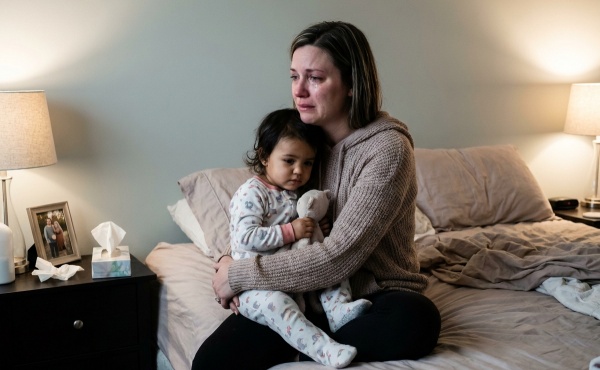
Every Tuesday Night I Tucked My Daughter In and Thought My Husband Was Working Late — He Was With My Maid of Honor. When She Finally Confessed, I Was Already Done….
Part 1: The Woman Who Knew Everything About Me
Her name was Cassidy Monroe, and she had been the kind of friend that most people spend their entire lives hoping to find and never quite do.
We met during our junior year at the University of Texas at Austin, assigned to the same study group for an economics course that neither of us particularly wanted to take. She showed up the first day with two coffees — one for herself and one for whoever arrived looking like they needed it most. I arrived looking like I needed it most. She handed me the cup without being asked, and we talked for three hours about everything except economics, and by the end of that semester we were the kind of friends who finish each other’s sentences and share the kind of silence that doesn’t require filling.
That was fourteen years ago.
In the fourteen years between that economics study group and the Tuesday evening I am about to describe, Cassidy Monroe had been present for every significant moment of my life. She was there when my father had his first heart attack and I drove from Austin to San Antonio at two in the morning and she drove with me without being asked. She was there when I got the promotion at the marketing firm where I had worked for six years, bringing a bottle of champagne to my office at five o’clock on a Friday. She was there when I met my husband, when I fell in love with my husband, when I married my husband — standing at the front of a vineyard outside Austin in a dress she had helped me choose, holding flowers she had helped me pick, reading a passage about loyalty and chosen family that she had written herself.
She gave a speech at the reception that made my mother cry. She talked about what it meant to watch someone you loved find their person. She used the word “irreplaceable””. I have thought about that speech many times in the past sixteen months.
My name is Lauren Calloway. I am thirty-four years old, and I am a senior marketing strategist at a firm in downtown Austin with a daughter named Willa who is five years old and believes with complete conviction that the correct number of stuffed animals on a bed is all of them. I live in a craftsman house in the Travis Heights neighborhood, three blocks from a coffee shop I have been going to since graduate school, in a city I have loved my entire adult life.
I had also been married for six years to a man named Brett Calloway, a civil engineer with a project management firm in North Austin, who was charming and capable and had a laugh that filled whatever room he was in and who had been, for the last year of our marriage, spending his Tuesday evenings at a vacation rental on the east side of Austin with my best friend.
I did not know this on the first Tuesday.
I knew it by the fourteenth.
The first sign was the kind of thing that only registers in retrospect — a Tuesday in October when Brett came home later than expected smelling like a restaurant I had not been to, with an explanation about a project meeting that ran long that was slightly too detailed in the way that lies are always slightly too detailed. I filed it in the back of my mind the way you file things you are not ready to examine and went back to the book I had been reading while Willa slept.
The second sign was a text notification I saw by accident two weeks later — not the content, just the name of the sender on Brett’s lock screen as it lit up on the kitchen counter while he was in the other room. The name was Cassidy. The time was 9:47 p.m. on a Tuesday.
I put the phone back exactly where it had been.
I went upstairs and checked on Willa, who was asleep with her arms thrown wide in the specific, trusting sprawl of a child who has never had reason to be afraid of the dark.
I stood in her doorway for a long time.
Then I went to my own room, sat on the edge of the bed, and began, very quietly, to pay attention.
Part 2: Fourteen Months of Paying Attention
I want to be precise about something: I did not become a suspicious person overnight.
I became a methodical one.
There is a difference, and the difference matters. Suspicion is reactive — it chases things, misreads things, creates confrontations before it has the information to sustain them. Methodology is deliberate. It observes, documents, and waits until the picture is complete before deciding what to do with it. I had spent six years in marketing, which is fundamentally the discipline of understanding what is actually happening versus what people want you to believe is happening, and I applied that discipline to my own life with the same rigor I applied it to client campaigns.
I started with patterns.
Brett’s Tuesday evenings had been irregular for years — sometimes a work dinner, sometimes a gym session, sometimes a beer with colleagues from the firm. But over the previous three months, they had become consistent in a way that irregular things don’t become unless something is organizing them. He left between six and six-thirty. He returned between nine-thirty and ten. He was always showered when he came home, which he explained as the gym, except the gym bag he carried out never came back smelling like a gym.
I noted the pattern without commenting on it.
I also noted that Cassidy, who typically texted me three or four times a week with the casual frequency of a decade-long friendship, had become slightly less available on Tuesday evenings specifically. Her responses came later. Her excuses — when she had them — were the same category of slightly-too-detailed that Brett’s had become.
In December, I hired a private investigator named Thomas Garrett, who operated out of a small office in South Austin and had the specific, useful quality of being completely unsurprised by anything. I told him what I had observed. He told me what documentation would require. I told him to proceed.
Thomas’s first report came back in January.
Brett had been meeting someone at a short-term vacation rental property on Cesar Chavez Street — a two-bedroom unit listed on a vacation platform under a name that was not his. The meetings were on Tuesday evenings, consistently between seven and nine-thirty p.m. Thomas had not yet identified the other party.
His second report identified her.
I remember the afternoon I opened the file — a Thursday in late January, sitting at my desk in the home office I used for client work, with Willa at school and the house quiet around me. The photograph was taken from a public street. It showed Brett walking toward the rental property entrance. Beside him, her hand on his arm, laughing at something he had said, was a woman I had known for fourteen years.
I sat very still.
Outside my window, a cedar waxwing was working through the berries on the possumhaw holly I had planted in the front yard two autumns ago. I had planted it specifically because cedar waxwings loved possumhaw berries, and I had been quietly pleased every winter when they arrived. That afternoon I watched one eat berries for four minutes and felt nothing except the specific, structural sensation of a floor giving way beneath something you had been standing on without knowing it was hollow.
I closed the file.
I texted Cassidy: Miss you. Lunch this week?
She replied in six minutes: Yes!! Thursday? I need to see your face.
I replied: Thursday works. Lenoir?
She replied: Perfect. Can’t wait.
I opened a new folder on my desktop, labeled it “Client Research Files,” and began saving everything Thomas sent me.
Over the following eight weeks, I built a record that would have impressed a paralegal. Fourteen Tuesday evening meetings documented with timestamps and photographs. A credit card statement showing charges at a restaurant on East Sixth Street on three of those Tuesdays — a restaurant Brett had mentioned to me as a place he wanted to try “sometime.” Phone records, obtained through legal channels, showing call patterns between Brett’s number and a number registered to Cassidy’s address. A timeline that covered eleven months and left very little room for alternative interpretation.
I also called an attorney named Patricia Huang of Huang Family Law in Austin, who had fifteen years of experience in Travis County divorce cases and the calm, organized energy of someone who understood that the difference between a good outcome and a bad one was almost always the quality of the preparation.
I told Patricia everything.
She listened without interrupting.
When I finished, she said: “You’ve been sitting on this for how long?”
“Eight weeks of documentation. Suspicions for about three months before that.”
“And your daughter is five.”
“Yes.”
“Then we do this carefully,” she said. “For her.”
“That’s exactly why I called you,” I said.
Part 3: The Lunch Where I Let Her Say It First
Cassidy arrived at Lenoir on a Thursday afternoon looking like a woman who had been carrying something heavy for a long time and had decided today was the day to put it down.
I recognized the look because I had been wearing a version of it for three months.
She was dressed carefully — more carefully than a casual lunch between old friends required — and she had that specific, over-composed quality of someone who has rehearsed a conversation so many times that the rehearsal has started to show through the performance. We ordered drinks. We talked about small things. Her job at the nonprofit in East Austin. Willa’s kindergarten class. A renovation project on my back porch that I had been planning since the fall.
The easy, practiced rhythm of fourteen years of friendship.
I let it run.
I let her steer the conversation the way she had been steering it since we sat down — toward something, circling it, approaching and retreating in the way of someone who has decided to jump but keeps looking down first. I had all the time in the world. I had been patient for three months. I could be patient for one more lunch.
She put her hands flat on the table.
I had seen her do that before — it was her tell, the physical signal that she was about to say something she had been holding.
“Lauren,” she said. “I need to tell you something, and I need you to know that I am more sorry than I have ever been for anything in my entire life.”
“Okay,” I said.
She looked at the table. Then at me. Her eyes were already filling.
“Brett and I have been seeing each other. For about a year. I know that there is nothing — there is no version of this where what I did is okay, and I’m not going to try to make it okay. I just couldn’t keep lying to you. You’re my best friend and I have been lying to your face for a year and I can’t—”
Her voice broke.
I waited until she finished.
Then I picked up my water glass, took a slow sip, and set it back down with the deliberate calm of a woman who had been waiting for this exact sentence for eight weeks and had decided, long before this lunch, exactly how she was going to respond to it.
“I know, Cass,” I said.
She blinked.
“What?”
“I know,” I said again. “I’ve known for a while.”
The color left her face in a single, visible wave.
I picked up my phone from the table beside my water glass. I opened the folder. I turned the screen toward her.
The first image was from Thomas Garrett’s second report — the photograph taken from Cesar Chavez Street, Brett’s hand at the small of her back, Cassidy laughing at something he had said. It was timestamped. It was clear. It was the kind of image that ends conversations about what did or did not happen.
I swiped.
The next image was a timeline document — eleven months of Tuesday evenings, each one with a date, a timestamp, and a corresponding notation.
I swiped again.
The credit card statement. The restaurant on East Sixth Street. Three separate Tuesday evenings.
I swiped again.
The phone record summary.
I put the phone face-down on the table.
“I didn’t come here to humiliate you,” I said. “I came because you called this meeting, and I thought you deserved to know that the confession you prepared was not going to land the way you expected it to.”
Cassidy stared at the table.
“Lauren—”
“You don’t need to explain it,” I said. “I have the explanation.”
I paid for my drink, left cash on the table, and walked out into the February afternoon on South Lamar. The sun was doing what Austin sun does in February — bright and slightly apologetic, like it knows it abandoned you for a few months and is trying to make up for it. I sat in my car for a few minutes without starting it.
Then I called Patricia Huang.
“It’s Lauren,” I said. “She confirmed it in person. File everything.”
Part 4: What Travis County Looks Like When You’re Prepared
Brett was served at his office in North Austin on a Monday morning in late February.
His project manager called our home number forty minutes later, which told me that Brett had been sufficiently destabilized to reach for support in the wrong direction. Brett called my cell phone six times between ten a.m. and noon. I let all six go to voicemail and forwarded them to Patricia without listening to them, because Patricia had advised me that anything Brett said in an unguarded phone call could be relevant and anything I said in response could complicate things.
Brett’s attorney was a man named Craig Ellison, a divorce attorney in the Arboretum area of Austin who was technically competent and strategically predictable in the way that Patricia had anticipated. His opening position was that the marriage had been “mutually deteriorating” for some time and that the division of assets should reflect that framing. It was the standard opening of a party who wants to establish shared fault before the other side can establish individual fault.
Patricia responded with the documentation.
Texas is a community property state, meaning assets acquired during the marriage are generally divided equally, but Texas Family Code also allows fault — including adultery — to be considered in property division. Patricia had built a case that was organized, specific, and difficult to argue with, because the best arguments are always the ones that don’t require argument — they simply present what happened and let the facts carry the weight.
The Tuesday evening timeline. The vacation rental documentation. The credit card records. The phone records. Eleven months of a pattern that was not ambiguous.
Craig Ellison’s “mutually deteriorating marriage” framing became considerably harder to sustain when presented alongside eleven months of documented Tuesday evenings.
The temporary orders hearing in Travis County was handled by Judge Sandra Okafor, who had been on the family court bench for twelve years and had the specific, composed attention of someone who has heard every version of every story and is still capable of reading the difference between a well-documented case and a well-constructed narrative.
She read the documentation.
She looked at Craig Ellison.
She asked two questions, both of which Craig answered in ways that did not help his client.
The temporary orders protected the marital assets, established a parenting schedule for Willa that prioritized stability and routine, and set the financial disclosure requirements that would govern the proceedings going forward.
I walked out of the Travis County courthouse that afternoon with Patricia beside me and the specific, grounded feeling of a woman who had prepared carefully and watched the preparation do its work.
“How are you feeling?” Patricia asked.
“Like I did the right thing slowly,” I said.
She nodded.
“That’s usually the only way to do it right,” she said.
The financial proceedings moved with the momentum of a case where one side has organized documentation and the other side has exposure. Brett’s firm had a partnership track that he had been on for two years, and the value of that professional trajectory was part of the marital estate calculation. The vacation rental charges — paid from a joint credit card on four separate occasions — were documented as marital waste under Texas law. The total was not enormous in isolation, but in the context of a property division negotiation, it was significant enough to shift the balance.
Cassidy and Brett did not last through the proceedings.
I heard this through the peripheral social network that survives most divorces — the mutual friends who feel obligated to update you on things you did not ask about. I received the information with the same neutrality I had been practicing for months. What happened between them after the marriage ended was not my story to carry.
I had Willa to think about.
I had always had Willa to think about.
Every decision I made during those sixteen months was filtered through the question of what kind of mother I wanted to be when this was over — not a perfect one, not an unbroken one, but a steady one. A mother who showed her daughter the difference between being hurt and being defeated.
Part 5: The Life I Built on the Other Side
The divorce was finalized on a Wednesday in June, four months after Patricia filed in Travis County.
I remember the day clearly because Willa had a field trip to the Barton Springs Pool that morning and came home sunburned across the nose and absolutely certain that she had seen a turtle the size of a dinner plate, which she described in detail for forty-five minutes while I made dinner and listened with the full, grateful attention of a mother who understands that a five-year-old’s certainty about turtles is one of the most stabilizing forces in the known universe.
The settlement gave me the Travis Heights house, which I had wanted not for its appraised value but because Willa’s handprints were pressed into the concrete of the back porch from the summer she turned three, and I was not prepared to leave those behind. I received an equitable share of the marital assets, adjusted for the documented marital waste. Brett received his professional accounts and the understanding that the partnership track he had been protecting throughout the proceedings was now something he would have to navigate without the domestic infrastructure I had been providing for six years.
The parenting plan gave Willa consistency — a structured schedule that kept her school routine intact, maintained her relationships with both parents, and built in the flexibility that real life requires. I had negotiated every clause with the attention of someone who understood that the document we were creating was not about Brett and me. It was about a five-year-old girl who deserved to grow up knowing that both her parents were reliable, even if they were no longer together.
Brett followed the parenting plan.
That was, in the end, the most important thing he did.
Cassidy sent me a letter in July.
It was four pages, handwritten on the kind of stationery she had always favored — heavy cream paper with a small monogram at the top. She wrote about shame and therapy and the specific, corrosive experience of having to see yourself clearly after a long period of looking away. She said she did not expect forgiveness. She said she hoped that someday I could remember the fourteen years before the last one without the last one making all of it feel false.
I read the letter twice.
I put it in a box in the closet.
Not the trash.
A box.
Because I am not sure yet what fourteen years of genuine friendship and one year of genuine betrayal add up to, and I have decided that I do not need to be sure right now. Some reckonings take longer than others, and forcing a conclusion before it is ready is just another way of lying to yourself.
My marketing practice grew in the months after the divorce in the way that things grow when you stop spending energy on the management of something that is failing. I had been carrying the emotional overhead of a marriage I knew was broken for at least a year before it ended, and that overhead had been costing me more than I had acknowledged. When it lifted, the work became cleaner, the thinking became sharper, and the clients I had been serving adequately began to be served exceptionally.
I took on four new clients in the fall, including a women-owned restaurant group in East Austin whose founder reminded me of myself ten years ago — talented, slightly overwhelmed, and very clear about what she was building. I gave her my full attention. She did not waste it.
I repainted the living room in September.
Not because the color was wrong.
Because I wanted to choose a color that was entirely mine, without negotiation or compromise or the subtle, accumulated weight of someone else’s preferences shaping my own. I chose a deep, saturated teal that my former self would have called too bold and my current self called exactly right. Willa came downstairs the first morning after it dried, stood in the doorway in her pajamas, and said with complete authority: “Mama, it looks like the ocean in here.”
“That’s what I was going for,” I said.
“I love the ocean,” she said.
“Me too,” I said.
People have asked me, since the story made its way through the Austin social circles that these stories always travel, whether I regret the way I handled it. Whether I wish I had confronted Brett and Cassidy the moment I saw her name on his phone screen. Whether sixteen months of careful, quiet preparation was worth the cost of living inside a marriage I knew was broken while I built the case to leave it properly.
My answer is always the same.
Willa.
Every decision I made during those sixteen months was made by a woman who understood that the way you end something is as important as the fact that you end it. A confrontation in October, before I had documentation, before I had legal counsel, before I understood the full financial landscape of my own marriage, would have given Brett and Cassidy the advantage of controlling the narrative. I would have been making decisions from the floor of an emotional crisis rather than the steady ground of informed preparation.
I had spent six years in marketing learning that the story you tell about something shapes what people believe about it. I was not going to let Brett and Cassidy tell the story of my marriage.
I was going to tell it myself.
With documentation.
On a Sunday morning in October, four months after the divorce was finalized, I sat on the back porch of the Travis Heights house with a cup of coffee and watched Willa chase a monarch butterfly through the yard with the absolute, joyful conviction of a child who believes she might actually catch it. The possumhaw holly I had planted two years ago was full of berries. A cedar waxwing was working through them with focused, efficient pleasure.
I watched the bird for a long time.
I thought about the Thursday afternoon in January when I had opened Thomas Garrett’s file and seen Cassidy’s face in a photograph on Cesar Chavez Street, and felt the floor give way beneath something I had been standing on without knowing it was hollow.
I thought about the lunch at Lenoir, and Cassidy’s hands flat on the table, and the specific, settling satisfaction of saying I know to a confession I had been carrying in my pocket for eight weeks.
I thought about Willa’s handprints in the back porch concrete, pressed there on a summer afternoon when she was three years old and the world was simple and the porch was wet and she thought it was the funniest thing that had ever happened.
The handprints were still there.
They would always be there.
Some things, I had learned, are more permanent than the people who were present when you made them.
And some things you build in the aftermath of loss — the teal living room, the new clients, the Sunday mornings with coffee and monarchs and cedar waxwings — turn out to be more yours than anything you built while you were still trying to hold something broken together.
Willa gave up on the butterfly eventually.
She came back to the porch steps and climbed into my lap with the unselfconscious ease of a child who has never had reason to doubt her welcome, and she pointed at the cedar waxwing in the holly tree and said: “Mama, that bird is eating all the berries.”
“I planted those berries for her,” I said.
Willa considered this.
“That was nice of you,” she said.
“I thought so too,” I said.
She leaned back against me and we watched the bird together in the October morning, and I thought about all the things I had planted in the last two years that were finally, quietly, coming into season.
I held my daughter a little tighter.
She didn’t notice, because she was watching the bird.
That was exactly right.
That was exactly enough.
