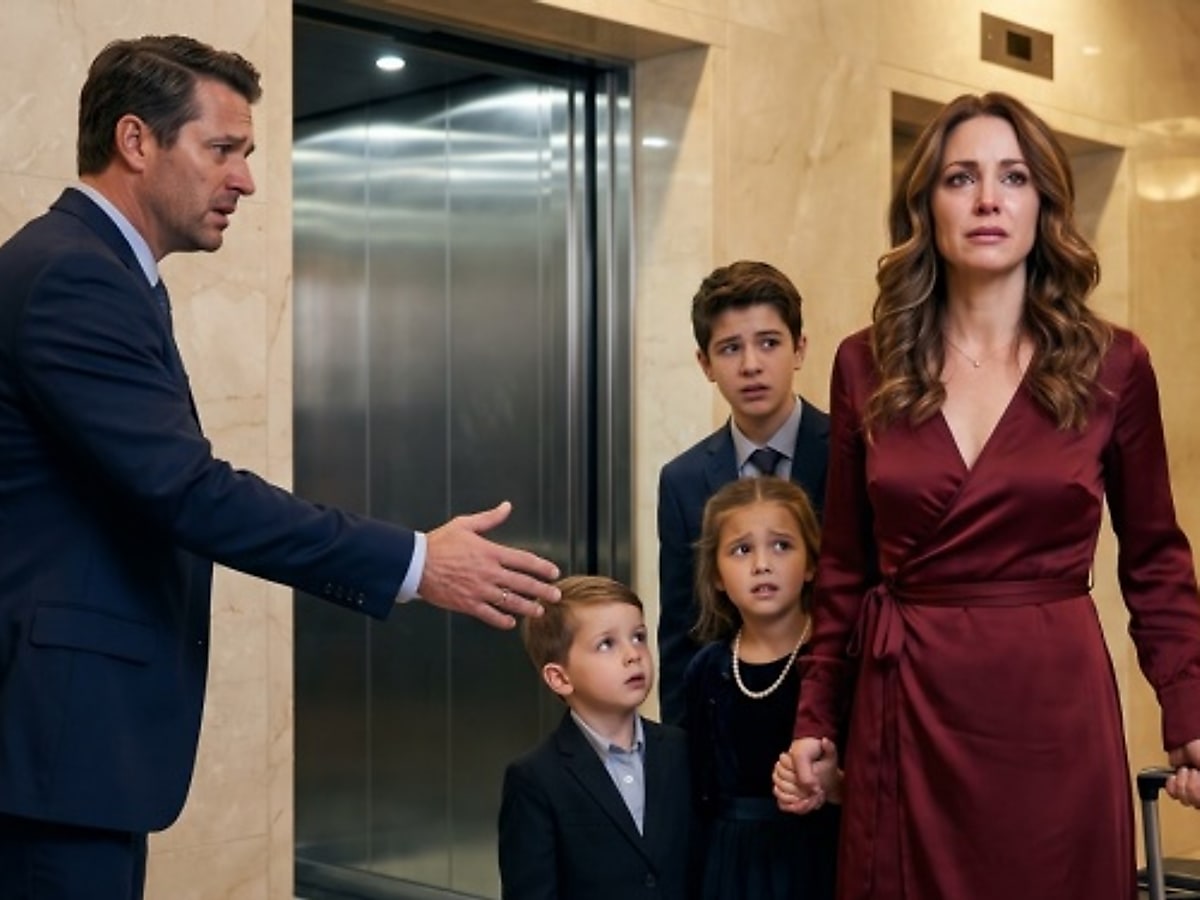
PART 1: A Blessing According to Carol
My husband walked out of our fifteen-year marriage and three children for Jessica, and his mother treated his betrayal like the beginning of a perfect new family.
That was the part that hurt in a way I still struggle to explain.
Not just that Matthew Carter left me. Not just that he packed a suitcase in our bedroom while our youngest stood in the hallway holding a stuffed dinosaur and asking if Daddy was going on a trip. Not even that he had been seeing Jessica Lane, a twenty-eight-year-old dental office manager from Franklin, Tennessee, for nearly a year before I found out.
It was the celebration.
Carol Carter did not shed a single tear over our marriage falling apart, never once asked how the children were sleeping through it or whether school pickup had gotten harder for me.
She simply looked at Jessica’s shining hair, her easy smile, and that small visible bump, and decided fate had personally delivered my replacement.
She told me, two weeks after Matthew moved out, that this baby was a blessing.
We stood together in a parking lot outside Williamson County Family Court after our first temporary hearing, right after I listened to Matthew’s lawyer argue for flexible scheduling because Jessica’s pregnancy counted as high risk and stressful.
I studied Carol’s face, waiting for even a flicker of shame.
None arrived.
I repeated the word blessing back to her like it might sting on the way out of my mouth.
She only lifted her chin higher, telling me Matthew and I had been struggling for years, and maybe this was simply everyone finally getting what they needed.
Behind her, Matthew stood with his hand resting protectively against Jessica’s lower back.
That same hand had rested against mine through three pregnancies of my own.
My name is Emily Carter, born Emily Rhodes, forty years old when my marriage collapsed, living outside Murfreesboro, Tennessee in a four bedroom house with three kids, two aging dogs, and a mortgage that made everything look normal from the street.
I taught fourth grade in a public school and earned $58,000 a year, never quite enough to feel secure, yet plenty enough to remind me I had sacrificed bigger opportunities so Matthew could climb higher.
Matthew, forty two, worked as a regional sales director for a medical equipment company headquartered in Nashville, polished in that suburban way with a clean haircut, an expensive watch, a golf tan, and a smile people trusted before he gave them any real reason to.
He coached our son’s baseball team, sat on the church finance committee, and posted Father’s Day pictures captioned about leading with love.
He also lied effortlessly, the way men do after years spent being believed without question.
Our children were Ava, fourteen and quietly perceptive, Noah, eleven and tenderhearted, and Lily, six, still young enough to believe divorce might just mean an extra long sleepover before Daddy came home.
The night Matthew left, Ava did not cry.
She watched him haul his garment bag downstairs and asked flatly whether he was moving in with her.
Matthew froze completely.
So did I.
No one had told Ava a single thing about Jessica yet.
He recovered first, saying this was between her mother and him, and Ava simply told him no, it wasn’t.
He left anyway.
By morning, Carol was already on the phone warning me not to poison the children, insisting Matthew deserved happiness, that Jessica carried their sibling, and that blended families could turn beautiful if the adults simply behaved with grace.
Grace became the word Carol wielded like a weapon.
Grace meant staying silent about the affair.
Grace meant sending the kids to family dinners where Jessica now sat at a table I had personally set for fifteen straight Thanksgivings.
Grace meant swallowing my reaction when Carol posted a photo online with Jessica at a boutique baby store in Cool Springs, captioned about God writing new chapters in unexpected ways, so excited for this little miracle.
Ava found it before I did.
She handed me her phone and said grandma was disgusting.
I wanted to correct her tone, but instead I stared at the photo and felt something inside me go completely still.
Jessica wore a cream sweater dress, holding tiny blue baby shoes, while Carol stood beside her, arm wrapped around her shoulder, smiling like a woman who had just won something enormous. Matthew had left a blue heart in the comments.
I handed the phone back and told Ava she never had to keep following adults who hurt her.
She blocked her grandmother that same night.
Noah kept asking whether the new baby meant Dad loved them less.
Lily asked whether Jessica would become her new mommy.
That was the night I locked myself inside the laundry room and cried into a towel, refusing to let my children watch me shatter every single time someone else made another cruel choice.
The divorce dragged on for eleven months.
Not because we had extreme wealth.
We didn’t.
But there were complications involving custody, child support, the house, Matthew’s bonus structure, retirement accounts, marital debt, and his constant push to let Jessica’s pregnancy shape everything down to holidays and school night pickups.
My attorney, Dana Whitfield, practiced family law in Rutherford County, sharp eyed, wearing silver bracelets, with the calmest voice I had ever encountered.
She told me early that Tennessee handled divorce through equitable distribution, not punishment, though the affair could matter in limited ways, especially involving spent marital funds, while the court’s real focus stayed on property division and the children’s best interests.
I asked her if that meant he simply got to detonate our entire life.
She told me he got to make choices, but not to escape consequences.
That sentence became my lifeline.
Consequences rarely looked cinematic.
Sometimes they looked like bank statements, custody worksheets, and a judge questioning why a father assumed he could skip Wednesday visitation for his girlfriend’s prenatal yoga class.
Matthew despised that reality.
He expected me to fall apart.
Instead, I documented everything.
Saved every text.
Tracked every missed pickup.
Kept receipts revealing hotel charges from during our marriage.
I found credit card purchases for jewelry, dinners, and weekend getaways that had never included me.
Dana filed claims regarding dissipation of marital assets where it applied. Not every dollar mattered, but plenty did. Matthew tried claiming certain charges were business related until one hotel invoice listed Jessica’s name under spa services.
That was the first crack in his confidence.
Still not enough, though, since he treated the pregnancy as proof his affair carried meaning, even nobility. He had not simply cheated, in his mind. He had fallen in love and created life, using the baby like some kind of moral shield.
Carol helped him buff that shield to a shine.
At custody exchanges, she would tell the kids things like their daddy was building a home where everyone would be welcome, while Ava stared out the window and Noah’s jaw tightened.
Once, Carol even brought Jessica to Noah’s baseball game.
Jessica sat in the bleachers wearing one of Matthew’s old Vanderbilt sweatshirts, hand resting on her belly, while Carol introduced her to another parent as her son’s partner and the mother of her next grandchild. I stood three feet away holding Lily’s juice box.
The other mother’s eyes darted toward me in visible horror.
I smiled.
Not because I felt fine.
Because I refused to give them the meltdown they were quietly hoping for.
After the game, Noah asked to ride home with me instead of Matthew.
Matthew told him not to punish him just because Mom was upset, and Noah simply said he wasn’t punishing anyone, he just didn’t want to be near her.
Naturally, that too became my fault somehow.
If Ava turned cold, I had influenced her.
If Noah refused sleepovers, I had made him anxious.
If Lily cried during exchanges, I hadn’t prepared her properly.
If I insisted he follow the temporary parenting schedule, I was inflexible.
If I asked him not to bring Jessica to school events yet, I was bitter.
Dana warned me this pattern would come.
She told me to stay steady, since courts notice patterns, and so do children.
So I stayed steady.
Mostly.
I fell apart privately instead, in the shower, in my car after drop off, once in a grocery aisle when I reached automatically for Matthew’s favorite cereal before remembering he no longer lived here.
One night, after the kids finally slept, I sat at the kitchen table surrounded by bills and realized I hadn’t eaten dinner myself, despite packing lunches, signing reading logs, answering emails, cleaning up after the dogs, and reviewing divorce discovery all day.
That was divorce motherhood in a nutshell.
Becoming everyone’s emotional first responder while your own life quietly burns behind you.
Then, three weeks before the divorce became final, I saw a message that was never meant for me.
Matthew had accidentally sent it through the co parenting app Dana insisted we use for all communication. He deleted it within a minute, but the app preserved everything regardless.
It read that Jessica needed to stop asking about the dates, that they were too close now, that the ultrasound would settle it, and that she should just keep Carol excited and say nothing before court.
I stared at those words until they seemed to lift right off the screen.
The dates.
The ultrasound.
Say nothing before court.
I screenshotted it anyway, even knowing the app already kept the record, then forwarded it straight to Dana.
Her reply came ten minutes later, telling me not to respond, that we would discuss it the next day.
I did not sleep at all that night.
Not because I cared whether Jessica’s baby biologically belonged to Matthew in the way people might assume.
My marriage was already finished regardless.
But Matthew had rebuilt his entire new life around that baby. Carol had constructed her public sainthood around that baby. Both of them had pressured my children into accepting Jessica because of that baby.
And now, quietly, a crack had opened in that foundation.
One Matthew had no idea I had already seen.
PART 2: The Hallway Outside Family Court
Our divorce became official on a gray Tuesday morning in Murfreesboro, the kind of humid day where the air already feels exhausted before noon.
I wore a navy dress, low heels, and my late mother’s pearl earrings, hoping they might make me feel like someone’s daughter instead of someone’s discarded wife. Dana met me outside the courtroom holding a folder and a paper coffee cup.
She asked if I was ready, and I told her no, and she said that was perfectly acceptable, promising to handle whatever came next while I simply answered the judge’s questions.
Matthew arrived ten minutes later with his attorney, Brent Lawson, and Carol beside him.
Carol wore lavender and her church pearls, hugging Matthew in the hallway before glancing at me as though I had personally inconvenienced the family by requiring legal closure. Jessica wasn’t present, which surprised me until I noticed Matthew checking his phone four times within two minutes.
Dana noticed too, quietly asking if something was happening today.
I told her Jessica had an ultrasound scheduled.
Dana’s expression barely shifted, though she simply said, ah.
The message from three weeks earlier hung silently between us.
The hearing itself moved quickly, since most terms had already settled through mediation. I would keep the house for at least three years, or until Lily finished elementary school, whichever came first, with refinancing spelled out clearly. Matthew would pay child support under Tennessee guidelines, plus his share of medical, extracurricular, and school costs.
We divided retirement accounts properly through qualified orders, split marital debt, and he received partial credit for certain payments, while I received reimbursement for documented marital funds spent on Jessica during our marriage.
It wasn’t dramatic justice.
It was arithmetic wearing a black robe.
But it was enough.
The parenting plan gave me primary time during school weeks, with Matthew receiving alternating weekends, one midweek dinner, set holidays, and summer visitation, requiring both parents to support the children’s bond with the other, avoid discussing legal matters with them, and introduce new partners with care.
Matthew hated that final clause, having wanted Jessica woven into the children’s lives immediately as family.
The judge simply told him his children weren’t required to match his personal timeline.
I wrote that sentence down later, half tempted to frame it.
When the judge finalized the decree, I braced for some overwhelming emotion.
Freedom, grief, relief, rage, something enormous.
Instead I only felt quiet.
Fifteen years ended with a stamp, two signatures, and Dana’s hand on my elbow as we walked out together.
In the hallway, Matthew approached with Carol trailing behind him.
He said he hoped we could move forward now, and I told him yes, forward for the kids.
His jaw tightened as he told me I didn’t have to be so cold, and I answered that I didn’t have to be warm either.
Carol jumped in, warning that my bitterness worried them, especially with a baby coming, insisting the children needed to see unity.
I turned to her and said my children needed honesty, stability, and adults who stopped demanding emotional labor from them.
Her mouth opened, then shut.
Matthew told her not now, though not out of agreement with me, simply because his phone was ringing.
He glanced at the screen and his expression shifted instantly.
Jessica.
He stepped away to answer, leaving Carol standing awkwardly beside me, saying nothing for once.
His voice dropped, though courthouse hallways carry sound strangely, and I caught fragments about repeating something, about calming down, about what the tech had said.
Dana, pretending not to listen, glanced my way, and I glanced back.
The crack widened further.
Matthew turned his back but pieces still reached me, warnings not to call his mother yet, questions about her last period date, pleas for her to stop crying.
Then silence.
He returned pale, and Carol grabbed his arm asking what happened, though he insisted it was nothing, too quickly.
She pressed, and he finally admitted Jessica was upset because the ultrasound measurement seemed off, and when Carol asked how off, he lowered his voice further, saying not here.
But I had already heard enough.
The ultrasound hadn’t settled anything the way he hoped.
It had raised new questions instead.
Dana touched my elbow, suggesting we leave, and I nodded, though as we walked toward the elevator, Matthew called my name.
I stopped despite myself.
He stood in the very hallway where our marriage had just legally ended, phone in hand, looking betrayed by his own screen.
He asked if I had known something, and I asked what he meant, and he accused me of contacting Jessica, which I denied, and of saying something to her, which I also denied.
Dana stepped forward, reminding him communication about the children should stay in the app.
He ignored her, accusing me instead of enjoying this.
There it was, the same emotional shortcut he always reached for. If I wasn’t devastated, I must be cruel. If I noticed consequences, I must have caused them.
I told him carefully that whatever was happening with Jessica’s pregnancy was not my situation.
His face reddened as he insisted I had made everything harder, and I told him no, I had simply stopped making his choices easier for him.
Then I walked away.
In the parking lot, Dana told me that was well said, and I admitted I had wanted to say something far worse, which was exactly why she complimented me.
I laughed for the second time that morning, feeling strangely, almost illegally lighter.
By the time I got home, three missed calls sat waiting from an unknown number, along with a text from Carol begging me to say I hadn’t known and to keep quiet, insisting this family had already suffered enough.
This family.
For months Carol had treated me as though gently erased from the family roster while Jessica got written in with glitter pen.
Now, suddenly, secrecy required my full cooperation.
I forwarded the screenshot to Dana, who simply told me not to respond, so I didn’t.
Instead I picked up Lily from school, Noah from practice, and Ava from a study group, grabbed drive-thru tacos since cooking felt impossible, and sat at the kitchen table while Lily asked if I was divorced now.
Ava froze. Noah stared at his plate.
I told Lily gently that yes, the judge finished the paperwork that day.
She considered this, then asked if that meant Daddy could never come home, and I squeezed her hand, telling her Daddy wouldn’t live with us again, but she would still see him and we both loved her deeply.
Noah asked if the baby meant more visits at their house, and I told him carefully that the schedule existed for the three of them, not for the baby.
Ava watched me the entire time, sensing there was more.
She always sensed when there was more.
Later, once Lily was asleep and Noah upstairs, Ava lingered in the kitchen asking what actually happened today. I told her the divorce was final, and she said that wasn’t what she meant.
I wiped the counter slowly, telling her Ava, and she reminded me she wasn’t six anymore.
I told her no, she was fourteen, old enough to notice tension in adults but not obligated to carry details that weren’t hers to hold.
She asked if it involved Jessica, and I told her there might be some uncertainty in their lives, but it wasn’t her responsibility.
She studied me carefully before simply saying good, her shoulders loosening slightly.
That night, once the kids slept, Dana called to warn me before I heard elsewhere that Brent Lawson had reached out informally, saying Matthew might request adjustments to certain dates due to medical stress involving Jessica.
I closed my eyes, reminding her the divorce had just finalized that very morning.
She agreed, adding that he hadn’t given specifics regarding the stress.
But I already suspected.
The baby’s measurements weren’t matching the story, and three weeks earlier Matthew had already known the dates might become a problem.
PART 3: The Prayer Chain and Tyler Reed
Two days later, gossip reached me through the most reliable source in Williamson County, a church prayer chain.
I no longer attended Carol’s church, having stopped after the pastor’s wife once told me God can redeem even painful transitions while handing Jessica a casserole. My friend Megan, whose mother still attended, called after school pickup asking an uncomfortable question.
She asked if Jessica’s baby was okay.
I stood in my driveway holding groceries, admitting I didn’t know, and asked why.
She explained a prayer request was circulating because the baby was measuring unexpectedly small, with concerns about dates and development.
Dates, again.
I asked exactly what Carol had said, and Megan told me doctors were monitoring closely, and that Matthew and Jessica needed peace from gossip.
I laughed once at that phrase, peace from gossip, considering how many months Carol had spent selling the neighborhood a polished love story dressed up as destiny. Now that the math didn’t add up, she suddenly wanted privacy.
I thanked Megan for telling me, and when she asked if I was okay, I told her no, and she simply agreed that was fair, offering no advice at all, which was exactly why we stayed friends.
That evening Matthew missed his midweek dinner with the kids, messaging through the app that Jessica had a medical appointment and asking me to be flexible.
I replied that the children were expecting him and asked for a makeup time that week.
He accused me of using the kids to punish him for his stress, and I typed back only that communication should stay focused on scheduling, a sentence Dana had taught me that worked less like magic on him and more like a lifeline for me, keeping me out of his swamp entirely.
Noah waited by the window for twenty minutes before I told him Dad couldn’t make it, and his face fell as he asked if it was because of Jessica. I admitted Matthew had cited a medical appointment, and Noah simply nodded and said so yes.
I sat beside him apologizing, though he shrugged too sharply and said it was fine, when clearly it wasn’t.
Ava came downstairs later asking if he had bailed again, and when I had no defense, she simply said what he did.
The next morning Dana called with more news, Matthew now wanting to discuss modifying the holiday schedule once the baby arrived, even though the baby wasn’t born yet and he had already missed dinner the night before.
Dana also mentioned Brent had asked if I knew anything about a man named Tyler Reed connected to Jessica’s past.
I sat very still, asking who that was, and Dana admitted that had been her exact question too.
I told her I’d never heard the name, and she said apparently Matthew had.
The crack widened again.
After the call, I did something I’d avoided for months, checking Jessica’s social media for my own sanity’s sake.
Throughout the divorce she had posted soft focus coffee cups, baby clothes, inspirational quotes, and one particularly nauseating photo of Matthew assembling a crib captioned about watching him become a dad all over again as her favorite blessing.
All over again, as though our three children had merely been a warm up act.
Her recent posts looked different now, fewer smiles, no more bump photos, comments disabled entirely.
But scrolling far enough back, sixteen months earlier, I found a photo from Destin, Florida, showing Jessica beside a sandy haired man with a forearm tattoo, his arm around her waist, captioned about some people feeling like summer, tagged Tyler Reed.
His profile was private, of course, though his bio listed Nashville, music production, Reed Sound Lab.
Nothing about the name rang any bells.
Then I remembered Matthew’s accidental message again, about stopping asking about the dates, being too close now, the ultrasound settling it.
Too close to what exactly. The divorce becoming final. The public announcement. A due date. Or a lie finally becoming impossible to sustain.
I never contacted Tyler or Jessica myself.
I did forward the public screenshot to Dana, who told me to document everything and never engage.
My life had turned into a museum of restraint.
A week later Matthew arrived twenty five minutes late for pickup, with Carol riding in the passenger seat, which was new.
The kids came down with overnight bags, Lily running to him happily, Noah walking slowly, Ava looking like she’d rather step into oncoming traffic than climb into his SUV.
Matthew forced a smile and greeted them, and Noah immediately asked if Jessica was okay.
His face tightened as he claimed she was fine, just dealing with some doctor stuff.
Ava asked if the zoo trip was still happening, and Carol leaned out the window suggesting they keep things calm this weekend since Jessica needed support.
Ava’s eyes flashed as she said they weren’t support staff.
Matthew snapped her name in warning, and I stepped onto the porch reminding him parenting time belonged to the children, and any changes needed to go through the app.
Carol looked at me with open dislike, suggesting I could teach the kids compassion, and I told her I was, that compassion didn’t mean disappearing.
Matthew asked if I could avoid starting something every single time, and I told him I wasn’t starting anything, simply standing on my own porch.
Ava smirked, and I pretended not to notice.
They left, and I spent the weekend imagining my children sitting quietly in Matthew’s apartment while Jessica cried and Carol centered everything around the unborn baby. By Sunday, Noah came home withdrawn and Lily cranky.
Ava came into my room that night saying Dad and Grandma had fought, and when I asked what she heard, she explained Grandma insisted Jessica needed to tell the truth before someone else did, Dad insisted she promised she was sure, Jessica cried in the bathroom, then Dad told them to watch a movie instead.
My stomach clenched as Ava asked if the baby wasn’t Dad’s.
I closed my eyes and admitted I didn’t know.
She asked if Dad knew, and I said I thought he had questions.
She said he made them feel like they had to love the baby immediately, and I agreed, and when she asked what if it wasn’t his, I told her adults would still have to handle it responsibly, which made her laugh bitterly and ask if any of them actually knew how.
I told her I did, and she leaned against me and finally cried, quietly, whispering that she hated being made part of it.
I held her and told her the only true thing I had.
Me too.
PART 4: The Message From Jessica
Jessica messaged me directly nine days later, at 11:42 p.m. on a Thursday, while I graded spelling tests over reheated coffee and listened to a dying dishwasher.
The Facebook message request said she knew she was the last person I wanted to hear from, but needed to tell me something Matthew wouldn’t, and asked me not to block her before reading it.
I stared at it for almost a full minute before calling Dana, who answered anyway, since family attorneys apparently either sleep well or have terrible boundaries.
She told me not to respond emotionally, to screenshot everything, never promise confidentiality, never agree to meet alone, and to send anything relevant to the children or court along her way.
Jessica’s message was long.
She apologized, admitting the word meant nothing, and claimed Matthew told her our marriage had been dead for years, that we slept apart, that I cared more about the kids than him, and that I had secretly agreed the divorce was best while trying to control the narrative.
I read that part almost calmly, since lies told to mistresses are rarely original.
Then came the part that mattered.
She wrote that the baby might not be Matthew’s, that she had told him before the divorce finalized the dates were close, but he insisted on moving forward since he’d already told everyone, believing the ultrasound would probably line up close enough and that stress might explain confusing dates. It hadn’t.
I stopped breathing for a second.
She continued, mentioning someone before Matthew named Tyler, saying it had ended before things got serious with Matthew, though now she wasn’t certain, that Matthew was furious, that Carol accused her of trapping him, that she knew I likely hated her, but that my kids were hearing things and being blamed for tension they hadn’t caused.
For the first time I felt something toward Jessica that wasn’t rage.
Not forgiveness exactly, not quite pity either.
Recognition.
She had stepped into a story Matthew authored for her, and now that the story no longer served him, he was rewriting her as the villain.
I understood that process intimately, having lived it myself.
Her next message revealed the real wound underneath everything, saying Matthew told Carol he might try reducing child support since, if the baby wasn’t his, he had lost everything for nothing.
There it was.
Not love. Not fatherhood. Not heartbreak.
Investment loss.
He had gambled his entire family on Jessica and now wanted a refund.
I forwarded everything to Dana, who called it relevant and told me not to respond that night.
I did respond the next morning, after Dana reviewed my draft, telling Jessica I had received her message, that all communication should stay respectful for the children’s sake, that I wouldn’t discuss adult conflict privately, and that anything affecting my children or legal matters should go through counsel.
It was cold, safe, and necessary.
She replied only that she understood, and she was sorry.
Matthew called six times that afternoon, which I ignored, before texting through the app that I shouldn’t communicate with Jessica since she was unstable and trying to manipulate people.
I replied only that communication should stay focused on the children’s schedule.
He wrote back that this affected the children, that I would probably enjoy telling them the baby wasn’t theirs.
I stared at that sentence for a long time.
The baby isn’t theirs.
Not mine, not ours, theirs, as though the children had been required to emotionally invest in his affair baby, and now I might cruelly rip it away from them.
I forwarded that too, and Dana called it very useful, advising me not to engage further.
The next conflict arrived quickly, Matthew asking to cancel his weekend for a personal emergency. I objected through the proper channel, noting repeated cancellations already, and Dana advised patience while flagging the pattern for later.
Ava refused to go even after he rescheduled, and though her preference alone couldn’t override the plan, Dana advised caution while I encouraged Ava to follow it anyway, validating her frustration. She asked if that meant she had to act more mature than her own father, and when I couldn’t answer quickly enough, she simply said exactly.
That weekend Matthew only took Noah and Lily for one night, returning them early.
Lily came home clutching a unicorn backpack, eyes red, saying Jessica had cried all day.
Noah threw his bag down the hallway, saying Dad told them to be kind since Jessica was going through something.
Ava, who had stayed home that weekend, asked if he’d bothered asking whether they were going through something too, and Noah shook his head, and Ava simply said of course not.
I sat all three down and told them plainly that adults might be upset, confused, or struggling, but none of them were responsible for fixing adult feelings.
Lily whispered whether the baby was still their brother, and my heart cracked as I admitted the adults didn’t know yet.
She said she had already drawn him a picture, and I pulled her close, telling her she could love the idea of a baby while still feeling sad or confused, and that caring about someone was never wrong.
Noah muttered that Dad blamed me for making things harder because I supposedly hated Jessica.
I told him I didn’t hate anyone enough to let children suffer for it.
Ava pointed out that wasn’t technically a denial, and I almost smiled despite everything, calling it a boundary instead.
The paternity test eventually happened after the baby was born.
Until then, only measurements, suspicion, and shifting blame existed.
Jessica moved out of Matthew’s apartment into her sister’s house in Spring Hill during her eighth month. Carol stopped posting baby updates entirely. Matthew stopped mentioning the baby except when using stress as an excuse for schedule changes.
The perfect new family grew remarkably quiet online.
Meanwhile, our own house slowly found a rhythm again.
Not healed, exactly. Steadier.
We made Saturday pancakes. Ava joined debate club. Noah started counseling and admitted feeling angry at Matthew while also guilty because his father looked sad. Lily asked fewer questions about where Daddy slept and more about painting her room lavender.
We painted it lavender.
Paint proved cheaper than therapy, though we kept doing both.
One afternoon Carol showed up at my door holding a foil covered casserole dish. I almost didn’t answer, but there she stood, older, smaller, uncertain, asking if we could talk.
I told her no, unless it concerned the children and stayed respectful.
Her mouth trembled as she admitted she’d made mistakes, that she got excited about the baby and thought embracing everything might make it feel less shameful.
There it was, not quite accountability, but closer than before.
I told her she embraced it by erasing me entirely, that she told my children to show grace while their father missed pickups, that she prioritized Jessica’s pregnancy over their pain.
Her eyes filled each time as she admitted I know, I know, I know.
I didn’t invite her inside.
Some apologies belong on the porch.
She asked to see the kids, and I told her not today, and when she asked me to tell them she loved them, I told her I had never told them otherwise.
That answer broke her more than yelling ever could.
She left the casserole behind.
I threw it away, not out of cruelty, but because my children didn’t need chicken and rice seasoned with guilt.
PART 5: What Truth Left Behind
Jessica gave birth to a baby boy on a rainy Sunday in late April.
I learned through the app at 6:13 a.m., a short message announcing the baby was born and that he wouldn’t be taking the kids that afternoon.
No name. No health update. No apology for another cancellation. Just another disruption dropped casually into my morning.
I replied asking whether he was forfeiting the day entirely or requesting a makeup date, and he didn’t respond for seven hours.
Later Ava showed me Carol’s post online, simple this time, no glowing caption, no miracle language, just a request for prayers for everyone involved, no photo, no blue hearts, no mention of Matthew at all.
Two weeks later, the truth finally became too solid to outrun.
The baby wasn’t his.
I didn’t hear it directly from Matthew. Dana heard it from Brent during a scheduling call. Paternity testing excluded Matthew entirely, and Tyler Reed was later confirmed as the biological father, according to disclosures Jessica made through her own attorney in a related support matter.
Sitting in Dana’s office hearing this, I expected triumph.
Instead I felt only exhaustion, deep and total.
Matthew hadn’t simply left me for Jessica. He had rearranged our children’s entire emotional world around a baby he wasn’t even sure belonged to him, let his mother pressure them, introduced Jessica as permanent family, weaponized the pregnancy legally, missed parenting time repeatedly, then blamed everyone else once uncertainty became fact.
Dana gently asked if I was okay, and I told her I was, then admitted I wasn’t yet, but would be.
Matthew went silent with the kids for four days after the results came in.
No calls, no texts, nothing.
Ava pretended not to care. Noah kept checking his phone constantly. Lily asked if the baby had disappeared.
That question shattered me completely.
I told her no, the baby was still here, just maybe not part of our family the way everyone originally assumed.
She asked if Daddy still loved him, and I admitted I didn’t know, then she asked if Daddy still loved them, and I told her yes, because children deserve reassurance even when adults make believing it hard.
Later, alone in my room, I whispered that Matthew better mean it.
He eventually asked to see the kids again. Dana advised following the plan unless legally necessary otherwise, documenting everything carefully. Their counselor helped prepare them. Ava stayed politely distant, Noah stayed anxious, Lily drew a picture of a baby with a question mark, then decided not to bring it after all.
When Matthew arrived, he looked wrecked, not nobly heartbroken but genuinely undone, like a man who mistook desire for destiny and lost his audience entirely.
Standing on the same porch where Carol once left her guilty casserole, he said he needed to talk to me, and when I said the kids were nearly ready, he simply said my name.
I asked what, and he admitted he’d made a mistake.
For fifteen years I had waited for small admissions. For eleven months I had waited for enormous ones. Now that the words finally arrived, they felt smaller than I imagined.
I agreed simply, yes.
He said he’d blown up everything, that he thought he was starting over, and I told him he was, he’d just confused starting over with abandoning responsibility.
His face tightened as he admitted he’d lost the baby too, and I reminded him the baby had never been property to lose in the first place.
He flinched, good.
He claimed he’d loved him, and I suggested maybe he loved what he represented instead, which he called cruel.
I told him cruelty was making his own children feel replaceable because he got excited about a new life.
He looked away, and for a brief second I glimpsed the man I once married, blurry, like a face underwater.
He admitted he didn’t know how to fix this, and I told him one conversation wouldn’t fix it, only consistently showing up when inconvenient, telling the truth without dumping it on children, and accepting their anger without flinching.
He nodded, then asked if I could help him explain it to them.
There it was again, the old reflex. Emily, carry this. Emily, soften this. Emily, absorb my consequences for me.
I told him I would support the kids, but wouldn’t manage his accountability for him.
His eyes filled, whether with grief or self pity or both, I couldn’t say.
The kids came downstairs and the conversation ended there.
That summer wasn’t easy. Matthew struggled rebuilding trust, attending counseling with Noah twice per the therapist’s suggestion. Ava avoided family sessions for months before finally agreeing to one where she told him plainly he had made them feel like his first draft.
Matthew cried. Ava didn’t.
Lily kept asking confusing questions about the baby, about Jessica, about whether grown ups could return babies like overdue library books. We answered patiently, imperfectly, repeatedly.
Jessica kept the baby and pursued support from Tyler.
She sent me one handwritten letter through Dana, two pages, surprisingly plain, apologizing for her role in my family’s pain, admitting Matthew had lied to her though she’d chosen to believe it because it benefited her, hoping my children would heal, asking for nothing in return.
I respected that more than any request for forgiveness.
I never replied. Some doors close without slamming.
Carol changed too, slowly. She stopped posting about new chapters, started asking to see the kids through me with proper notice, apologized to Ava directly after Ava agreed to lunch.
Ava told me later Grandma cried, and when I asked what she did, she said she handed her a napkin, mercy with boundaries fully intact.
Carol apologized to Noah and Lily more simply. Noah hugged her. Lily asked if she still had the baby shoes, and Carol cried again, admitting no. I never asked what happened to them.
By fall, life had settled into its own rhythm, different from before but steady in a new way.
School mornings stayed chaotic, the dogs still barked at delivery trucks, Noah still lost socks somewhere impossible, Ava still rolled her eyes at too many questions, and Lily’s lavender room became a shrine to unicorns and glitter slime and quiet recovery.
Matthew became more consistent once the court warned that repeated missed visitation could affect future modifications. Maybe the legal threat sobered him, maybe losing the fantasy did, maybe both.
Eventually I stopped trying to guess his reasons.
I only cared about behavior.
Trust is behavior.
One year after the divorce finalized, I took the kids to Gulf Shores, Alabama for spring break, our first vacation without Matthew.
I felt terrified, not of the travel itself, but of the empty space where his presence used to sit.
The trip turned out beautifully in ordinary, unremarkable ways. Noah built elaborate sand walls he called emotional support fortresses. Lily collected shells and named every seagull Jessica, until Ava begged her to pick literally any other name. Ava sat beside me one evening while the younger two chased waves and said she thought we were better now.
I asked better than when, and she shrugged, saying better than when everyone was pretending.
That sentence stayed with me long afterward.
Pretending had been the real sickness all along.
The affair was one symptom. The pregnancy was another. Carol’s celebration, Matthew’s defensiveness, Jessica’s uncertainty, the pressure placed constantly on the kids, all of it grew from pretending.
Pretending betrayal counted as destiny.
Pretending children could be rushed into acceptance overnight.
Pretending a baby somehow made wrong choices righteous.
Pretending dates never mattered.
Pretending consequences equaled cruelty.
But truth, painful as it was, gave us something pretending never could offer.
Solid ground.
I never got my old life back.
I got an honest one instead.
Hard days still show up. Exchanges still happen where Matthew lingers too long looking at the house. Lily still asks questions that reopen old wounds. Noah still comes home quiet sometimes, carrying something from his father’s apartment. Ava still trusts slowly, testing every surface like ice before stepping fully onto it.
But we no longer live inside Matthew’s story.
We live inside ours now.
And ours isn’t only about betrayal.
It’s about a girl who learned she could stay angry and still remain kind.
A boy who learned love is supposed to show up consistently.
A little girl who learned families can change shape without disappearing entirely.
And a mother who learned protecting peace sometimes means refusing to protect the very people who shattered it.
Matthew once believed he had secured his future with Jessica.
A new apartment. A new baby. A mother cheering loudly from the sidelines. A story where leaving an unhappy marriage made him brave enough to finally choose the woman he truly loved.
But the future he built already carried a hidden crack before the divorce ink even dried.
The ultrasound eventually revealed what his pride had chosen to ignore.
The dates mattered.
The truth mattered.
And three weeks before that appointment, one accidentally deleted message had already warned me the perfect new family wasn’t nearly as certain as everyone wanted the world to believe.
When the baby turned out not to be his, people expected me to celebrate.
I didn’t.
A collapsing lie still leaves children standing in the wreckage it left behind.
I gathered mine close.
I held them.
I gave them the truth in pieces small enough to carry.
And then I built a life where nobody ever had to pretend betrayal was a blessing simply because the adults involved were too ashamed to call it exactly what it was.
Names have been changed and this story has been dramatized for entertainment purposes.
