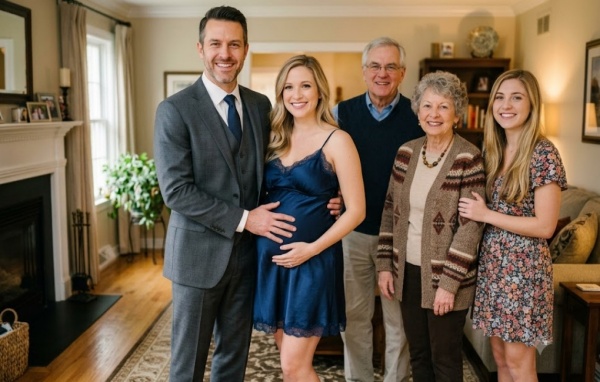
My Husband’s Family Replaced My Children With His Mistress’s Baby. They Celebrated Her as Their “Fresh Start” and Treated My Kids Like They No Longer Existed… Until the Doctor Revealed the Truth…
Part 1: The Woman They Decided to Forget
For nine years, I was the woman who remembered every birthday, every allergy, every school conference, and every quiet disappointment Ethan’s family pretended not to notice. I was the one who brought casseroles to his mother when she had knee surgery, mailed Father’s Day cards to his dad when Ethan forgot, and kept the kids smiling through every holiday where the adults cared more about appearances than kindness. But when Ethan left me for a woman named Madison, his family acted like I had been a temporary inconvenience they were finally allowed to erase.
My name is Claire Miller, though I went back to my maiden name, Claire Whitaker, the day our divorce became final in a Dallas County courtroom. Ethan and I had two children together, Sophie, who was eight, and Noah, who had just turned five. They were old enough to understand rejection, but too young to understand why adults could dress it up as “moving forward.”
Ethan met Madison at a charity golf event in Frisco, which was exactly the kind of place where wealthy people smiled for photos while making decisions that hurt people in private. She was twenty-nine, polished, and always looked like she had walked out of a boutique hotel lobby. Ethan was forty-one, restless, and suddenly convinced that our ordinary life of soccer cleats, grocery runs, and mortgage payments had been some kind of prison.
I found out about them because Ethan forgot to unlink his iPad from his phone. It was not dramatic at first. It was just one message lighting up on the kitchen counter while I was packing Sophie’s lunch: “I miss waking up next to you.”
I stood there with a peanut butter sandwich in my hand and felt the world tilt in a way no one prepares you for. There was no screaming, no broken plates, no movie-scene confrontation. Just me, standing barefoot on the tile, realizing the life I had been protecting had already been given away.
When I confronted Ethan that night, he didn’t deny it. He looked tired, almost relieved, as if I had finally opened a door he was too cowardly to touch. He said, “I never meant for it to happen,” which is what people say when they want forgiveness for things they kept choosing over and over again.
Within three months, he had moved into a rented townhome near Plano with Madison. Within six months, she was pregnant. Within seven months, Ethan’s mother, Linda, began calling the baby “our family’s new beginning.”
I heard it first through Sophie, who came home from a weekend at Ethan’s house holding a pink bakery box and wearing an expression too old for her face. She told me Grandma Linda had ordered cupcakes with little gold toppers that said “New Beginning.” Then she asked me, in the smallest voice, “Mom, were Noah and I the old beginning?”
I sat beside her on the edge of her bed and felt something inside me harden. Not hatred, not exactly. More like the quiet steel a person grows when grief has been insulted too many times.
I told Sophie she and Noah were not old anything. They were loved, wanted, and permanent. I said it with a calm voice because children do not need their mother’s pain spilling all over them, even when that pain is justified.
But after she fell asleep, I went into the laundry room, shut the door, and cried into a towel so Noah wouldn’t hear me from across the hall. It wasn’t just that Ethan had cheated. It was that his family had chosen to punish our children for not fitting into the story they wanted to tell.
Before Madison, Linda had introduced Sophie as “my little sunshine” and Noah as “my favorite buddy.” She had kept their drawings on her refrigerator and argued that Thanksgiving wasn’t Thanksgiving unless the kids helped mash the potatoes. After Madison’s pregnancy announcement, Linda’s refrigerator became a shrine to ultrasound photos.
The drawings disappeared first. Then the framed pictures from our family trip to Galveston vanished from the hallway. By Easter, Sophie and Noah were no longer invited to the big family brunch because Linda said “the timing might be emotionally confusing for everyone.”
Everyone apparently meant Madison. Not my children. Never my children.
Ethan’s father, Robert, was quieter but not kinder. He sent birthday cards late, usually with a $20 bill tucked inside like a receipt for an obligation. When Noah asked why Grandpa didn’t come to his kindergarten spring program, Robert said over speakerphone, “We’ve just got a lot going on with the baby coming.”
“The baby” became a weather system over all of us. Every conversation bent around it. Madison’s cravings, Madison’s nursery, Madison’s maternity photos, Madison’s “rainbow after the storm,” even though the storm had been Ethan destroying his marriage and leaving two children standing in the rain.
I did not fight them for attention. I had learned by then that begging people to love your children is a humiliation no mother should endure. Instead, I built a smaller world where Sophie and Noah could feel safe.
We ate pancakes for dinner on Fridays. We watched old Disney movies on the couch with too much popcorn. We drove to White Rock Lake on Sunday mornings and fed ducks from a distance because Noah had once read a sign that said bread was bad for them and took it very seriously.
Money was tight, but not desperate. I worked remotely as an operations manager for a healthcare software company, which meant I spent my days in spreadsheets and video calls while trying not to let anyone hear Noah asking for juice in the background. Ethan paid child support because a judge told him to, not because he had suddenly developed a conscience.
The custody schedule gave him every other weekend and one Wednesday dinner. At first, I encouraged the kids to go, even when they resisted, because I believed children deserved a relationship with their father. But each time they came back, they seemed smaller.
Sophie stopped talking about what happened there unless I asked carefully. Noah began packing his stuffed dinosaur in his backpack because, as he put it, “Madison doesn’t like toys on her couch.” Once, Sophie told me Madison had asked her not to touch the baby clothes because “they were expensive.”
I emailed Ethan about it. He replied with three sentences: “Madison is pregnant and sensitive. The kids need to adjust. Please don’t make everything harder.”
That was Ethan’s gift. He could turn the wound he made into an inconvenience I caused.
The baby shower was held at a country club in North Dallas. I knew because Linda accidentally sent the invitation to my old email address before forwarding it to someone else, and the subject line was impossible to miss: “Celebrating Ethan & Madison’s New Beginning.” The invitation had watercolor eucalyptus leaves, gold lettering, and a request for guests to bring “a letter of blessing for Baby Miller.”
Baby Miller. My children were Millers too, though Linda seemed to have forgotten.
Sophie found the invitation open on my laptop because I had stepped away to answer the door. She read enough to understand. For the rest of the night, she was quiet in a way that made me want to drive to Linda’s house and ask her what kind of grandmother needed to be reminded that love was not a limited resource.
Instead, I closed the laptop and made grilled cheese. I helped Noah build a blanket fort. I sat beside Sophie later and let her lean against me without demanding words she didn’t have.
That night, after the kids were asleep, I booked three plane tickets to Oregon. My younger sister, Rachel, lived outside Portland with her wife and their golden retriever, Maple. She had been asking us to visit all summer, and I had kept saying maybe because flights were expensive and Ethan might accuse me of interfering with his time.
But the trip fell on my custodial weekend, and I was done organizing our lives around people who treated my children like leftovers. I paid $1,246 for the tickets from Dallas Fort Worth to Portland International and did not regret a cent. If Ethan’s family wanted a new beginning, then my children deserved one too, even if it was only a week of pine trees, cool mornings, and people who were happy to see them.
When I told Sophie and Noah, Noah jumped up and down because he had never been on a plane. Sophie smiled carefully, like she was afraid joy might be taken away if she held it too tightly. I promised them we were going to eat donuts, see waterfalls, and let Aunt Rachel spoil them until they were impossible to live with.
Two days before our flight, Ethan called me. I knew from his tone that he was standing somewhere near Madison because his voice had that polished, patient quality he used when he wanted to seem reasonable for an audience. He said his family was planning a “small private celebration” at a luxury clinic after Madison’s appointment, and he wanted the kids there.
I asked what kind of celebration happened at a medical clinic. He said Madison’s doctor had arranged a special family consultation because they had done some optional genetic screening and a prenatal paternity confirmation for legal peace of mind. Then he added that his mother had ordered flowers and hired a photographer for “a few tasteful family shots.”
I almost laughed, but there was nothing funny about it. Only Ethan’s family could turn a doctor’s office into a stage. Only they could ask my children to applaud the baby they had been replaced by.
I said no. He sighed like I was being difficult before I even finished the word.
“Claire, this matters to Mom,” he said. “She wants all the grandchildren included.”
“All?” I asked. “That’s interesting timing.”
He ignored that. He said the appointment was at Rosewood Women’s Institute, a private clinic near Highland Park where people paid extra for white marble floors and waiting rooms that looked like boutique hotels. He said it would mean a lot if Sophie and Noah could come.
I looked across the room at Noah’s little suitcase, already packed with three dinosaurs, one hoodie, and a package of fruit snacks he had declared “airplane food.” I thought of Sophie reading that invitation and asking whether she was the old beginning. Then I told Ethan we had plans.
“What plans?” he asked.
“We’re flying to Oregon,” I said.
There was a pause. Then his voice changed.
“You didn’t tell me.”
“You didn’t ask,” I replied. “And it’s my weekend.”
He accused me of being petty. He said I was keeping the kids from a meaningful family moment. He said Madison had been “nothing but gracious,” which was such an absurd sentence that I had to sit down.
I told him the children were not props. They would not be brought to a clinic to smile beside adults who had spent months making them feel unwanted. If he wanted a meaningful family moment, he could start by showing up for Noah’s next school event.
He hung up first. That was fine. Some conversations end better when the person who broke the family stops pretending to be the victim.
The morning of our flight, Dallas was already hot by 8 a.m. The pavement outside our apartment shimmered, and Noah complained that his backpack was “sweating.” Sophie wore her denim jacket even though it was July because she said planes were cold, and she wanted to look like “a travel person.”
I checked our bags, held their hands through security, and bought them overpriced muffins near Gate C17. Noah pressed his face to the window and narrated every airplane movement as if he were reporting live for national television. Sophie took pictures of the wing, the gate sign, and her boarding pass.
At the exact same time, across town, Linda was arranging white roses in a private consultation suite at Rosewood Women’s Institute. I knew that later. I knew because people who build stages for humiliation often leave behind witnesses, photos, and messages they cannot control.
At 10:42 a.m., while we were boarding our flight, Ethan’s family was gathering under soft recessed lighting with pale blue gift bags lined along a marble counter. Madison wore a cream maternity dress and a diamond necklace Ethan had bought with money he once told me we needed to save. Linda had ordered cookies shaped like baby rattles, each one iced with the words “Baby Miller.”
By 10:55 a.m., Noah had buckled his seat belt and asked if clouds felt like mashed potatoes. Sophie was leaning over him, explaining that clouds were water vapor and probably not safe to stand on. I laughed for the first time in days.
By 11:03 a.m., the clinic door opened, and Dr. Hannah Patel walked into a room full of people who believed they were about to receive confirmation of their perfect new story.
Part 2: The Celebration at Rosewood
I was not in that room, but I heard about it later from three different people, each of them telling the story with the stunned precision of someone who had watched a glass house collapse without being touched. The first was Ethan’s cousin, Becca, who had always been kinder than the rest but rarely brave enough to oppose them. The second was a nurse from the clinic who did not share private medical details but confirmed enough about the scene for me to understand its shape. The third was Ethan himself, though his version was soaked in panic and self-pity.
Rosewood Women’s Institute did not look like any doctor’s office I had ever visited. It had a valet stand, a refreshment bar with cucumber water, and exam rooms with framed abstract art that probably cost more than my first car. Madison had chosen the clinic because she wanted what she called “a calm, elevated pregnancy experience.”
Linda loved that phrase. She repeated it constantly, usually while implying that my pregnancies had been ordinary and chaotic because I had delivered at a regular hospital with vending machines and fluorescent lights. She spoke as though Sophie and Noah had arrived through some discount entrance to the family.
The private suite had been reserved for Madison’s appointment and the “family reveal” afterward. That phrase bothered me when Ethan first said it, but I assumed it meant a gender reveal or some harmless ultrasound moment. I did not know Madison had requested that the clinic present the prenatal paternity results in front of the family.
According to Becca, Madison wanted certainty displayed like a crown. There had been whispers, apparently, though not from me. A few relatives had noticed the timeline was tight between Ethan leaving our home and Madison announcing her pregnancy, and Madison wanted the official report to silence everyone.
Ethan agreed because Ethan loved anything that made him look like a man whose choices had been validated by destiny. He signed the release. Madison signed hers. The clinic documented consent, because in America, doctors do not get to casually announce private medical information to a room full of relatives just because someone brought flowers.
That detail mattered later. It mattered because when everything fell apart, Linda tried to blame the doctor. She said Dr. Patel had “ruined a family moment,” as if the truth were a rude guest who had arrived without an invitation.
But the truth had been invited. Madison had sent it a formal request with signatures.
The family gathered in layers. Linda and Robert stood nearest Madison, glowing with ownership. Ethan hovered beside her with one hand on her shoulder, performing devotion for the camera.
Madison’s mother, Denise, sat stiffly near the window. She was a retired elementary school secretary from Oklahoma, and from what little I had seen of her, she seemed uncomfortable with the luxury surrounding her daughter. She had the look of a woman who had learned not to ask questions because answers were expensive.
Becca stood near the door, holding a gift bag she later admitted contained a baby blanket embroidered with “Miller.” Ethan’s brother, Grant, was there with his wife, Jenna, who filmed short clips for Linda’s private family group chat. Two of Linda’s friends from church had somehow been invited too, because Linda believed every emotional moment improved when witnessed by women wearing pearls.
The photographer, a young woman named Kelsey, had been instructed to capture “natural joy.” Becca said that phrase made her want to disappear into the wall. Nothing in that room was natural.
There were white roses, pale blue hydrangeas, and a silver frame waiting on the table for the first printed ultrasound photo. There were tiny cupcakes from a bakery in University Park that charged $68 a dozen. There was a banner, tasteful but unmistakable, that read “A New Chapter Begins.”
Not a new child. Not a new grandchild. A new chapter.
That was what hurt me most when I saw the photos later. Not that they were celebrating a baby, because babies are innocent. It was the language. They weren’t adding love; they were replacing history.
At the airport, Sophie had asked if we could text Ethan a picture from the plane. I hesitated for half a second, then said yes. She sent him a photo of Noah grinning beside the window with the message: “Noah’s first flight!”
He did not respond. Not then.
At Rosewood, Dr. Patel greeted everyone politely and asked Madison how she was feeling. She was calm, professional, and careful in that way good doctors are when they sense family dynamics are not as sweet as the flowers suggest. She explained that she would discuss the screening results Madison had requested and confirmed again that Madison wanted the named family members present.
Madison smiled brightly. “Yes, absolutely. We want everyone to be part of this.”
Ethan nodded. Linda clasped her hands under her chin.
Dr. Patel looked down at her tablet. Becca said there was the smallest pause, not dramatic enough for most people to notice, but long enough for the air to change. Then Dr. Patel asked Ethan and Madison whether they had reviewed the clinic’s notes about the paternity confirmation process.
Madison laughed lightly. “We thought today would be the perfect time.”
Ethan squeezed her shoulder. “We’re ready.”
There is a particular kind of confidence people have when they think truth is only a mirror that will flatter them. Ethan had that confidence. Madison had it too, though hers seemed sharper, more desperate.
Dr. Patel did not smile for the camera. She asked the photographer to stop recording during the medical discussion, which Kelsey immediately did. Linda objected, saying they wanted to capture the moment, but Dr. Patel replied that medical consultations were not performances and any photos could happen afterward.
That should have been the first sign that reality was not planning to cooperate.
The doctor explained the general genetic screening first. The baby appeared healthy based on the available results, though she reminded them that prenatal screenings were not guarantees and routine care would continue. Everyone relaxed.
Linda started crying before there was anything to cry about. Robert patted her shoulder. Madison placed both hands on her belly like a woman posing for the cover of a parenting magazine.
Then Dr. Patel moved to the second report.
She asked once more, clearly and calmly, whether Madison and Ethan wanted the paternity result discussed in front of the people present. Madison said, “Yes.” Ethan said, “Of course.”
Becca told me later that she remembered the exact sound of Linda’s bracelet tapping against her water glass. She remembered the scent of roses. She remembered Madison’s smile freezing half a second before anyone understood why.
Dr. Patel looked at Ethan, then at Madison. Her voice stayed even.
“Mr. Miller is excluded as the biological father based on the DNA comparison.”
One sentence. Calm. Clinical. Undecorated.
The room did not explode immediately. That was the strange part. For two or three seconds, everyone simply sat inside the sentence, trying to make it into different words.
Excluded. Biological father. DNA comparison.
Linda was the first to speak. She said, “No, that can’t be right,” with the authority of a woman who had spent her life believing reality could be corrected by tone. Robert stood up so quickly his chair scraped the floor.
Ethan took his hand off Madison’s shoulder. Becca said that was the moment she felt sorry for Madison, not because Madison was innocent, but because public humiliation has a temperature. Everyone in the room felt it.
Madison went pale. “There must be a mistake.”
Dr. Patel explained that confirmatory procedures had been followed through the laboratory and that any further questions could be addressed privately. She did not accuse. She did not speculate. She did not name another man.
That mattered too. The doctor did not create the scandal. She simply refused to pretend the report said what the family wanted it to say.
Linda turned toward Madison slowly. “What does that mean?”
Madison began crying, but not in the soft way people cry when they are hurt. It was loud, sharp, and angry, as if the room had betrayed her. She said she didn’t know, then said the test was wrong, then said stress could affect results, which was not how DNA worked.
Grant muttered something under his breath. Jenna stopped filming, though not before the first few seconds of confusion had been captured. Denise, Madison’s mother, covered her mouth and looked at the floor.
Ethan said nothing at first. That shocked everyone more than if he had shouted. He just stared at Madison like she had turned into a stranger while standing beside him.
Then Linda started crying harder. Not because of me, not because of Sophie and Noah, not because her son had destroyed a marriage. She cried because the baby she had chosen as the symbol of redemption no longer belonged to the story she had written.
Robert asked whether Ethan’s sample could have been mixed up. Dr. Patel said the clinic would discuss any formal review process privately with the patients. Her voice remained steady, but Becca said her expression made it clear the consultation was over.
The flowers suddenly looked ridiculous. The banner looked cruel. The cookies with “Baby Miller” written in blue icing sat untouched on the counter like evidence.
At that exact moment, somewhere over Oklahoma, Noah pressed his forehead to the airplane window and whispered, “Mom, we’re above the clouds.” Sophie leaned across me to see. I took a picture of them both, their faces lit by morning sun, and for a moment I felt almost free.
I did not know Ethan’s world was burning down behind us. I only knew mine, at 34,000 feet, felt quieter than it had in months.
When our plane landed in Portland, my phone came alive with missed calls. Ethan had called six times. Linda had called twice, which was strange because she had barely called me since the separation unless she wanted to complain about scheduling.
There were texts too. Ethan’s first message was angry: “Call me immediately.” His second was worse: “Did you know?”
I stood near baggage claim with one child holding each hand and read those words three times. Did I know what?
Rachel waved from across the airport before I could answer. Noah ran to her, dragging his little suitcase behind him. Sophie followed, and Maple the golden retriever was waiting outside in the pickup area with her head out the window like a welcome committee.
I put my phone away. Whatever Ethan had decided was urgent, my children had been waiting months for adults who chose them first. I was not about to hand him our first peaceful moment in Oregon.
But that night, after the kids were asleep in Rachel’s guest room under a quilt with tiny pine trees on it, I stepped onto the porch and called him back.
He answered before the first ring finished.
“Did you know Madison was sleeping with someone else?” he demanded.
I stared out at Rachel’s dark yard. Somewhere in the trees, insects hummed. The air smelled like cedar and rain, a world away from Dallas heat and clinic marble.
“No,” I said. “But I’m curious why you think that would be my secret to keep.”
Part 3: When the Perfect Story Cracked
Ethan’s breathing on the phone sounded uneven. For once, he did not have a script. He had spent months explaining his affair as destiny, Madison as love, and the baby as proof that everything happened for a reason, only to discover that destiny had apparently been seeing other people.
He said Madison claimed the test was wrong. Then she claimed there had been a night before she and Ethan were “exclusive,” which was a creative way to describe a woman dating a married man. Then she admitted there had been someone else.
I did not ask for details. I did not want them. There is a point where other people’s betrayals stop being information and become debris.
Ethan, however, wanted me to stand in the wreckage with him. He wanted me to be shocked, sympathetic, outraged on his behalf. He wanted me to forget that only a year earlier, I had been the one sitting at the kitchen table while he explained that he “hadn’t meant to hurt anyone.”
“I can’t believe she did this to me,” he said.
I closed my eyes. There it was. The center of Ethan’s universe, exactly where he had always kept it.
“She did to you what you did to me,” I said. “Except I didn’t get flowers and a photographer when I found out.”
He went silent.
I didn’t say it cruelly. I didn’t need to. Some truths are sharp enough without being thrown.
He asked if the kids were okay. It was the first time all day he had asked. I looked through the window at Sophie asleep beside Noah, both of them exhausted from travel and happiness, and I felt a boundary rise in me like a wall.
“They’re safe,” I said. “They’re with me.”
He said he needed to see them when we got back. He said everything was complicated. He said his mother was devastated.
I almost told him Linda’s devastation was not my responsibility, but I was tired. Instead, I said, “Do not involve Sophie and Noah in this. Do not call them crying. Do not make them comfort adults.”
He promised he wouldn’t. I did not believe him, but I had learned that documentation mattered more than promises. After we hung up, I emailed him the same boundary in writing.
The next morning, Rachel made blueberry pancakes and pretended not to notice that I had barely slept. Sophie and Noah ate at the kitchen island while Maple waited under Noah’s stool with deep professional hope. Outside, the Oregon sky was gray and soft, and the air felt like it had been rinsed clean.
Rachel waited until the kids were watching cartoons before asking, “What happened?”
I told her the short version. Her eyebrows climbed higher with every sentence. When I got to the doctor’s announcement, she put down her coffee.
“In front of everyone?” she asked.
“With consent, apparently.”
Rachel leaned back in her chair. “That is the most expensive karma I’ve ever heard of.”
I laughed, then immediately felt guilty. Not because Madison had been humiliated, exactly, but because there was still a baby at the center of it all. An innocent child who had not asked to be made into a symbol, a weapon, or a “new beginning.”
That was the part I kept returning to. Adults had created this entire disaster with lies, pride, and performance. The baby had done nothing.
Neither had Sophie. Neither had Noah.
Over the next few days, Dallas seemed to reach for me through my phone. Linda sent a long text saying the family was “going through an unimaginable trauma” and that the kids should come home early because “family belongs together during hard times.” I read it twice, then showed Rachel, who made a noise like she had swallowed a lemon.
I replied with one sentence: “Sophie and Noah will return as scheduled.”
Linda wrote back: “This is not the time for bitterness.”
That almost got me. Not because it hurt, but because it was so perfectly Linda. She could ignore children for months, decorate a clinic to celebrate their replacement, then accuse me of bitterness for not offering them up as emotional support animals when her fantasy collapsed.
I did not respond.
Becca called me later that afternoon. She sounded nervous, and I realized she might think I blamed her. I didn’t. Becca had always been trapped between decency and loyalty, and while that was not heroic, it was human.
She apologized for not speaking up sooner. She said she had seen the way Linda’s behavior hurt the kids and wished she had said something. I thanked her, but I did not rush to comfort her guilt.
People often want forgiveness at the exact moment they begin feeling uncomfortable with who they have been. Sometimes forgiveness comes. Sometimes accountability needs to come first.
Becca told me what happened after the doctor left the room. Madison locked herself in the restroom. Ethan walked out to the parking garage and punched the elevator button so hard he split his knuckle, though not badly enough to require stitches. Linda demanded to speak with clinic management.
The photographer packed her camera bag in silence. The flowers were left behind. Denise sat alone in the waiting area, crying quietly into a tissue while Robert paced near the front desk.
No one ate the cupcakes.
By evening, the story had leaked through the family, though thankfully not publicly online. Linda had spent months showing off Madison’s pregnancy in group texts, brunches, and church circles, so the sudden cancellation of celebration photos created questions. In communities built on image, silence can be louder than gossip.
Madison moved temporarily into her mother’s guest room in Richardson. Ethan stayed at the Plano townhome for two nights, then checked into a hotel near Legacy West because he said he “couldn’t breathe” in the nursery they had decorated. I knew this because he told me in a voicemail I did not answer.
He sent another message on the third day: “I know I made mistakes, but this is different.”
I stared at the words while sitting on a bench near Multnomah Falls, watching Sophie take pictures of moss-covered rocks. Noah was beside Rachel trying to pronounce “Multnomah” and failing with confidence. The waterfall roared so loudly I could barely hear myself think, which was a mercy.
This is different.
Of course he thought that. His pain was always unique. Everyone else’s pain was just context.
I typed, “Please keep communication limited to the children,” then deleted it. I typed it again. Then I sent it.
He did not respond for six hours. When he did, he wrote, “You’re enjoying this.”
I wasn’t. That was the strange thing. A year earlier, I might have imagined revenge as something satisfying, like watching the people who hurt me finally understand. But real collapse is messier than imagination. It spills onto children, families, bank accounts, doctor’s appointments, and ordinary Tuesday mornings.
I did not enjoy Madison’s humiliation. I did not enjoy Ethan’s panic. I did not enjoy Linda’s grief, even though she had been cruel.
What I felt was distance. Like I had been carrying a heavy suitcase for miles and suddenly realized I could set it down. Their story had never been my responsibility to make beautiful.
On our fifth day in Oregon, Sophie asked me if Dad was mad at us. We were sitting on Rachel’s back steps, eating cherries from a bowl. Noah was in the yard throwing a tennis ball for Maple, who returned it every time with the solemn pride of an Olympic athlete.
I asked Sophie why she thought that.
She shrugged. “He hasn’t texted me back about the plane picture.”
There it was. Not the scandal. Not the DNA test. Not the adults crying under marble lights. Just a little girl noticing that her father had failed to respond to her joy.
I pulled her close and said, “That is not because of you.”
She looked at me with those serious brown eyes and asked, “Then why?”
I could have lied. I could have said he was busy, overwhelmed, distracted. Parents do that sometimes because we think a soft lie is better than a hard truth.
But children live inside the truth whether we name it or not.
“Dad is dealing with adult problems,” I said carefully. “But it is still his job to love you well. If he doesn’t answer, that is his mistake, not yours.”
She nodded, but I could tell the words had not fully reached the place that hurt. So I added, “You do not have to become smaller to make people remember you.”
Her face changed then. Just a little. Like a window opening.
That evening, Ethan finally texted her: “Looks fun. Love you.” Sophie read it, smiled for half a second, and put the phone down. I hated him for making three words feel like a feast.
When we returned to Dallas, the heat hit us outside DFW like opening an oven. Noah announced that Oregon had better air. Sophie said she missed Maple already.
Ethan was supposed to pick them up the following Wednesday for dinner. I expected him to cancel. Instead, he arrived fifteen minutes early, wearing a wrinkled button-down and sunglasses even though it was cloudy.
He looked thinner. Not dramatically, but enough for me to notice. Stress had stripped some of the shine off him.
Sophie and Noah hesitated at the door. Ethan crouched and hugged them both too tightly. Noah squirmed first.
“Dad, I can’t breathe.”
Ethan let go, blinking fast. “Sorry, buddy.”
I handed him the kids’ backpacks and kept my voice neutral. “Dinner only. Back by seven-thirty.”
He nodded. Then he looked at me like he wanted to say something profound. I stepped back before he could.
“Seven-thirty,” I repeated.
He brought them home at 7:29. That was how I knew he was scared. Ethan had never respected time unless consequences were standing nearby.
The kids seemed okay, mostly. Noah said they had burgers and milkshakes. Sophie said Dad was quiet.
After they went to bed, Ethan texted: “Can we talk?”
I wrote back: “About the kids?”
He replied: “About everything.”
I did not answer.
Part 4: The People Who Wanted Forgiveness Without Repair
The next few weeks were a strange season of adults trying to rearrange guilt into something more comfortable. Ethan’s family did not apologize at first. They circled the disaster, looking for a version where no one had to admit how cruel they had been.
Linda called and left voicemails that sounded like prayers but were really accusations. She said families were tested. She said children needed stability. She said Sophie and Noah should not be “kept away” because of adult issues, which was rich coming from a woman who had excluded them from brunch to protect Madison’s feelings.
Robert sent one text: “Your anger is understandable, but this has been hard on everyone.”
I read that one while folding Noah’s dinosaur pajamas and almost replied with a list of things that had been hard on everyone. Instead, I took a breath and saved the screenshot in the folder my attorney had told me to keep. Documentation, not debate.
My attorney, Marissa Lang, was a practical woman with silver glasses and the emotional temperature of a courthouse hallway. During our divorce, she had taught me that clarity was not cruelty. She had also taught me that judges cared less about poetic justice than stable routines, written records, and whether parents followed court orders.
When I told her what happened, she did not gasp. Attorneys who handle family law in Dallas have apparently heard every possible version of human foolishness. She simply asked whether Ethan’s behavior was affecting the children’s schedule or emotional well-being.
I told her yes, but not in a way that was easy to prove. He was suddenly attentive, but uneven. He wanted extra calls, extra dinners, extra chances to show he was still a father after discovering he might not be one to Madison’s baby.
Marissa tapped her pen against her notebook. “Do not let guilt rewrite the custody agreement,” she said. “If he wants changes, he can request them properly. Your children are not a repair project.”
That sentence stayed with me.
Because that was exactly what was happening. Ethan had lost the future he thought would redeem him, so he was reaching backward toward the children he had neglected. I wanted him to love them better, but I did not want them used as proof that he was still good.
Madison stayed mostly out of sight. Rumors moved quietly through the family, but I refused to chase them. I heard the possible father was a man she had dated before Ethan, then heard he was someone from the golf event, then heard she was refusing to contact him until after another test.
None of that was my business. I had enough work keeping my own home steady.
Sophie started third grade in August with a new purple backpack and a teacher named Mrs. Keller who sent cheerful emails with too many exclamation points. Noah began kindergarten and cried the first morning because he thought the classroom hamster looked “lonely.” I walked back to my car after drop-off and cried too, though not because of the hamster.
Life went on in the rude, beautiful way it always does. Bills came due. Groceries had to be bought. The air conditioner made a suspicious noise that cost $312 to fix. Children needed sneakers, permission slips, and reminders not to use bath towels as superhero capes.
Then, in September, Linda asked to meet me for coffee.
I considered saying no. The old Claire would have said yes immediately, then spent the entire morning making sure Linda felt comfortable. The new Claire waited two days before responding.
We met at a coffee shop in Lakewood, neutral territory with small tables and overpriced lattes. Linda arrived wearing a beige linen blouse, pearl earrings, and the expression of someone preparing to survive an unpleasant obligation with dignity. I arrived in jeans, a navy T-shirt, and no intention of performing warmth.
She looked older. That surprised me. Her face had softened at the edges, and the confidence she usually wore like perfume seemed faded.
We ordered coffee. She stirred hers for a long time without drinking it.
“I owe you an apology,” she said.
I had imagined that sentence so many times that hearing it in real life felt almost suspicious. I did not answer right away.
Linda swallowed. “I got caught up in the baby. In the idea of the baby. I thought if Ethan had a new family, then maybe what he did wasn’t as ugly as it looked.”
There it was. Not the full truth, but close enough to smell like it.
“And Sophie and Noah?” I asked.
Her eyes filled. “I failed them.”
I wanted that to be enough. I wanted those three words to unlock something gentle in me. But pain does not leave just because someone finally names it.
“Yes,” I said. “You did.”
Linda flinched, but she did not argue.
I told her about Sophie’s question after the cupcake box. I told her Noah had noticed the missing photos at her house. I told her children understand more than adults think, especially when love is withdrawn.
By the time I finished, Linda was crying quietly. The old Claire would have handed her napkins and softened every sentence. The new Claire let the silence do its work.
“I want to make it right,” she said.
“You can’t make it right quickly,” I replied. “You can only make it different over time.”
She nodded.
I gave her conditions. No discussing Madison’s baby with Sophie and Noah unless they asked. No using them to process Ethan’s pain. No surprise invitations to family events where they would be expected to act cheerful around people who had ignored them. If she wanted to rebuild trust, she could start small: show up to soccer, call on birthdays, keep promises.
Linda agreed to everything. Whether she understood everything was another question.
Before we left, she asked if she could hug me. I said no, gently but clearly. Her face crumpled for a moment, but she nodded.
Boundaries often look cruel to people who benefited from you not having any.
Ethan’s apology came later and was worse.
He asked to meet at a park while the kids played nearby. I agreed because the location was public and the topic was supposedly co-parenting. Sophie and Noah ran to the swings while Ethan and I sat at a picnic table under a live oak tree.
He looked at the children for a long time. “I’ve been a terrible father.”
I said nothing.
He glanced at me, maybe expecting reassurance. I gave him none.
“I got swept up,” he said. “Madison made me feel like I could start over.”
“You did start over,” I said. “You just didn’t notice what you stepped on.”
He rubbed his face with both hands. “I know.”
But did he? I couldn’t tell. Ethan was good at remorse when consequences were fresh. He was less good at change when life became ordinary again.
He said he missed our family. I felt the air between us go still.
“No,” I said.
“I didn’t ask anything.”
“You were about to.”
He looked away.
I told him I was not an emergency exit. I was not the soft place he could return to because Madison’s story had collapsed. Our marriage was over, not because of a DNA test, but because he had ended it long before the judge signed the papers.
He nodded, but tears gathered in his eyes. I had seen Ethan cry only a handful of times in our marriage. Once when Sophie was born, once when his grandfather died, and once when the Cowboys lost a playoff game in a way he considered personally offensive.
“I hate myself,” he whispered.
I kept my voice quiet. “Then become someone you can respect. But do not ask me or the kids to do that work for you.”
Noah shouted from the swings, “Mom, look how high!” I looked. I waved. Ethan looked too, and his face folded with grief.
For a second, I saw the man I had married. Not the cheater, not the liar, not the wounded center of his own drama. Just a father watching his son fly forward and back, realizing how much time cannot be recovered.
That moment hurt more than I expected.
Madison had the baby in November, a little boy. I learned this from Becca, who told me carefully, as if the news might shatter something in my kitchen. The baby was healthy, and Madison named him Oliver.
I was glad he was healthy. I meant that. Babies deserve clean beginnings, even when adults make a mess around them.
A later legal paternity test confirmed Ethan was not Oliver’s father. Madison eventually contacted the biological father, who lived in Austin and, according to Becca, wanted to be involved. Ethan moved out of the Plano townhome before Thanksgiving.
Linda struggled with it. She had bought blankets, a crib, tiny Cowboys onesies, and a silver rattle engraved with “Baby Miller.” Now those objects sat in a nursery no one used.
But for once, she did not turn Sophie and Noah into the solution. She showed up to Noah’s Thanksgiving program with grocery store flowers and cried when he sang off-key. She came to Sophie’s soccer game wearing a folding chair over one shoulder and cheered so loudly Sophie pretended to be embarrassed.
It did not fix everything. Nothing does. But it was a beginning that did not require erasing anyone.
Thanksgiving itself was small that year. I declined Linda’s invitation to the big family dinner and took the kids to Rachel’s in Oregon again. We ate turkey, mashed potatoes, green beans, and a pumpkin pie Noah helped make by spilling cinnamon across half the counter.
At dinner, Rachel asked everyone to say one thing they were thankful for. Noah said Maple. Sophie said airplanes. I said peace.
And for the first time in a long time, I meant it without forcing the word.
Part 5: The Real New Beginning
By Christmas, the story that had once felt like a storm became something people mentioned less often. That is how scandal works in families. At first, it is all anyone can breathe; then slowly, life covers it with grocery lists, school concerts, dentist appointments, and the ordinary mercy of time.
Ethan moved into a small two-bedroom apartment near the kids’ school. It was not fancy. The furniture looked like it had been chosen in one exhausted afternoon from a warehouse store. But Sophie had a bed there, Noah had a basket for dinosaurs, and for the first time since the divorce, their father’s home seemed designed with them in mind.
He still made mistakes. He forgot pajama day once and sent Noah to school in regular clothes, which Noah considered a betrayal of historic proportions. He overcompensated with gifts, especially after hard conversations. He sometimes looked at me like regret was a language I owed him fluency in.
But he also showed up. He attended parent-teacher conferences. He learned Sophie’s soccer schedule. He stopped letting his mother manage his relationship with the children and began calling them himself, not every night, not perfectly, but consistently enough that Sophie stopped checking her phone with that painful hunger.
I did not forgive him all at once. I am not sure forgiveness works that way outside of greeting cards and church signs. For me, it came in small practical decisions: not flinching when his name appeared on my phone, not replaying old arguments while brushing my teeth, not letting anger rent space in rooms where my children were laughing.
Madison sent me one message in January. I almost deleted it unread, but curiosity won.
It said: “I know I have no right to ask for anything from you. I just want to say I’m sorry for the pain I helped cause, especially to your kids. I was selfish and wanted to believe my happiness justified everything. It didn’t.”
I read it three times.
Then I put the phone down and made dinner.
The next day, I replied: “Thank you for acknowledging that. I hope Oliver is well.”
That was all. It was not friendship. It was not absolution. It was simply the cleanest answer I could give without poisoning myself.
I never met Oliver. I saw one photo by accident when Becca showed me pictures from a family gathering and swiped too far. He was a round-cheeked baby in a green sleeper, staring at the camera with solemn confusion. He looked like every baby does: innocent of the adults around him.
I hoped he would be loved for himself, not for the story anyone wanted him to complete.
In February, Linda invited Sophie and Noah over to bake Valentine’s cookies. I said yes after confirming Ethan would be there and the visit would be short. Sophie wanted to go; Noah wanted frosting; I wanted to see whether Linda could keep being reliable when no crisis forced her to.
When they came home, Sophie carried a paper plate covered in heart-shaped cookies and a small framed drawing she had made at Linda’s house. Noah had frosting on his sleeve and announced that Grandma cried “only a little.” That made Sophie roll her eyes.
Later, after Noah was asleep, Sophie sat beside me on the couch.
“Grandma put our pictures back up,” she said.
I kept my face still. “How did that feel?”
She thought about it. “Good. But also weird.”
“That makes sense.”
“She had one of Oliver too.”
I looked at her carefully. “Was that okay?”
Sophie nodded. “He’s a baby. It’s not his fault.”
I pulled her close and kissed the top of her head. She was wiser than the adults had been, and that made me proud and sad at the same time.
Spring came early to Dallas that year. Bluebonnets appeared along the highways, and the live oaks dropped pollen over every car like yellow dust. Noah turned six and requested a dinosaur party at a park because he said indoor birthdays did not have enough running.
Ethan came. Linda and Robert came. Rachel flew in from Oregon and wore a T-shirt with a cartoon T. rex holding a coffee cup. For two hours, everyone behaved like adults who understood the assignment.
There was no perfect healing. Robert still said awkward things. Linda still tried too hard. Ethan watched me laugh with Rachel and looked away like it hurt.
But Sophie ran across the grass with her cousins. Noah opened presents with frosting on his chin. Nobody called anyone a new beginning.
After the party, Ethan helped carry folding chairs to my car. The kids were with Rachel at the playground, and for a moment we stood alone near the trunk under a warm Texas sky.
“I’m trying,” he said.
“I know.”
He looked surprised. Maybe he expected me to deny him even that.
“I don’t know if it’s enough,” he admitted.
“It doesn’t have to be enough for me,” I said. “It has to be steady for them.”
He nodded. “I understand.”
I hoped he did. I no longer needed to be certain.
That was one of the greatest freedoms after everything ended: I stopped making Ethan’s growth my job. I stopped translating his intentions into actions he never took. I stopped holding the emotional clipboard for an entire family that only noticed my labor when I put it down.
People sometimes ask what happened to the luxury clinic celebration, as if that was the climax of the story. I understand why. It had all the elements people remember: flowers, a smug family, a mistress in a cream dress, a doctor with one devastating sentence.
But that was not the real climax. The real climax happened quietly, months later, when Sophie left her phone on the kitchen counter and went outside to ride her bike without checking whether Ethan had texted back. It happened when Noah drew a family picture at school with two houses and said, “This is normal for us.”
It happened when I paid my own bills, booked my own flights, and stopped measuring my worth by whether people who had discarded me regretted it loudly enough.
One Saturday in April, I took the kids back to White Rock Lake. The air was warm but not unbearable, and sailboats moved across the water like white scraps of paper. Noah brought binoculars to look for birds, though he mostly used them to inspect snack trucks.
Sophie walked beside me, taller than she had been the summer before. She told me about a book she was reading, a girl in her class who talked too much, and how she might want to try theater next year. Her voice was light.
Noah ran ahead, then turned around and shouted, “Mom, are we getting ice cream after?”
“Maybe,” I called.
“That means yes!” he yelled.
Sophie laughed. I laughed too.
For a moment, I saw us from the outside: a mother and two children walking beside a lake in Dallas, ordinary as sunlight. No marble clinic. No flowers. No banner. No one trying to prove that one family had to be destroyed for another to begin.
Just us.
That evening, after the kids were asleep, I sat at the kitchen table with a cup of tea and opened an old folder on my laptop. It contained divorce papers, attorney emails, screenshots, financial records, and every painful document that had once made my chest tighten. I created a new folder called “Archive” and moved most of it there.
Not deleted. I am not that naive. But no longer sitting open in the center of my life.
Then I opened a blank document and wrote a sentence I had been carrying for months:
They called her baby their new beginning because they did not understand that real beginnings do not require abandoning the people who loved you first.
I stared at it for a long time.
The truth is, I don’t think Ethan’s family ever meant to become villains. Most people don’t. They meant to avoid shame, protect image, and turn a painful situation into something they could display without guilt. In doing that, they became careless with the hearts of children.
That is often how harm happens in families. Not always through shouting or cruelty that looks obvious from across the room. Sometimes it happens through invitations not sent, pictures quietly removed, phone calls not returned, and adults insisting that children should understand what the adults themselves refuse to face.
Dr. Patel’s sentence did not destroy their family. It revealed the cracks they had decorated over. The roses, the cookies, the banner, the proud smiles—none of it could hold up once truth entered the room.
And me? I was not on that stage when it collapsed.
I was on a plane with my children, somewhere between the life we had survived and the peace we were learning to choose. Noah was asking whether clouds felt like mashed potatoes. Sophie was taking pictures of the wing.
I used to think that being left behind was the worst thing that could happen to a person. Now I know there are worse things, like staying where your children are taught to feel replaceable. Like begging for a seat at a table where love is treated as a performance.
We were not left behind. We were released.
Months after Noah’s birthday, Linda asked if she could have the kids for an afternoon during summer break. I said yes, with conditions, because trust was no longer a door left unlocked. When they came home, Sophie told me Grandma had asked about Oregon and said she was glad they had gone.
That surprised me.
“She said she was wrong,” Sophie added.
I looked up from unpacking Noah’s backpack. “How did that make you feel?”
Sophie shrugged, but not in a guarded way. “Better, I guess. I told her Aunt Rachel’s dog is still my favorite relative.”
I laughed so hard Noah came running from the hallway to ask what happened. Sophie repeated it, and then he laughed too, mostly because everyone else was laughing. The sound filled the kitchen, bright and easy.
That was the kind of new beginning I believed in.
Not a baby used as proof. Not a clinic room staged for applause. Not a family pretending betrayal could become beautiful if photographed from the right angle.
A real new beginning is quieter. It is a child laughing without checking who is watching. It is a mother realizing she can protect peace without explaining herself to people committed to misunderstanding her. It is a father, flawed and late, learning that presence matters more than speeches.
It is a grandmother putting old pictures back on the wall and understanding they should never have come down.
It is choosing not to pass pain forward, even when you have every reason to.
Sometimes people want the dramatic ending. They want to know if Ethan begged me to take him back, if Madison got what she deserved, if Linda was humiliated in front of everyone the way she had humiliated my children in private. They want justice to look like a public collapse.
But the best justice I received was not public at all.
It was Sophie sleeping peacefully before the first day of fourth grade. It was Noah taping a drawing of two houses and one big sun to our refrigerator. It was me walking into my own kitchen, in my own home, and feeling no urge to check whether Ethan’s family approved of the life I was building.
The baby they celebrated was not Ethan’s. The future they worshiped was not what they thought. The woman they erased became the one person who did not need the truth to be announced in a room full of witnesses to know her worth.
And when that doctor calmly said the sentence that changed everything, I was miles above them, holding my children’s hands, already on my way to a better life.
