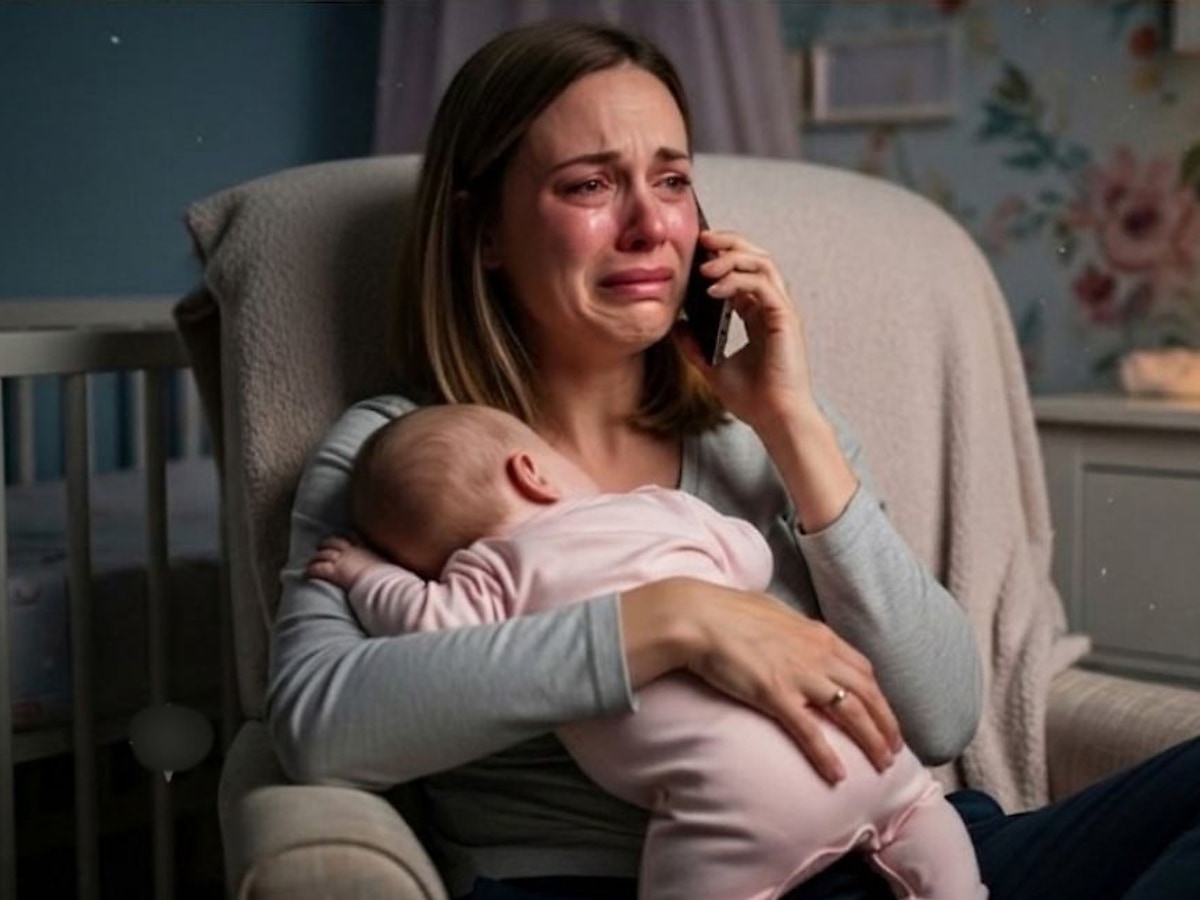
Part 1: The Call That Wouldn’t Stop
My name is Sarah Whitman, and I used to believe I knew exactly what my life was. I was thirty-six years old, a senior marketing executive at a pharmaceutical company in San Francisco, married to a man most people described as brilliant, driven, and impossible not to admire. My husband, Robert, was a venture capitalist who made more money in a year than either of us had grown up imagining.
Eleven years of marriage sat behind us by that point.
Two kids filled our days, Sophie at nine, already devouring novels meant for kids twice her age, and Michael at seven, still clutching a stuffed sea otter he swore was purely decorative.
Our home in Pacific Heights had cost $3.2 million, all bay windows and gleaming staircases, the kind of place that made guests instinctively lower their voices.
From outside looking in, we seemed like the family everyone quietly wanted to be.
We hosted holidays with fresh flowers on the table while Robert carved turkey and cracked jokes that had everyone laughing.
Winters took us to Lake Tahoe, summers to Monterey, and once a year we’d fly somewhere warm enough that our kids forgot what fog even felt like.
Robert and I kept our date nights sacred, every other Friday, dropping the kids with our sitter and heading somewhere with tiny plates and reservations nobody could get.
He’d reach across the table, ask about my latest campaign, tell me I looked good even on nights I felt wrecked from exhaustion.
Looking back, that’s the part that hurts most now.
The deception never wore a cold face. It wore forehead kisses, carpool schedules, shared calendars, birthday cake, lazy Sunday pancakes.
If you’d asked me back then whether our marriage was flawless, I’d have laughed and said nobody’s is.
Robert buried himself in work constantly. I shouldered most of the emotional labor at home. We fought over screen limits, private school costs, whether his phone belonged at the dinner table.
But it never crossed my mind that he was running an entire second existence.
Then everything shifted at 2:03 a.m. on a Tuesday in March.
Rain had been drumming steadily against our bedroom windows for hours, gentle enough that I’d drifted off thinking it sounded almost soothing. Robert lay beside me, arm flung over his head, breathing deep and untroubled the way he always did when life handed him whatever he wanted.
Then his phone lit up and started buzzing.
I let it go at first. His phone never stopped, some founder texting from New York, a partner calling from Boston, an email dropping in from London at some ungodly hour because his career never respected sleep schedules.
It stopped ringing, then started again.
I cracked one eye open and saw the screen glowing on his nightstand, the words BLOCKED NUMBER staring back at me.
Robert didn’t stir.
Voicemail picked up. Ten seconds later, it rang again. Then again. By the fifth call, my annoyance had curdled into something sharper, cold enough to snap me fully upright.
I grabbed the phone off the nightstand.
“Hello?” I said, voice thick with sleep.
Silence at first, just breathing. Then a young woman’s voice, shaky, unsure.
“Is this Robert’s wife?”
Everything in me froze solid.
“Who is this?” I demanded.
“My name is Jasmine,” she said. “I’m sorry, I know it’s crazy late, but I’ve been trying to reach him for weeks and he won’t pick up, won’t text back. I didn’t know what else to do.”
I glanced over at Robert, still dead asleep, face half smashed into his pillow, oblivious to the fact that a stranger’s voice had just cracked my entire world open with one sentence.
“How did you get this number?” I asked.
“He gave it to me himself,” Jasmine said. “Told me to call if anything urgent came up. This qualifies.”
My grip tightened around the phone.
“What kind of urgent.”
She made a small broken sound, almost a sob.
“It’s about our daughter.”
The floor seemed to tilt beneath me.
“Your daughter?”
“Our daughter,” she whispered. “Her name is Lily. She just turned seven months.”
I could hear rain against glass. I could hear Robert’s slow breathing. I could hear my own pulse pounding so loud it felt external, like it belonged to someone else in the room.
“No,” I said, though I couldn’t tell if I was talking to her, myself, or nobody at all.
“I’m so sorry,” Jasmine said quickly. “I really thought you knew already. He told me you two were basically done, that the marriage was over in every way that mattered, that he was planning to leave.”
I stood up so abruptly the room spun. I slipped into the hallway and shut the bedroom door behind me with hands that wouldn’t stop shaking. Nothing but rain and the refrigerator’s distant hum broke the silence downstairs.
“Where are you,” I asked.
“Los Angeles,” she answered. “Westwood, actually. His office down here is in Century City. We met at a conference, two years back now.”
Two years.
Those two words landed like bricks.
“He hasn’t seen Lily in three months,” Jasmine went on. “He used to send money, but now he’s late every single time. Daycare runs almost $2,400, plus I’m still paying off medical bills from her birth. I’m not asking for anything unreasonable. I just want him to step up.”
I shut my eyes.
“Does he know you’re calling me right now?”
“No,” she said. “I just couldn’t keep begging him to pick up. I’m sick of watching him treat my own daughter like something he can bury.”
My daughter. My husband. Her daughter. Their daughter.
The words tangled together until breathing felt nearly impossible.
I didn’t scream. I didn’t shake Robert awake. I didn’t hurl the phone across the hallway, though a piece of me wanted to. I told her I needed to go, and ended the call.
Then I stood there in the dark, gripping my husband’s phone, watching the life I’d built dissolve without a sound.
I retreated to the guest room and sat on the edge of the mattress until sunrise crept in. Tears didn’t come right away. Shock works strangely that way sometimes, arriving not as sobbing but as this clean, hollow quiet, like every door in your mind slammed shut simultaneously.
Around 5:30 a.m. the sky outside turned that early gray. The city stirred awake around us. Down the hall, Sophie’s alarm would sound soon, and Michael would wander into the kitchen already asking about waffles.
I stared down at the phone still clenched in my hand.
Eleven years I’d honored Robert’s privacy without question. That morning, privacy felt like something he’d bought using my trust as currency.
I typed in the passcode I’d watched him enter hundreds of times, and the screen unlocked.
What waited inside didn’t offer explanations.
It offered proof.
Part 2: The Kitchen Table Confession
By 7:15 a.m. I sat at the kitchen table with Robert’s phone laid out in front of me and coffee going cold, untouched. The kids had already eaten, dressed, and disappeared upstairs to brush their teeth. I moved through that morning like a machine, packing lunchboxes, initialing a permission slip, forcing a smile when Michael asked about early pickup for soccer.
Robert came down wearing navy sweatpants and a Stanford hoodie, hair still damp from his shower. He looked completely ordinary, which somehow made the whole thing worse.
“Morning,” he said, reaching for the coffee pot.
I looked at him steadily.
“We need to talk.”
Something in my tone made him pause mid step. His gaze flicked from my face to the phone sitting on the table, and for one unguarded flash, his expression shifted before he could catch it.
Fear.
Not puzzlement. Not worry. Genuine fear.
That’s when I understood Jasmine hadn’t exaggerated a single word.
“Sarah,” he said carefully, “what’s happening here.”
I slid the phone across toward him. “A woman named Jasmine called at two this morning. She wanted to discuss someone named Lily.”
His face drained of all color instantly.
His mouth opened, then shut again.
I’d imagined countless possible reactions during those dark hours before dawn. Denial, rage, some absurd cover story. But this silence told me more than any confession ever could have.
“Sophie and Michael are upstairs,” I said. “So sit down. Keep your voice quiet. And give me the truth, all of it.”
He sat.
Neither of us spoke for a long stretch. Our kitchen sat there looking painfully normal around us, apples piled in a bowl, Michael’s crayon drawing taped to the fridge, Sophie’s spelling words held up by a Golden Gate Bridge magnet. It felt cruel that the world could stay so intact while mine split apart completely.
“I can explain,” Robert said.
I laughed once, humorless, because that sentence felt so tiny next to what he’d actually done.
“No,” I said. “You can tell me what happened. Explaining isn’t the same thing.”
He stared down at his hands.
“I met Jasmine at a conference down in L.A.,” he said. “Two years ago now. I was there three days. We talked after a panel, grabbed drinks with a group afterward, and then.”
“And then you slept with her,” I finished.
He flinched.
“Yes.”
That single word hung there between us like smoke.
“It wasn’t meant to turn into anything,” he said. “I know how that sounds, but it wasn’t planned. I was reckless. Selfish.”
“Don’t call it recklessness,” I said. “You maintained a two year relationship with another woman.”
He swallowed hard.
“Yes.”
“You told her we were already separated.”
His eyes closed.
“Yes.”
The room seemed to bend at its edges.
“You told her our marriage was finished.”
“Yes.”
“You got her pregnant.”
He nodded silently.
“And Lily is yours.”
He finally lifted his eyes to meet mine, and for the first time since sitting down, something resembling shame crossed his face.
“Yes,” he said. “She’s my daughter.”
I shot up from my chair so fast it scraped hard against the floor. Upstairs, footsteps moved around, and I forced myself to breathe slow. I would not let him turn this house into a memory our children would carry forever.
“How long did you think you could keep a child hidden,” I asked.
“I wasn’t thinking straight.”
“No, Robert. You were thinking with total clarity. Separate bank account. Blocked calls. Deleted texts. Telling her not to reach out to me. That isn’t confusion. That’s a plan.”
He dragged both hands down his face.
“I thought I was protecting our family.”
Those words hit harder than his confession had.
“Protecting the family?” I echoed. “You destroyed this family. You lied to a woman who trusted you completely. You abandoned an infant. And now you’re calling that protection?”
He offered no response.
I grabbed the stack of screenshots I’d printed at dawn. Messages, photos, bank transfers, a picture of Lily in a pink onesie, Robert’s exact eyes staring out, tiny fist pressed against her own cheek. I dropped the whole pile onto the table between us.
His face collapsed the moment he saw her photo.
“Don’t,” I said. “Don’t act surprised, like this is news to you.”
He looked away.
“She looks like you,” I said quietly. “That must have made ignoring her a lot harder.”
“Sarah, please.”
I leaned forward, palms flat against the table.
“You don’t get to beg for mercy before you’ve told me everything I deserve to know.”
So he told me.
He admitted flying to Los Angeles far more often than his calendar ever revealed. Some “portfolio dinners” had actually been evenings spent with Jasmine. He’d been wiring her $3,000 every month from an account I’d never known existed.
He’d been present when Lily was born, but only briefly. He said Jasmine genuinely believed he’d eventually leave me for good. He confessed to making promises he never intended keeping, because lying felt easier than facing what he’d actually done.
Each sentence shrank him a little more in front of me.
By the time Sophie and Michael thundered downstairs with backpacks slung over shoulders, Robert and I had become total strangers sharing the same table. I smiled at my children with a calm I borrowed from somewhere outside myself. I kissed their heads, told them I loved them, watched them climb into the carpool.
The instant the front door clicked shut, I turned back to face him.
“I want you out of this house today.”
His head jerked up.
“Sarah, let’s not decide anything while we’re upset.”
“I’m not upset,” I said, though clearly I was. “I’m certain.”
“This is my house too.”
“Discuss that with a lawyer. But today you’re leaving, because I refuse to let our kids breathe inside this lie one more hour.”
He rose slowly.
“We should think about Sophie and Michael here.”
I stepped closer, close enough to see the fine lines beside his eyes I used to find endearing.
“I’ve been thinking about them nonstop since two this morning,” I said. “Maybe try that sometime.”
He packed his bag without another word. I stood in our hallway watching him fold shirts with that same tidy precision he applied to every problem, as if life could always be sorted into neat enough piles.
At the door, he turned back around.
“I love you,” he said.
For one second, the old version of me nearly answered. The one who remembered our wedding out in Napa, our cramped first apartment in the Mission, the night Sophie arrived and he cried so hard a nurse handed him tissues. But that version of me had died somewhere between the fifth unanswered call and that photograph of Lily.
“No,” I said. “You love appearing good. That’s not the same thing as loving me.”
He walked out just past noon.
The house sat silent once the door closed. I stood frozen in the foyer and finally broke down, not the graceful crying from films, but a shaking, ugly grief that dropped me onto the stairs because my legs simply gave out.
That night I told the kids their father would be staying somewhere else while we sorted through serious adult issues. I held back the details about Jasmine, about Lily, for the time being.
Sophie studied me carefully, too sharp for easy comfort.
“Are you two getting a divorce,” she asked.
Part of me wanted to lie, to shield her from every jagged edge of this truth. But I’d just learned exactly what lies dressed up as protection actually do to people.
“I don’t know yet,” I said gently. “But no matter what, both your dad and I love you completely. None of this is because of anything you did.”
Michael cried first. Sophie held her tears until bedtime, then curled into my side and whispered, “Did Dad do something bad.”
I smoothed her hair.
“Yes,” I said. “But adult mistakes were never supposed to become children’s burdens.”
Once she drifted off, I sat alone in the hallway between their rooms. I wasn’t only a wife who’d been betrayed anymore. I was a mother standing guard between my kids and the wreckage their father had left behind.
And I knew I couldn’t afford to fall apart for very long.
Part 3: Sitting Across From Jasmine
Two days passed before Jasmine called again. This time her number showed up plainly, no block. I stared at the screen a full minute before answering.
“I’m sorry,” she said the instant I picked up. “I know I’m probably the last person on earth you want to hear from.”
“Not the last,” I said. “That title belongs to Robert.”
A brief pause followed. Then, oddly, she laughed through what sounded like tears.
“Fair enough,” she said.
“No,” I said. “He earned that one.”
She let out a shaky breath.
“I think we should meet in person,” Jasmine said. “There are things you deserve to know. Not to hurt you further, just because I believe he’s still lying to us both.”
Every instinct told me to refuse, to hang up and pretend she wasn’t real. But Lily was real, Robert’s lies were real, and pretending had already cost me plenty.
We settled on a coffee shop near the Ferry Building in San Francisco. Jasmine caught an early flight out of Burbank, saying driving up with a baby would’ve been too much. She left Lily behind, which I felt grateful for and slightly ashamed of feeling grateful for.
I got there fifteen minutes early and sat by the window, watching commuters move along the Embarcadero. The city looked the same as always, gray water, white ferries, tourists snapping photos, office workers clutching lattes like everything remained totally manageable. I wondered how many of them carried private catastrophes tucked under their coats.
Jasmine walked through the door at 10:04 a.m.
I recognized her instantly from the photos. Twenty-eight years old, long dark hair pulled back into a low ponytail, olive skin, eyes that clearly hadn’t rested properly in months. Beautiful, sure, but nothing like the polished, threatening figure I’d imagined during those dark 2 a.m. hours.
She looked exhausted. Human. Young.
“Sarah?” she asked.
I nodded.
She sat down across from me, setting a worn diaper bag on the chair beside her even without Lily present. Maybe by now it had simply fused itself to her body, proof of responsibility she carried everywhere she went.
“Thank you for agreeing to this,” she said.
I studied her for a long moment.
“I honestly don’t know what I feel about you,” I admitted. “But I know Robert lied to you too.”
Her eyes welled up instantly.
“He told me you already knew the marriage was finished,” she said. “Said you two stayed together publicly for the kids and money, that you’d both emotionally moved on already.”
I nearly laughed, but no humor remained in me for that.
“Very convenient story.”
“I understand that now.”
She twisted a paper napkin between her fingers nervously.
“When we first met, he was charming,” she said. “Not flashy, not the type trying to impress someone younger. He listened closely. Remembered small details. Asked about my mom’s surgery, my job, my apartment, everything.”
That sounded exactly like Robert. Attention had always been his specialty, whenever attention served his purposes.
“He said he felt trapped in his marriage,” Jasmine continued. “Said he loved his kids but the relationship was already over. Said he didn’t want to humiliate you by rushing into filing. He made himself sound noble about it.”
I stared out the window a moment.
“He turned cowardice into something that sounded like kindness,” I said.
She nodded.
“When I found out I was pregnant, I expected him to be scared but ultimately happy. He wasn’t. He went completely pale the second I told him.”
Her voice cracked on that last part.
“He asked if I was certain. Then asked if I’d considered every option. I told him I planned to keep her. Everything changed after that.”
I listened as she filled in the rest.
Robert had covered some prenatal visits in cash. He attended one ultrasound appointment and cried hearing the heartbeat. Then he vanished for three straight weeks, claiming some crisis at work demanded his attention.
He’d been present for Lily’s birth at Cedars-Sinai, but left before morning arrived, claiming a flight back to San Francisco couldn’t wait. He held his own daughter for eleven minutes total. Jasmine knew the exact number because she’d been watching the clock the whole time.
“He swore he’d come back the following weekend,” she said. “He never did.”
Something shifted inside me hearing that. It didn’t lessen my anger. It widened it, deep enough now to include not just my own pain, but the pain of an infant who’d done absolutely nothing wrong.
“Did you know about Sophie and Michael,” I asked.
“Yes,” she said. “He talked about them constantly. Showed me pictures. Made it sound like you two were already sorting out custody arrangements together.”
I shut my eyes briefly.
“He used our own children to make his lie feel believable.”
“I’m sorry,” she whispered.
I studied her closely then.
“Did you ever search me online?”
She hesitated a beat.
“Yes.”
Her honesty surprised me.
“And?”
“I found your LinkedIn. A handful of charity event photos. A holiday picture someone tagged you in.” She glanced down. “You looked happy in them. I asked him about it once. He said social media was just performance.”
That comment stung because it held some truth. Social media absolutely is performance. But apparently so was my entire marriage, and nobody had informed me I was even onstage.
“What exactly do you want from me,” I asked.
She dabbed beneath one eye.
“I want him to stop hiding from this,” Jasmine said. “I want child support handled legally, not through random payments he threatens to cut off whenever he pleases. I want Lily covered by health insurance. I want him to actually acknowledge her existence.”
“And from me specifically?”
“Not your money. Not your life. Definitely not your husband.” She swallowed hard. “I just didn’t know anyone else capable of making him tell the truth.”
There it was, the strange, humbling reality of it all. She’d called me because even now, after everything Robert had done, she believed I held more influence over him than she ever could.
Maybe she was right about that.
I leaned back in my seat.
“I have two children depending on me,” I said. “Whatever comes next, Sophie and Michael remain my priority.”
“I understand completely.”
“But Lily is their sister,” I said, and saying it out loud hurt physically. “Whether I like that reality or not, she exists. None of this was ever her choice.”
Jasmine began crying quietly.
“I know,” she said.
We talked nearly two hours straight. We compared calendars and matched his supposed business trips against her own memories. We discovered he’d fed each of us slightly different versions of the same exact lie, always positioning himself as the wounded party, always making the women around him responsible for his own comfort.
By the time we stood to leave, I no longer viewed Jasmine as the villain in my story. I wouldn’t call her a friend either, that would’ve felt far too clean, too convenient, too dishonest given everything.
I saw her instead as another person caught inside the same blast radius.
Outside, wind off the bay cut sharp. Jasmine pulled her coat tighter around herself.
“I’m sorry for what this did to your family,” she said.
I looked directly at her.
“You made a mistake trusting a married man without asking harder questions,” I said. “But Robert made his vows to me specifically.”
She nodded silently.
“Take good care of Lily,” I told her.
“I will.”
Watching her walk away, something twisted painfully in my stomach.
Robert hadn’t only betrayed me. He’d engineered an entire situation where women who never should have had to sit across a table from each other were now stuck cleaning up the mess he’d made of his own life.
That evening I called a family law attorney.
Her name was Patricia Chen.
Nothing I told her seemed to surprise her one bit.
Part 4: What the Paperwork Revealed
Patricia Chen’s office occupied the twenty-second floor of a downtown building overlooking Market Street. She was in her fifties, sharply dressed, radiating a calm that somehow made me feel safer and more terrified simultaneously. She let me talk through everything without a single interruption.
Once I finished, she folded her hands together on the desk.
“First thing,” she said. “California runs no-fault divorce. Courts generally won’t punish infidelity directly. Don’t expect a judge to hand you everything simply because he cheated. That’s not how any of this works.”
The bluntness stung, though I respected it.
“So what actually matters here,” I asked.
“Money,” Patricia said. “Disclosure. Custody arrangements. Support obligations. Stability for your kids. And whether he concealed assets or broke his fiduciary duties during your marriage.”
I told her about the hidden bank account.
Her expression changed instantly.
“That,” she said, “matters a great deal.”
Over the following weeks, my life turned into an endless stack of documents. Bank statements. Credit card records. Mortgage paperwork. Tax filings. Travel receipts. Text screenshots I wished I’d never had to read twice.
Robert wanted everything handled quietly. That was his exact phrase, quietly, as if quiet hadn’t already been the breeding ground for every terrible decision he’d made.
He stopped by the house one night after the kids fell asleep, looking noticeably thinner than before.
“We don’t need to make this ugly,” he said.
“You already made it ugly,” I said. “I’m simply making it legal.”
His jaw tightened.
“I’m still their father.”
“Yes,” I said. “Which is exactly why everything needs to exist in writing now.”
Patricia filed our divorce petition in San Francisco County. Jasmine filed her own parentage and support case down in Los Angeles County. Robert, a man accustomed to steering founders and investors, suddenly found himself powerless over his own narrative.
Initially he denied everything.
He claimed Jasmine exaggerated details. He called the monthly transfers “temporary help.” He demanded a paternity test before agreeing to anything involving Lily.
Jasmine agreed without hesitation.
The results confirmed exactly what everyone already suspected.
Lily belonged to Robert.
His legal team shifted tactics after that. Paternity stopped being contested. Numbers became the battlefield instead.
Patricia explained that California calculates child support through strict guidelines, factoring income, custody percentages, insurance costs, and various tax considerations. None of it aimed at punishment, only at securing the child’s rightful support.
The court ordered Robert to pay guideline support for Lily, contribute toward her health coverage, and cover a share of any medical costs insurance didn’t handle. The final figure wasn’t the dramatic number people imagine from television, but it was enough to stabilize Jasmine’s household and stop Robert from treating his own daughter like some optional line item.
Within our own divorce, Patricia zeroed in hard on that hidden account and unexplained spending. California treats most marital assets as community property, split evenly, but both spouses owe each other honest disclosure. Concealing funds opens the door to sanctions, fee awards, and reimbursement demands.
Robert hadn’t merely cheated on me.
He’d secretly siphoned shared money for years.
That was the piece the court could actually hold him accountable for.
The whole process felt brutal, though nothing like courtroom dramas suggest, no shouting matches or surprise witnesses. It was brutal in a slower, quieter way, endless email chains, sworn declarations, forensic accounting reports, settlement meetings, the creeping humiliation of watching your entire marriage reduced to spreadsheet rows.
A forensic accountant eventually traced transfers totaling more than $92,000 across two years. Some went straight to Jasmine. Some funded hotel stays, flights, dinners, gifts. Robert tried framing it all as ordinary personal spending, but Patricia refused to let that slide.
“Personal spending is one category,” she told him flatly during a settlement conference. “Secret accounts paired with false disclosures fall into an entirely different one.”
I’ll never forget his expression in that moment.
It was the look of a man realizing charm has no effect whatsoever on math.
The kids started therapy that spring. I shared more of the truth with them, guided carefully by their therapist. I skipped adult specifics but told them their dad had another child named Lily, and that nothing about it changed how deeply loved they remained.
Michael asked if Lily had somehow stolen his father away.
That question shattered something inside me.
“No, sweetheart,” I said, pulling him close. “Lily’s just a baby. She never took anything from anyone. Grown-ups made every one of these mistakes.”
Sophie stayed quieter through it all. Eventually she asked whether I’d known beforehand. When I said no, she stared at the floor for a long stretch of silence.
“So he lied to everyone,” she asked finally.
I had no way to soften that truth without lying myself.
“Yes,” I said. “But from now on, we tell each other the truth.”
Robert initially pushed for equal custody, believing it would shrink his support obligations and preserve his public image. Patricia warned me against reacting purely on emotion. “Watch what he actually does,” she advised. “Not what he performs for an audience.”
So we tracked everything carefully.
Who showed up to parent-teacher conferences. Who booked pediatrician appointments. Who remembered Michael’s soccer schedule and Sophie’s allergy medication timing. Robert genuinely loved his children, but he’d mostly played a guest role inside the daily machinery of raising them.
Eventually we settled on a custody arrangement offering the kids real structure while giving Robert meaningful involvement, without pretending he’d always been equally present. He received alternating weekends, one weeknight dinner, shared holidays, and extra summer time. He also committed to co-parenting counseling sessions.
The financial settlement finally arrived after months of grinding pressure. I didn’t walk away with everything, that was never realistic to expect. But I secured my rightful share of community property, reimbursement tied to the hidden funds, structured spousal support, and an order requiring Robert to cover a large portion of tuition, therapy, and extracurricular costs for our kids.
He also ended up paying a significant chunk of my legal fees, thanks directly to that concealed account and the discovery delays it caused.
Once the final paperwork was signed, I sat in Patricia’s office staring down at it all.
“That’s really it,” I asked.
She offered a sad little smile.
“Legally speaking, yes.”
Strange, how something this massive could end simply through signatures on paper.
No dramatic courtroom moment. No judge declaring my vindication out loud. No instant where Robert fully grasped the scope of what he’d actually destroyed.
Just paper, ink, and the quiet knowledge that my future no longer depended on his lies.
Walking out of the courthouse, my phone buzzed with a text from Jasmine.
“Lily took her first steps today.”
A video was attached.
I stood there staring at it for a long while. A tiny girl in a yellow shirt wobbled unsteadily across a living room rug straight into Jasmine’s waiting arms. She giggled the moment she stumbled.
Robert’s exact eyes. Jasmine’s smile.
My own children’s little sister.
I didn’t know what exactly to feel.
So I let myself feel all of it at once.
Part 5: What Came After
The divorce became final eighteen months after that original 2 a.m. call. By then I’d stopped tracking time through court dates and started measuring it through smaller, ordinary moments instead. The first morning I woke up without reaching for Robert’s side of the bed. The first school event I attended alone without feeling a shred of embarrassment. The first Sunday our house felt peaceful rather than hollow.
Robert eventually left his hotel for a condo over in Noe Valley. Still nicer than most people’s homes, sure, but for him it represented a serious fall from the world he’d carefully constructed around himself. He sold his second car, scaled back expensive trips, and discovered that financial consequences feel entirely different once nobody else can quietly absorb them for you.
He also started seeing Lily regularly.
Visits felt stiff and limited at first. Jasmine didn’t trust him easily, and honestly, I couldn’t blame her one bit. He had to learn the unglamorous basics of fatherhood, packing snacks, changing diapers, tracking nap schedules, simply showing up without expecting applause for it.
Lily never knew him as some powerful, important man. To her he was just the tall person who occasionally arrived carrying board books and a nervous smile. Strangely enough, that may have been exactly what he needed.
Sophie and Michael finally met Lily nearly a year into this whole process. We arranged it carefully with therapists guiding every step, at a park up in Marin on a quiet Saturday morning. Robert was visibly nervous. Jasmine was nervous too. My own shoulders ached from tension the entire drive over.
Lily toddled straight toward Michael first, drawn by the red ball in his hands. He glanced at her, then back at me, clearly unsure what to do.
“Go ahead and say hi,” I told him gently.
He crouched down to her level.
“Hi,” he said. “I’m Michael.”
She snatched the ball and burst out laughing.
That was really it. No swelling music, no instant miraculous healing. Just a little girl giggling and a boy quietly discovering that complicated feelings can coexist right alongside simple kindness.
Sophie held back at first. Later, riding in the car, she said, “She’s pretty cute. I’m still mad at Dad though.”
“Both things can be true,” I told her.
That sentence became something we lived by afterward.
Both things can be true.
Robert could be a genuinely loving father while also being a man who caused enormous damage. Jasmine could have made painful, questionable choices while still deserving support as Lily’s mother. I could be strong and still burst into tears in a grocery store aisle whenever our old wedding playlist happened to play.
Both things can be true.
My career shifted too during all this. For years I’d told myself certain risks were off limits because Robert’s schedule always came first, because the kids needed my flexibility, because someone had to remain the steady one. After we separated, stability became something I finally built entirely for myself.
Six months after the divorce finalized, I got promoted to Vice President of Marketing. I negotiated harder than I ever had in my entire career. When the offer letter arrived, I sat in my car in the parking garage and cried, not over the title itself, but because I realized I hadn’t disappeared inside somebody else’s story after all.
I began therapy for myself too. At first purely because everyone kept insisting I should. Then I kept showing up because betrayal, it turns out, doesn’t simply end once the liar walks out your front door.
It lingers in small, quiet places. In the way you second guess your own judgment constantly. In replaying old conversations, hunting for clues you missed. In wondering whether trusting someone made you naive all along.
My therapist helped me see something I initially resisted. Trust isn’t stupidity. Loving someone fully isn’t proof of weakness. Shame belongs entirely to the person who lied, never to the person who simply believed the marriage was genuine.
About a year later, I started dating again. Slowly. Carefully. Somewhat awkwardly.
His name was Daniel, a history teacher at a high school over in Oakland. No private equity portfolio, no acronym heavy dinner conversation. He asked real questions and actually waited around for the answers. He met my kids only after months passed, not weeks, and when Michael rambled for twenty straight minutes about sea otters, Daniel listened like a quiz might follow.
The first time he attended one of Sophie’s school performances, she whispered to me afterward, “He clapped really loud.”
I smiled.
“He really did.”
“I liked that,” she admitted.
So did I, honestly.
Jasmine and I aren’t friends in any traditional sense these days. We don’t grab brunch together or pretend our shared history is tidy. But we stay in contact whenever necessary, especially since our children’s lives now overlap in ways none of them ever chose for themselves.
She still sends photos occasionally, Lily with cake smeared across her face, Lily stomping around in tiny rain boots, Lily gripping a crayon like it might bite her. Each photo used to hurt terribly. Slowly, over time, they became something else entirely.
Proof that life keeps moving forward, even when it begins rooted in betrayal.
Robert has genuinely changed some, though I’m careful never to romanticize that shift too much. Consequences can absolutely make someone more responsible without erasing the original harm they caused. He attends therapy regularly. He shows up for school events. He pays support punctually because the court order leaves zero room for disappearing quietly anymore.
He’s apologized to me numerous times by now.
Some apologies felt rehearsed. Others sounded defensive. Only one ever truly landed, arriving two years after that original phone call, when he stood on my porch after dropping the kids off and said, “I don’t think I understood that lying to you also taught our children the world was less safe than they believed.”
I studied him for a long, quiet moment.
“That’s precisely what you did,” I said.
He simply nodded, and for once, he didn’t ask me to comfort him through the weight of finally understanding it.
I haven’t forgiven Robert in whatever glossy way people describe forgiveness online. I didn’t wake up one random morning free of anger, radiating wisdom, grateful for the pain somehow. That version of healing sounds lovely in theory, but it was never going to be mine.
My healing looked far more practical than that.
I changed our locks. I hired an attorney. I told the truth carefully, piece by piece. I protected my children fiercely. I built new routines from scratch. I learned to sleep alone again. I stopped tracking his location, stopped rereading old messages obsessively, stopped wondering why I hadn’t been enough.
Because that’s exactly the lie betrayal always tries leaving behind.
That if I’d been prettier, softer, more exciting, less tired, more available, more forgiving, more anything at all, none of this would have happened.
But Robert’s choices were never a reflection of my worth as a person.
They were only ever a reflection of his own character during that particular season of his life.
If you’re reading this because you found suspicious text messages, a hotel receipt, some hidden account, an unfamiliar second phone, an unexpected baby, an entire secret life, please hear this clearly.
You’re not crazy.
You’re not being dramatic.
You are not the one destroying your family simply by speaking the truth out loud.
Whoever built the lie is the one who created the damage. Your refusal to keep living inside that lie isn’t destruction at all. It’s the very first honest act after an extended season built entirely on dishonesty.
Find real support. Speak with an attorney in your own state before making any major decisions. Document whatever you legally can. Shield your children from adult specifics, but never build their entire lives on lies simply because the truth feels too painful to say out loud.
And please, don’t ever mistake silence for genuine strength.
For a long time I believed strength meant preserving the picture perfectly intact. The house, the holiday traditions, the smiling family portraits, the polite little explanations for everyone else’s comfort. I believed strength meant swallowing pain quietly so nobody around me ever felt uncomfortable.
Now I understand real strength can look like a woman sitting at her kitchen table, hands trembling, saying simply, “Tell me the truth.”
It can look like signing legal documents.
It can look like driving your children to therapy appointments.
It can look like allowing your ex husband to become a better father without rewriting the past just to cast him as some hero.
It can look like sitting across from the very woman you were taught to resent, only to realize the true enemy was always the lie that had trapped you both equally.
Sometimes I still think back to that phone call. The blocked number glowing on the screen. Rain against the windows. Robert sleeping soundly right beside me. Jasmine’s trembling voice asking if she’d reached his wife.
For months afterward, I wished desperately I’d never picked up.
Now I understand that call never actually destroyed my life.
It only destroyed the illusion I’d been quietly living inside for years.
And painful as that truth was, it handed me something I hadn’t held onto in ages.
Honesty.
That honesty cost me my marriage, my certainty, the entire future I’d once assumed was waiting for me. But it gave me back something equally valuable, my own dignity. It gave my children a mother who chose truth over comfortable appearances.
It gave me a life that isn’t flawless, isn’t polished, isn’t always simple to navigate.
But it’s genuinely mine.
And after everything Robert took away, mine is more than enough.
Names have been changed and this story has been dramatized for entertainment purposes.
