Part 1: The House That Was Never Really His
The first time I understood that my husband’s free hotel would cost me everything, it was 11:47 p.m. on a Tuesday in late October, and I was standing in the doorway of my own bedroom staring at a shape under my grandmother’s quilt that was not my husband.
Not a guest room.
My room.
My grandmother Vera’s hand-stitched wedding quilt, the one with the pale yellow squares she cut from her own mother’s aprons, was pulled up to the chin of a woman I had never seen before. Her hair was dark and spread across my pillow. Her shoes, a pair of red platform sandals, were sitting on top of my nightstand like she had set them there every night for years.
I stood in the doorway for a long time.
I did not scream. I did not cry. Something in me went very, very quiet, the way a room goes quiet right before a storm knocks the power out.
My name is Calla Merritt. I am a licensed occupational therapist. I work out of a rehabilitation clinic in Charlotte, North Carolina, and I have spent fifteen years helping people relearn how to do the basic things that make a life feel like their own. Getting dressed. Making coffee. Walking to the mailbox. I know what it looks like when a person has lost the thing that grounds them.
I recognized it that night because I felt it standing in my own doorway.
I backed out of the room quietly, walked to the kitchen, and sat down at the table where my grandmother used to shell butter beans on Sunday afternoons. I put my hands flat on the wood. I breathed.
Then I picked up my phone and called my attorney.
But I am getting ahead of myself. Because the stranger in my bed was not the beginning. It was just the night I finally stopped pretending the beginning had not already happened.
Let me go back to where this actually started, which was three years earlier, on a Thursday evening in November, when I came home from a twelve-hour shift to find a man named Beckett stretched across my sofa with his sneakers on the cushions and a beer sweating a ring into my grandmother’s walnut coffee table.
Rylan came out of the kitchen wearing the apron my grandmother had embroidered with little blue flowers. He had a wooden spoon in one hand and that easy smile people always trusted before they trusted me.
“Babe,” he said, like I was the one interrupting. “This is Beckett. College buddy. He’s crashing here this weekend.”
I checked my phone. He had texted me six minutes earlier.
Beckett raised his beer. “Great place, by the way.”
It was my place. My grandmother Vera left it to me when she died because she said I was the only one in the family who understood what a home was supposed to feel like. I had painted the porch myself. I had saved her ceramic birds from the estate sale. I had signed every insurance form, every property tax document, every repair contract.
Rylan lived there because I loved him.
That night I ate spaghetti with a stranger who kept calling me “quiet” like it was a flaw. When I finally got to our bedroom, Rylan followed me.
“You looked annoyed,” he said.
“I was surprised.”
“He needed help.”
“I understand that. I just need notice before people stay here.”
Rylan blinked at me, disappointed. “It’s called being hospitable, Calla.”
That word. Hospitable.
It became the word he used to make my boundaries sound like character defects.
His mother Solene arrived for a “quick visit” with six suitcases and a list of complaints about my towels. His cousin Pax and a pregnant girlfriend stayed three weeks after saying they needed one night. His fraternity brothers slept on air mattresses in my dining room and left wet towels on antique chairs. His office friends came for football Sundays and tracked mud through the kitchen.
Every time, I found out too late.
“Babe, Pax needs the room another week.”
“The guys are coming Sunday. Order pizzas?”
“My mom says Thanksgiving through New Year’s makes the most sense.”
When I objected, Rylan’s face did not get angry. It got cool. His smile flattened, his eyes going distant, like I had embarrassed him in front of people who were not even in the room.
“This is how families work,” he told me one night while I stood holding a stack of dirty plates from a dinner I had not agreed to host. “They show up for each other.”
I believed for a long time that he meant it sincerely.
That was my first mistake.
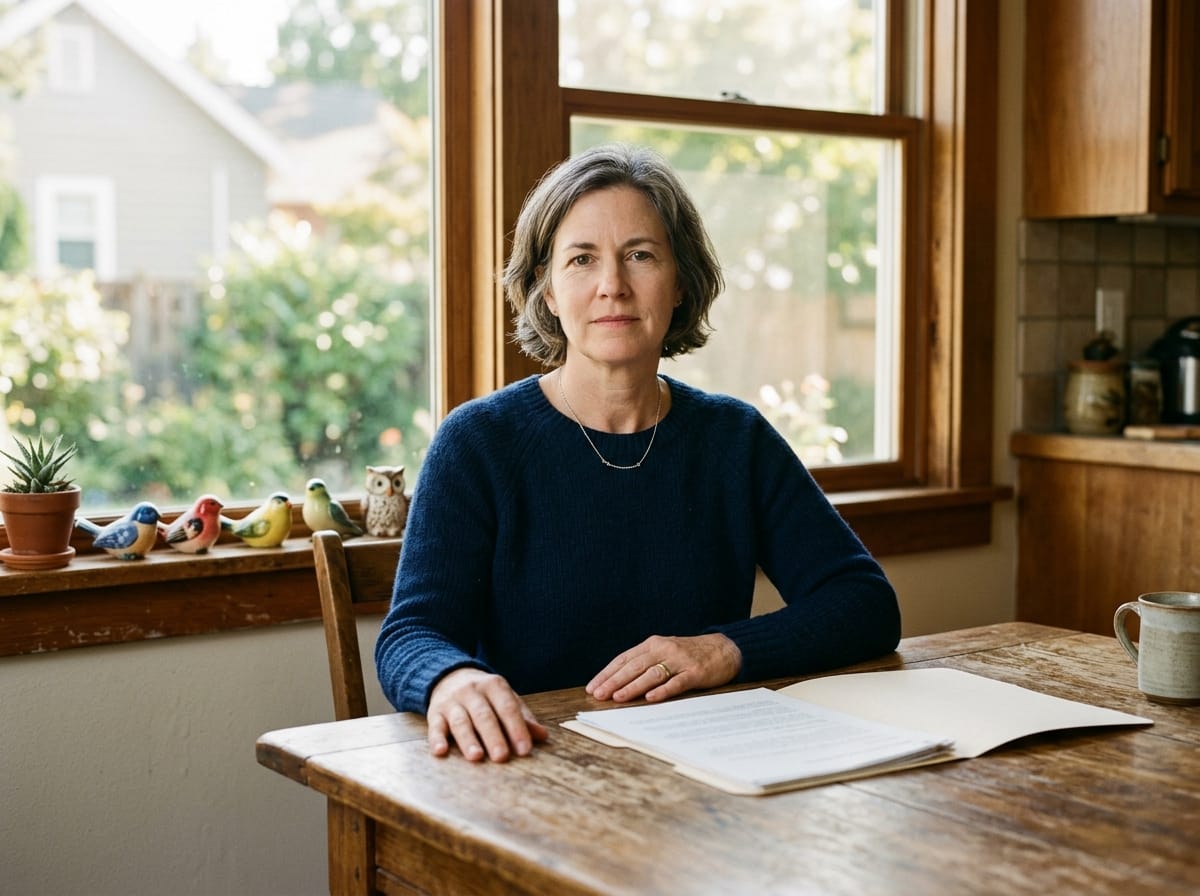
But what I did not know yet, what I would not discover for another two and a half years, was that the revolving door of houseguests was not just Rylan being generous.
It was a distraction.
Part 2: What Hospitality Was Actually Covering Up
I want to be honest about something. I am not a woman who gives up easily.
I suggested couples counseling twice. Rylan agreed the first time, attended two sessions, then announced the therapist was “too focused on blame” and stopped going. I started keeping a simple log in a notes app on my phone. Dates, names, how much notice I had received. Not to build a case. Just to feel less crazy when Rylan told me I was overreacting.
November 4: Beckett, 0 days notice, 3 nights.
December 19 through January 2: Solene, 1 day notice, 14 nights.
February 8: Pax and Dani, 1 day notice, 21 nights.
The log grew.
I also started noticing smaller things. The way Rylan’s phone was always face-down on the counter. The way he stepped out of the room to take certain calls. The way he sometimes came home from “work drinks” smelling like a specific perfume that was not mine, something with a cedar base, the kind that costs $180 a bottle at Nordstrom.
I told myself I was being paranoid.
Then one Saturday morning in March, I was looking for the car insurance documents in Rylan’s desk drawer, because our renewal notice had come and he said he had filed it. I found the insurance documents. I also found a Visa statement I had never seen before.
It was not our joint account.
It was a card in Rylan’s name only, and the balance was $23,400.
I sat down on the floor of the home office with that statement in my hands. I am a methodical person by training. I did not panic. I photographed every page with my phone, then I put the statement back exactly where I found it, closed the drawer, and went to make coffee.
The charges told a story. Hotel rooms at the Kimpton in Uptown Charlotte, $289 a night, four separate stays. Dinners at Kindred in Davidson, $200 and up. A weekend at a rental in Asheville in October, $1,400, the same weekend Rylan had told me he was at a sales conference in Raleigh.
I emailed the photos to a private Gmail account I created that afternoon. I named the account something boring, something that looked like a spam folder if Rylan ever glanced at my screen.
Then I kept going to work. I kept coming home. I kept cooking dinner.
Because I needed to know how deep this went before I moved.
The answer came faster than I expected.
Three weeks later, I was at the clinic when my colleague Denise, who had met Rylan at our housewarming party two years earlier, stopped me in the hallway with an expression I recognized immediately. The expression of someone who has been holding information and finally decided the weight of it was not worth carrying alone.
“Calla,” she said quietly. “I saw Rylan last weekend at Optimist Hall. He was with a woman. They were not acting like coworkers.”
I thanked her. I kept my voice steady. I went into the supply closet and stood there for about ninety seconds.
Then I went back to my patients.
That evening I called my attorney, a woman named Patricia Owens who had handled my grandmother’s estate and who I trusted completely. I told her I needed to understand my options. I told her about the house, the deed, the credit card statement, the log.
Patricia listened without interrupting.
“Forward me everything,” she said when I finished. “And Calla, do not change your behavior at home yet. Not until we know what we are dealing with.”
I did not change my behavior.
But I started paying very close attention.
And what I found in the next four weeks would turn out to be so much bigger than a husband who forgot to ask before inviting people over.
Part 3: The Husband’s Free Hotel Had a Hidden Business Model
I need to pause here and tell you something that still makes me sit down when I think about it too hard.
The houseguests were not random.
I figured this out on a Wednesday night in April when I was going through our joint bank account, something I had started doing weekly with the same quiet focus I brought to patient charts. I noticed a pattern I had missed before because the amounts were small enough to look like ordinary expenses.
Venmo deposits. Irregular but consistent. Always from the same four or five names.
Beckett. Pax. A name I did not recognize, username “T-Ray.” Another called “SportsDave.”
The amounts ranged from $200 to $600 per deposit. Sometimes twice a month.
I pulled up Rylan’s public Venmo history, which he had never thought to make private, and I went back eighteen months. The deposits totaled just over $11,000.
He was charging people to stay in my house.
Not openly. Not like a listing. Just quietly, between friends, a cash arrangement that never showed up anywhere official. He was running a side income out of my grandmother’s home, pocketing the money, and depositing it into the private Visa account I had already photographed.
The account that was funding hotel rooms and dinners with another woman.
I sat at the kitchen table for a long time that night. The ceramic birds on the windowsill looked back at me. My grandmother had collected them over forty years, little painted wrens and cardinals from every state she had ever visited.
She had trusted me with this house because she believed I would protect it.
I forwarded everything to Patricia.
She called me the next morning. “Calla, this changes the picture significantly. What he’s doing with the Venmo income has tax implications. And if he’s been using marital funds to finance an affair, that’s relevant to asset division.”
“How relevant?” I asked.
“Very,” she said. “But I want a forensic accountant to look at this before we file. Can you give me two more weeks?”
Two more weeks.
I went home that evening and made dinner. Rylan sat across from me and talked about a coworker’s retirement party and whether we should get a new grill for the summer.
I passed him the bread basket.
I said, “That sounds nice.”
I had already changed the password on my personal email. I had already moved my grandmother’s jewelry to my sister Bette’s house in Concord. I had already made a copy of the house deed, the original mortgage documents, and every repair receipt going back to the year I inherited the property.
I was not angry.
I was ready.
But I still did not know about the woman in my bed.
That part came on a Tuesday night in late October, when I picked up an extra shift to cover for a colleague and then finished two hours early because the last patient canceled. I drove home along Providence Road with the windows down, thinking about nothing in particular, thinking about whether the hydrangeas needed cutting back before the first frost.
I used my key. I walked through the quiet house. I opened my bedroom door.
And there she was.
Red platform sandals on my nightstand. My grandmother’s quilt pulled up to her chin.
I backed out of the room. I walked to the kitchen. I sat down.
And I called Patricia.
Part 4: The Morning Everything Became Official
Patricia answered on the second ring.
It was 11:52 p.m.
“I need to file,” I said.
She did not ask me to explain. She had been waiting for this call for two months. “I’ll have the paperwork ready by Thursday morning,” she said. “Do not confront him tonight.”
I did not confront him.
I went to Bette’s house and slept in her guest room, the one with the yellow curtains, and in the morning I called the clinic and took a personal day. I sat at Bette’s kitchen table and drank her strong coffee and watched her kids eat cereal and I felt, for the first time in three years, like I could breathe all the way down.
“I should have done this sooner,” I said.
Bette put her hand over mine. “You did it when you were ready.”
On Thursday I signed the divorce petition. Patricia had already connected me with a forensic accountant named Marcus Webb, a quiet, precise man who wore bow ties and spoke about financial irregularities the way I spoke about range-of-motion deficits, clinically, without drama, with complete authority.
Marcus spent three weeks going through everything.
What he found went beyond the Venmo deposits and the private Visa card.
Rylan had also been listing my house on a private rental platform, not Airbnb, something more informal, a network that circulated among certain social groups in Charlotte. He had collected $34,000 in rental income over twenty-two months. None of it declared. None of it deposited into our joint account. All of it funneled through the private card and spent on the affair and on cash withdrawals Marcus traced to a second woman in Raleigh.
Two women.
Two separate sets of hotel receipts.
Two years of my house being used as the funding mechanism for a double life.
I read Marcus’s report at Patricia’s office on a Thursday afternoon in November, sitting in a leather chair across from her desk with a cup of coffee going cold in my hand. Patricia watched me read. She did not rush me.
When I finished, I set the report down.
“Okay,” I said.
“Okay?” Patricia asked.
“What do we do next?”
What we did next was file the forensic report with the court as part of the divorce proceedings. Patricia also referred the tax documentation to a CPA who prepared a formal disclosure for the IRS, because $34,000 in undeclared rental income is not a small oversight. The licensing board for Rylan’s industry, financial services, received a separate notification regarding conduct that violated their ethics guidelines. Patricia did not make that call herself. She simply made sure the right documents were in the right hands.
She was very good at that.
The divorce hearing was scheduled for late January.
Rylan hired an attorney who spent the first two sessions arguing that the house should be considered a marital asset because Rylan had “contributed to its upkeep.” Patricia put Marcus on the stand. Marcus walked the court through twenty-two months of rental income, the private Visa account, and the two sets of hotel receipts with the patience of a man who had done this many times before and found it neither exciting nor difficult.
Rylan’s attorney stopped arguing about the house after that.
The judge awarded me full ownership of the property, which had always been mine under the deed but which Rylan’s team had tried to complicate. She also ordered Rylan to repay the $34,000 in rental income he had collected from my home, plus interest.
He was given ninety days.
Outside the courthouse, on the wide stone steps in the January cold, Patricia buttoned her coat and looked at me.
“How are you feeling?” she asked.
“Lighter,” I said.
And I meant it.
But the story was not quite finished. Because two weeks after the hearing, Rylan’s licensing board completed their own review.
Part 5: What the House Looked Like When It Was Just Mine Again
The licensing board suspended Rylan’s credentials for eighteen months.
The IRS audit that followed the tax disclosure resulted in back taxes, penalties, and interest that, combined with the court-ordered repayment to me, left Rylan with very little of the financial cushion he had spent two years quietly building.
I know this not because I tracked him. I know it because his mother Solene called me four months after the divorce was final, and it was the most honest conversation we had ever had.
“I didn’t know about the money,” she said. “I want you to know that.”
I believed her.
“I also want to say,” she continued, and her voice was careful, like she was choosing each word off a shelf, “that I was not kind to you. In your own home. And I’m sorry for that.”
I thanked her. I told her I hoped she was well. I meant both things.
That was the last time we spoke.
By spring, I had repainted the front porch. A color called Dried Thyme, a soft gray-green that my grandmother would have loved. I rehung her ceramic birds in the kitchen window, all fourteen of them, the wrens and cardinals and one small painted bluebird from a trip she took to Tennessee in 1987.
My colleague Denise came over for dinner in April, the first dinner I had hosted in years that I had actually chosen to host. We ate on the back porch with the string lights on and talked until almost midnight.
“You seem different,” she said.
“I feel like myself,” I said.
That is the only way I know how to describe it. For three years I had been a guest in my own home, tiptoeing around other people’s comfort, managing Rylan’s moods, apologizing for wanting quiet in the place my grandmother left me. And then one Tuesday night in October I stood in my own doorway and something in me went still and clear and decided.
No more.
There is a kind of patience that looks like weakness from the outside. You stay quiet. You keep notes. You go to work. You pass the bread basket. People who do not understand it might call it passive, or slow, or too tolerant.
But sometimes the quietest response is the one that builds the strongest case.
I did not yell at Rylan. I did not confront the woman in my bed. I did not send angry texts or post anything online or call his mother with accusations. I simply gathered what was true, put it in the hands of people who knew what to do with it, and waited for the systems that exist for exactly this purpose to do their work.
The IRS does not care about your charm.
The licensing board does not care about your excuses.
A forensic accountant does not care about your version of events.
And a deed with your name on it, signed and recorded and backed by twenty-two months of documented rental fraud, is a very difficult thing to argue against in a North Carolina courtroom.
My grandmother used to say, “A house knows who belongs in it.”
I think she was right.
The hydrangeas bloomed that May, the big blue ones along the front walk, the ones I had planted from cuttings the summer after she died. I stood on the porch in the early morning with my coffee and looked at them for a long time.
I was not happy in the way people mean when they say they got their revenge.
I was at peace.
There is a difference, and it matters.
What I want anyone reading this to take away is not the satisfaction of watching someone face consequences, though I will not pretend that part was nothing. What I want you to take away is this: you are allowed to protect what is yours. You are allowed to be quiet and methodical and patient. You are allowed to call an attorney at midnight and say, simply, “I need to file.”
You do not have to perform your pain to make it real.
You do not have to be loud to be taken seriously.
You just have to know what you have, document what is happening to it, and refuse to let someone else’s definition of “hospitable” become the reason you lose your own home.
The house is mine. It always was.
I just had to remind a few institutions of that fact.
For anyone navigating a similar situation, the American Bar Association’s lawyer referral directory at americanbar.org can help you find a family law attorney in your state. You do not have to figure out the first step alone.
And if you want to read about another woman who protected what she had built, quietly and completely, this story about standing firm when family crosses the line might feel familiar.
Names and identifying details have been changed. This is a dramatized story and personal reflection shared for entertainment and educational purposes only. Any resemblance to real people is coincidental.
Read Husband’S Free Hotel and other true-to-life family dramas. For perspective on situations like this, see family dynamics.
