Part 1: Grounded on Christmas Eve
Elliot Hayes thought the worst part of Christmas Eve was being trapped on a delayed flight while his family waited for him in Aspen. Then he turned around from his first-class seat and saw the woman he had thrown out three years earlier, sitting twenty rows behind him with two exhausted toddlers in her arms. The boy had his gray eyes, and the little girl had the same suspicious stare he had seen in every Hayes family portrait. In that moment, the billionaire realized the delay wasn’t an inconvenience, it was the beginning of a truth he could no longer escape.
Waiting had never suited Elliot.
His entire existence ran on the opposite principle, private elevators arriving before he reached them, restaurant owners clearing tables the instant his assistant called ahead, boardrooms falling quiet the second he entered wearing one of his tailored navy suits.
At thirty-eight, he ranked among the wealthiest men in New York, a tech investor whose portrait had graced business magazines beside words like visionary, disruptor, and ruthless.
None of that carried any weight that particular night, stuck inside a stalled first-class cabin bound from New York toward Aspen.
The aircraft sat frozen on the JFK tarmac, snow dusting its wings, passengers shifting restlessly while flight attendants repeated the same rehearsed apology every fifteen minutes.
A storm had swept through the Northeast faster than forecasters predicted, grounding departures while the captain offered updates that never actually arrived.
Elliot glanced at his Patek Philippe for what felt like the tenth time.
His family’s Christmas Eve dinner at the Hayes estate in Aspen had already begun at eight, and his mother had texted him three separate times wondering if he’d make it.
His younger brother sent a picture of a half decorated tree with a caption suggesting he not try suing the weather.
Elliot didn’t crack a smile.
He pressed the call button, and a flight attendant named Melissa appeared, wearing the patient face of someone already blamed that day for clouds, ice, and federal regulations alike.
“Mr. Hayes?” she asked.
“How much longer,” he said, not really phrasing it as a question.
Melissa kept her tone even. “We’re still waiting on clearance. The captain will update everyone once there’s a reliable window.”
“You told me that exact thing twenty minutes ago.”
“I understand, sir.”
“No, I really don’t think you do.” He leaned back, jaw tightening. “There’s an estate full of guests waiting on me in Colorado, and my own company owns aircraft that could be airborne in fifteen minutes if this airport would simply let us move.”
Melissa’s smile shrank slightly. “No aircraft departs until the tower clears things, sir.”
Across the aisle, an older woman wrapped in a red cashmere scarf peered over her reading glasses at him before returning to her book.
Elliot caught the look and turned away, aware he sounded entitled and, worse, aware he was being ridiculous, though irritation had always come easier to him than helplessness.
Helplessness dragged him straight back to three years earlier.
He’d spent most of the flight trying to avoid thinking about that particular winter, but holidays carried a cruel kind of memory, certain songs, certain smells, certain flurries against glass capable of yanking a man backward faster than any private jet.
The harder he tried focusing on emails and the pending Denver acquisition, the more one name kept cutting through everything.
Mara Whitaker.
Never Mara Hayes.
She’d never actually taken that name.
He shut his laptop harder than necessary.
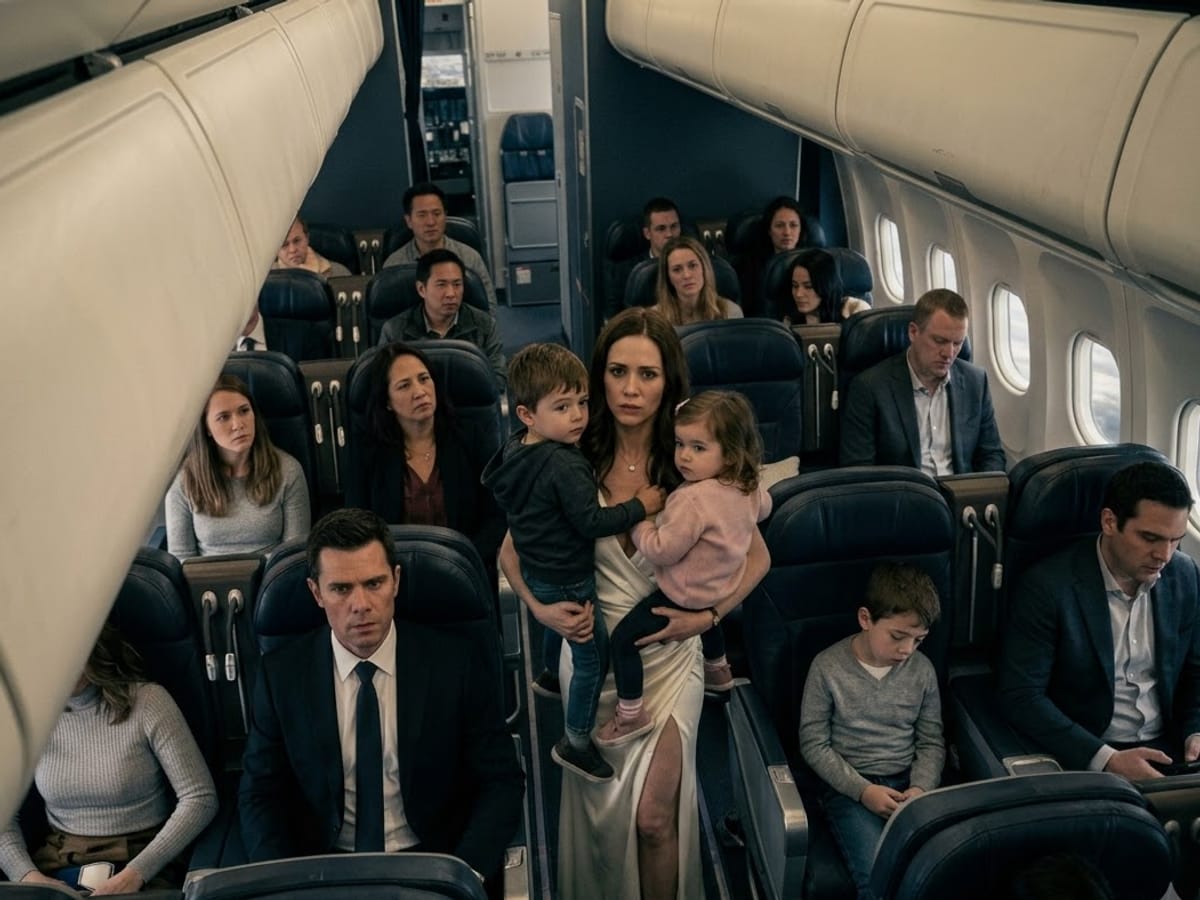
Three years back, Mara had stood five months pregnant in the foyer of his Greenwich house, tears streaking her face, one hand cradling her stomach while Elliot held an envelope stuffed with photographs, medical dates, and a private investigator’s notes.
He’d looked at the woman he’d planned to marry and decided, in one furious instant, that love had made him foolish.
He believed then that the babies weren’t his.
Their real father, he assumed, was Daniel Reed, Mara’s first love from back in Maine, someone she’d nearly married before circumstances pulled them apart.
Daniel had resurfaced months before the wedding, and Elliot convinced himself he was simply being observant, rational, calm, telling himself billionaires didn’t get rich by ignoring warning signs.
Mara had pleaded with him to listen.
He refused.
The memory tightened his throat enough that he grabbed his sparkling water and swallowed hard. Outside the window, ground crews in neon vests moved carefully through the blowing snow.
Somewhere twenty rows back, a child began crying.
Not an adult voice.
A small, tired one.
The crying started soft, then grew frustrated, exactly the sound produced by too many coats, too little sleep, and a Christmas Eve losing its magic somewhere around the second delay announcement.
Elliot shut his eyes, having no children of his own, no patience for them, no reason whatsoever to turn around.
Then a woman’s voice reached him.
Gentle. Warm. Familiar enough to slice through three years of denial in an instant.
“Hey sweetheart, I know, I know you’re exhausted. We’ll be flying soon, okay? Can you be brave with me?”
His hand froze around the glass.
The voice continued, quieter now. “Noah, please don’t kick your sister’s blanket. Ivy honey, your mitten slid under the seat.”
Noah.
Ivy.
Elliot turned slowly in his seat.
Past business travelers, families bundled in winter coats, bags wedged beneath seats, twenty rows beyond first class, he finally saw her.
Mara Whitaker sat in an economy aisle seat, a toddler curled against her chest while another child leaned against the window beside her, her hair shorter now, falling in soft brown waves just past her shoulders, wearing a cream sweater and jeans, her face older, stronger, more exhausted than the woman he’d forced out of his house years earlier.
For a moment, breathing felt impossible.
Then the little boy lifted his head.
His eyes were unmistakably Elliot’s.
Not similar, not maybe-if-you-squint eyes, but the exact storm gray that had stared back at Elliot from mirrors, portraits, and magazine covers his entire life, his dark hair falling across his forehead in the same stubborn wave Elliot’s mother used to smooth flat before church.
The girl by the window turned next.
She carried Mara’s mouth, Mara’s soft cheeks, and unmistakably Elliot’s suspicious expression.
Elliot stood up so fast his seatbelt clattered against the leather seat.
The woman across the aisle lowered her book to watch.
Melissa appeared instantly. “Mr. Hayes, please remain seated while we’re on the ground.”
He barely registered her words.
Mara looked up.
Their eyes met across twenty rows and three full years of silence, her face going pale in an instant.
The toddler in her arms rubbed his eyes sleepily and murmured, “Mommy?”
Elliot stared at the children, then back at her.
And suddenly, this delayed Christmas Eve flight was no longer the worst thing to happen to him that night.
It had become the only reason he’d finally uncovered the truth.
Part 2: The Woman He Cast Aside
Three years earlier, Elliot Hayes had confused certainty with fact.
He believed he had proof, photographs of Mara entering a Brooklyn café with Daniel Reed, a hotel restaurant receipt charged to Daniel’s card on a night Mara claimed she’d been at a friend’s apartment, a timeline arranged to look damning if viewed through the ugliest possible lens.
What he lacked entirely was patience.
Mara had met Elliot at a childhood literacy gala in Manhattan, not recognizing him at first, which was partly why he noticed her, wearing a rented deep green dress and arguing with a museum trustee about wealthy donors naming buildings while ignoring teacher salaries.
He’d found her amusing.
Then impressive.
Then, to his own surprise, deeply in love.
Mara came from a world far removed from his, raised in a fishing town outside Portland, Maine, where trucks wore salt stained tires and status meant shoveling an elderly neighbor’s driveway unasked.
Her father ran a hardware store, her mother taught fourth grade, and she’d worked through college before building a nonprofit supplying books to underfunded schools, carrying a way of looking at people that made them feel both understood and accountable.
Elliot had never once been held accountable by someone he actually wanted to kiss.
It unsettled him deeply.
He proposed after fourteen months, atop his Manhattan penthouse while snow drifted over Central Park, Mara crying yes before asking whether the ring was insured since it clearly cost more than her parents’ entire house.
He’d laughed so hard he briefly forgot how terrified he was of being loved only for his money.
That fear never truly left him.
It had taken root early, planted by his father, Conrad Hayes, who built the family fortune through private equity and emotional distance, teaching his sons that trust was a luxury, vulnerability a liability, marriage merely a contract with nicer lighting.
Elliot’s mother, Vivian, drifted through their mansion like an elegant ghost, polite and composed, quietly wounded by a husband who mistook providing for loving.
By thirty-five, Elliot had more money than he could reasonably spend and less faith in people than he’d ever admit aloud.
Mara had softened that, though not completely.
Learning she was pregnant six months before their wedding stunned him, then thrilled him, then terrified him entirely, twins, the doctor announced, pointing at two flickering shapes on the ultrasound while Mara covered her mouth laughing through tears and Elliot sat frozen beside her, already imagining two cribs inside a nursery he’d planned to paint pale blue gray.
For two full weeks, he felt happy in a way that frightened him.
Then Daniel Reed reappeared.
Daniel had been Mara’s hometown first love, kind eyed, carpenter handed, dating her through college before they split when she left for graduate school in New York, remaining friendly afterward in that distant way people manage when sharing history but no future.
Elliot disliked him instantly.
Something about Daniel’s easy smile, his flannel shirts, his Maine accent, and the way Mara relaxed around him in a manner that felt somehow older than Elliot’s own love bothered him deeply.
Daniel had come to New York because his sister was receiving cancer treatment at Memorial Sloan Kettering, and Mara offered to help navigate hospital logistics, which Elliot told himself he admired.
Privately, though, he hired someone to watch them.
That marked the true first betrayal.
Not hers.
His own.
The investigator delivered photos stripped of context, Mara and Daniel outside the hospital, Mara hugging him while he cried, Mara meeting him near Grand Central at a hotel restaurant, chosen only because nearby lodging near the hospital cost a fortune his family had already drained on treatment.
The investigator also produced an anonymous note claiming Daniel had told a friend the twins might belong to him.
Elliot never discovered its author.
He only knew that reading it caused every buried insecurity inside him to rise up and declare itself proof.
On December 18th, six days before Christmas, Elliot confronted her in the foyer of his Greenwich estate.
Snow had just begun falling outside, garland wrapped around the grand staircase his staff had hung that same morning, Mara wearing one of his old cashmere sweaters over maternity leggings, hair twisted loosely, cheeks flushed from decorating the nursery.
He tossed the envelope onto the entry table.
“What is this,” Mara asked.
“You tell me.”
She opened it slowly, confusion sliding into shock as the photos appeared. “You had me followed?”
“That’s all you have to say?”
Her eyes filled instantly. “Elliot, what did you do?”
“What did I do?” His laugh came out cold. “I should be the one asking you that.”
She tried explaining, Daniel’s sister, the hospital, the hotel restaurant meeting, the timing of the hug, but Elliot wasn’t listening anymore, already constructing a courtroom inside his own head with himself as judge, jury, and wronged party.
Then he spoke the words that would ruin everything.
“I want a paternity test.”
Mara went completely rigid.
“If that’s genuinely what you need once they’re born,” she said quietly, “we can discuss it. But if you’re asking because you believe I cheated, then look me directly in the eye and say exactly that.”
He did.
“I believe you lied to me.”
She pressed a hand protectively over her stomach, as if shielding the babies from his voice.
“I never once betrayed you,” she said.
He glanced again at the photos. “Get out.”
At first she thought she’d heard him wrong.
“What?”
“Stay at a hotel. Your friend’s apartment. Daniel’s place, if that’s where you’d rather go.”
Mara stared at him like he’d become a total stranger wearing the face of the man she loved.
“I’m five months pregnant.”
“I’ll have my driver take you anywhere you need.”
The sentence sounded elegant, practical, and precisely the kind of cruelty wealthy men mistake for control. Mara’s tears finally spilled over, though she didn’t scream or collapse, simply walking upstairs, packing a single suitcase, and returning twenty minutes later without the engagement ring.
She set it beside the envelope on the table.
“You’re going to regret this,” she said.
He remembered answering, “Not nearly as much as I’d regret raising another man’s children.”
For three years, those words had lived somewhere inside him like a sealed room.
Now, aboard a delayed Christmas Eve flight, that door had finally cracked open.
And inside stood two children with his exact eyes.
Part 3: Twenty Rows of Silence
“Sir, you need to sit.”
Melissa’s tone had sharpened noticeably.
Elliot turned just enough to remember he was standing in an aisle full of curious and irritated commercial passengers, a man in seat 3C already lifting his phone, not quite recording, but close. Elliot forced himself back into his seat, heart pounding.
Mara looked away first.
That stung more than expected.
The little boy in her arms gazed toward first class with sleepy confusion, while the girl by the window clutched a stuffed reindeer by one antler, whispering something into Mara’s sleeve. Mara bent down, kissed the child’s forehead, and dug through a diaper bag with hands that weren’t entirely steady.
Elliot wanted desperately to go to her.
He had no right whatsoever.
That truth pressed heavily on his chest, though it didn’t stop the questions flooding him, had she known, had she tried telling him, had she given birth completely alone, had these children spent three Christmases fatherless simply because pride had blinded him to a woman who loved him.
He pulled out his phone and typed a message to his assistant.
Find Mara Whitaker. Current address. Children’s ages. Anything public. Now.
Then he deleted it before sending.
For the first time in years, Elliot understood the real difference between gathering information and asking permission.
He flipped the phone face down.
The captain’s voice crackled overhead. “Ladies and gentlemen, thanks again for your patience. We’re looking at roughly another forty five minutes before departure, possibly longer. Electronic devices are fine at the gate, but please stay seated unless necessary.”
A collective groan rippled through the cabin.
Elliot hardly noticed.
He glanced back once more.
Mara struggled to open a small cracker packet with one free hand while balancing the boy with the other, her daughter’s blanket having slipped onto the floor, the man seated across from her pretending not to notice her struggle.
Before he could stop himself, Elliot stood again.
Melissa materialized like a wall in sensible shoes.
“Mr. Hayes.”
“I need to speak with someone.”
“You may do so after takeoff, or if the captain permits deplaning.”
“It’s important.”
“I’m certain it is.” Her tone suggested she’d heard that line from stockbrokers, influencers, lawyers, and men wearing unpriced shoes. “But unless it’s a medical emergency, please remain seated.”
Behind her, Mara had already noticed him.
She shook her head once.
Not dramatically, not angrily, simply no.
Elliot sat back down.
That single word had rarely stopped him before, given how he’d built companies pushing straight past refusal, bought properties from owners who initially declined, closed deals others called impossible. But Mara’s quiet no accomplished more than any locked door ever managed.
He called Melissa back over, this time with noticeably less arrogance.
“I’d like to send something to the woman seated in…” He glanced back, estimating. “Twenty three, aisle, traveling with two small children.”
Melissa’s expression shifted, caution creeping in. “Send something?”
“Water. Snacks. Whatever’s available. Extra blankets too, if you have them.”
“We can offer those directly, of course.”
“Please don’t mention it’s from me, unless she asks.”
Melissa studied him a moment, perhaps recognizing him, or perhaps simply recognizing a man realizing money couldn’t purchase the conversation he actually wanted. She nodded once and walked back.
Minutes later, Mara received two water bottles, a small snack box, and an extra blanket.
She glanced toward first class immediately.
Elliot didn’t turn around.
That was the first decent thing he’d managed for her in three entire years.
The second act came half an hour later, once the captain announced passengers could step into the terminal while crews inspected a de-icing system. The flight wasn’t canceled yet, though nobody was leaving soon, everyone unbuckling with the weary energy of holiday travelers who’d long since lost faith in scheduled time.
Elliot stayed seated until Mara had gathered her children.
He watched her lift the boy, sling the diaper bag over one shoulder, tuck the reindeer under her daughter’s arm, somehow managing two tiny animal shaped backpacks simultaneously. No nanny, no assistant, no driver, no ring on her finger, just Mara and two toddlers in snow boots.
The girl glanced at him while passing first class.
“Mommy,” she whispered loudly, “that man is staring.”
Mara’s face tightened visibly.
Elliot lowered his eyes.
Inside the terminal, Christmas music played too cheerfully overhead while families lined up for coffee and exhausted travelers slept across seats with coats draped over their faces, snow swirling beyond the windows under floodlights turning the tarmac into a glowing white haze.
Elliot found Mara near Gate B31.
She’d claimed a corner by the windows where the twins could sit coloring on the carpet, the boy sticking stickers onto his own shoe, the girl carefully coloring Santa’s hat purple.
Mara spotted Elliot approaching before he’d gotten close.
“Don’t,” she said.
He stopped six feet away.
That distance felt simultaneously absurdly small and impossibly vast.
“Mara.”
“No.”
“I just need—”
“You don’t need anything from me at all.” Her voice stayed low and controlled, the practiced tone of a woman who’d learned to keep emotion from becoming public entertainment. “You need to walk back to first class right now.”
The boy glanced up. “Mommy, who’s that man?”
Elliot’s entire body went rigid.
Mara’s eyes flickered, briefly.
“Someone I used to know,” she said.
That answer landed like a verdict.
Someone I used to know. Not your father, not Elliot, not the man who should have stood beside her when they were born.
Elliot swallowed hard. “Could we talk privately?”
She laughed once, humorlessly. “Privately? In an airport, on Christmas Eve, with two toddlers?”
“I deserve that.”
“You deserve considerably worse than that.”
He nodded. “I know.”
“No, you really don’t.” Mara stood, wipes packet still in hand. “You know what you saw today. You have no idea what happened after you threw me out.”
The words weren’t loud.
They didn’t need to be.
Elliot glanced at the children. “Are they mine?”
Mara’s expression shifted.
Not shock exactly, since she’d clearly expected this eventually, but a disappointment so heavy it looked almost like exhaustion.
“You still think you get to ask that question first?”
He had no answer ready.
The girl tugged Mara’s sweater. “Mommy, I need potty.”
Mara turned from Elliot instantly, motherhood overriding everything else. “Okay Ivy. Noah, shoes on, we’re all going together.”
“I could watch—” Elliot started.
Mara’s stare froze him mid sentence.
“You will never offer to watch my children like you’ve somehow earned that right.”
My children.
Not our children.
Elliot stepped backward.
Mara gathered the twins and headed toward the restroom, leaving him standing beneath fluorescent airport lights with more money than nearly anyone in the terminal and absolutely nothing useful to do with it.
He checked his phone.
His mother’s text waited on the screen.
Still delayed? Your father is complaining about dinner.
Elliot stared at that message for a long moment.
Then, for the first time in his adult life, he walked to the airline counter and asked whether three seats in first class had opened up.
Part 4: What the Photographs Never Showed
The gate agent looked drained before Elliot even opened his mouth.
Her name tag read Janice, and her expression suggested she’d personally absorbed the frustration of four hundred stranded holiday travelers already. Elliot approached quietly, which, for him, functioned as its own quiet apology.
“I’d like to upgrade a passenger and her two children,” he said.
Janice typed something into her terminal. “Sir, upgrades get complicated during irregular operations.”
“I’ll cover whatever the fare difference costs.”
“I’m sure you will.” She didn’t look impressed. “Name?”
“Mara Whitaker. Seat twenty three, aisle, traveling with two children.”
Janice’s fingers paused mid keystroke.
She looked up. “Are you traveling together?”
“No.”
“Related to the minors?”
Elliot opened his mouth, then closed it again.
That was exactly the problem.
Biology, even if true, wasn’t the same thing as relationship. Blood wasn’t a boarding pass. A man couldn’t abandon a pregnant woman then reappear in an airport expecting language to bend around his sudden regret.
“I might be their father,” he said quietly.
Janice’s expression softened slightly, though only slightly. Airport staff had heard everything imaginable. “Might be?”
“Their mother and I share a complicated history.”
“That’s really something you should sort out with her before I start moving anyone’s seat.”
“She won’t accept an upgrade if she knows it came from me.”
“Then I definitely can’t authorize it.”
Elliot nearly argued further.
Then Mara’s earlier words echoed in his memory.
You will never offer to watch my children like you’ve somehow earned that right.
He stepped back from the counter.
For the next hour, he simply waited.
It proved the hardest thing he’d done all year.
He watched Mara return from the restroom with Ivy balanced on her hip, Noah gripping the back of her sweater like a lifeline. He watched her buy mac and cheese from an overpriced airport café, counting bills carefully before paying, the kind of quiet calculation that would have offended him once. He watched her wipe Noah’s face, zip Ivy’s coat, answer a video call from someone named Aunt June, smiling through visible exhaustion while insisting, “We’re okay, just delayed.”
We’re okay.
Elliot wondered how many times she’d said that exact phrase while it wasn’t remotely true.
Eventually, once the twins finally fell asleep across two connected terminal chairs, Mara stood and walked directly toward him.
He rose immediately.
She stopped several feet away. “Did you try upgrading us?”
“Yes.”
“I told you not to.”
“I know.”
“And yet?”
“And yet I tried, because watching you struggle made me want to help. Then I realized helping without respecting your wishes is just control wearing nicer clothes.”
Mara studied him closely.
That was the first thing he’d said all night that sounded like actual growth instead of strategy.
She crossed her arms. “Who told you that?”
“No one.”
“Therapy?”
He hesitated.
Her eyebrows lifted slightly.
He exhaled. “Yes.”
For the first time that entire night, something resembling surprise flickered across her face.
Elliot Hayes admitting to therapy wasn’t a sentence the old Mara would ever have believed possible. The old Elliot considered therapy something for people who enjoyed blaming their parents on beige couches. But after Mara left, once the house grew unbearably quiet and every achievement started tasting like cardboard, he’d finally gone.
Not immediately.
Men like Elliot rarely embrace humility until consequences force the door open.
“I started two years ago,” he said. “After my mother got sick.”
Mara’s expression flickered. “Vivian?”
“She’s in remission now.”
“I’m glad to hear that.”
The kindness came automatically, which somehow made it hurt worse.
She owed his family absolutely nothing, yet compassion remained available in her anyway. Elliot wondered how much of that he’d once mistaken for weakness.
“Mara,” he said, “I was wrong.”
She glanced toward the sleeping twins. “About what exactly?”
“Everything.”
“No. Be specific.”
He nodded slowly.
That was the woman he remembered, never soft in the way people underestimated, but precise in a way that made lies uncomfortable to hold.
“I was wrong hiring someone to follow you,” he said. “Wrong believing photographs stripped of context. Wrong accusing you outright. Wrong throwing you out while pregnant. Wrong never finding you afterward to apologize. Wrong letting pride become the loudest voice in every room.”
Mara’s eyes shone, though her voice held steady.
“You’re missing one.”
He already knew which.
“Wrong denying those babies before I even knew them.”
She looked away then.
For a moment, terminal noise filled the space between them, a boarding call for Tampa, a child’s laughter near vending machines, the distant hiss of an espresso machine.
“I took the test,” Mara said.
Elliot’s heart seemed to stop entirely.
She didn’t look at him. “After they were born. Not because you deserved proof, but because I knew you might eventually return with lawyers. I wanted to be ready for that.”
His stomach twisted painfully.
“They’re yours,” she said.
Those words should have brought joy.
Instead, they tore something open inside him.
Elliot sat down because his legs suddenly felt unreliable. He looked at Noah, sleeping with his mouth slightly open, one mitten still stuck on. He looked at Ivy, curled protectively around her purple hatted Santa coloring page like treasure.
His children.
Three years old.
He’d missed their first breaths, first steps, first words, first fevers, first birthdays, every ordinary miracle no acquisition or estate could ever buy back, no fund or building name capable of returning the sound of a toddler saying Daddy for the very first time, had that word ever belonged to him.
“Do they know?” he asked.
“No.”
“About me?”
“They know they have a father. They know he wasn’t able to be part of our family.”
Elliot flinched visibly.
Mara noticed. “That was the kindest version I could manage saying.”
“I don’t deserve kind.”
“No,” she said. “You don’t.”
He accepted that fully.
Then she sat beside him, not close, but near enough that anyone passing might assume two tired travelers discussing weather delays. The twins slept twenty feet away beneath JFK’s bright indifferent lights.
“The truth wasn’t what you assumed,” Mara said.
“I understand that now.”
“No, Elliot. You really don’t.”
He turned toward her.
She folded her hands. “Daniel wasn’t in love with me anymore. He was dying.”
Elliot stared at her, stunned.
“What?”
“His sister wasn’t the only one being treated. She had lymphoma. Daniel had pancreatic cancer, already stage four by the time he told me.” Her voice softened with old grief. “He didn’t want anyone back home knowing yet, didn’t want his mother collapsing before Christmas. I was simply helping with paperwork, insurance calls, appointments, everything you never once asked about because you were too busy judging what kind of woman I was.”
Elliot couldn’t manage words.
“That hotel restaurant?” she continued. “That’s where I met him after an appointment, since he refused to break down crying in a hospital lobby. The hug in that photo happened the day he told me he had maybe six months left.”
Elliot remembered that exact picture.
Mara’s arms around Daniel, his face buried against her shoulder. At the time, Elliot saw betrayal there. Now he saw only a man collapsing beneath a death sentence.
“Who sent that note?” Elliot asked.
Mara finally looked at him directly.
“That’s the part I didn’t understand until much later.”
Something cold moved through him.
“Who?”
“Your father.”
For the second time that night, the entire airport disappeared around him.
“My father?”
Mara nodded. “Daniel told me before he passed. Conrad visited him at the hospital, offering to cover his medical bills if he’d sign a statement suggesting the babies might be his.”
Elliot half rose, then sank back down.
“No.”
“Yes.”
“My father wouldn’t—”
“Wouldn’t he really?”
The question landed with surgical precision.
Elliot pictured Conrad Hayes, a man who viewed scandal the way generals viewed enemy territory, who had never liked Mara, considering her too middle class, too outspoken, too unimpressed by the Hayes name, once calling marriage to her “emotionally expensive.”
“My father did this?”
“He tried.” Mara’s mouth tightened. “Daniel refused. But someone still delivered exactly what you wanted to believe.”
Elliot felt sick to his stomach.
He’d spent three years blaming Mara for a betrayal likely engineered by the very man who taught him never to trust anyone. Yet Conrad couldn’t shoulder every bit of blame. Elliot had chosen suspicion himself. He’d chosen cruelty. He’d chosen to look at the woman carrying his children and see a threat instead of a partner.
“Why didn’t you tell me all this?” he whispered.
Mara’s laugh came out quiet and sad. “I tried.”
He closed his eyes.
She really had.
He remembered her mentioning Daniel being sick. He remembered cutting her off. He remembered telling her not to insult him with another story. He remembered her expression when she finally understood love wouldn’t protect her from his pride.
“Daniel died two months before the twins were born,” Mara said. “His mother still sends them Christmas cards. She knows they aren’t biologically his, obviously. She simply says they’re part of the story of the year he was loved well.”
Elliot pressed a hand over his mouth.
That nearly broke him completely.
The intercom chimed overhead.
“Passengers on Flight 482 to Aspen, thank you for your continued patience. We’re preparing to reboard, with an estimated departure in thirty minutes.”
Mara stood.
The conversation ended there, since motherhood ran on its own schedule regardless of heartbreak. She woke Ivy gently, then Noah. Ivy cried, wanting more sleep. Noah dropped a mitten and announced fresh hunger.
Elliot picked the mitten off the floor.
He held it out toward her.
She looked at it, then at him.
After a long pause, she accepted it.
“Thank you,” she said.
It wasn’t forgiveness.
Just two words.
But Elliot clung to them like a man pulled from freezing water.
Part 5: The Christmas That Finally Told the Truth
The plane eventually lifted off at 9:46 p.m.
By then the cabin sat dark except for reading lights and glowing screens, snow streaking past the windows as the aircraft climbed above New York, carrying families, executives, skiers, students, and one billionaire whose entire life had shifted twenty rows behind him. Elliot sat with untouched champagne, fully aware his children slept in economy.
He didn’t attempt moving them again.
He sent no further snack boxes.
He didn’t request favors from the crew or demand Mara speak with him before landing. For once, he understood restraint could show more respect than grand gestures ever could. The old Elliot would have tried fixing everything before touchdown, the newer version, if he even deserved that title yet, recognized some damage couldn’t be repaired at cruising altitude.
Aspen’s airport sat nearly silent when they finally landed.
Past midnight now, officially Christmas Day, travelers shuffled toward baggage claim beneath wreaths and artificial garland, SUVs and shuttles idling outside beneath falling snow, headlights glowing gold against dark mountains.
Elliot spotted Mara struggling with the twins near the carousel.
A driver in a black coat stood twenty feet off holding a sign reading HAYES. Elliot glanced at it, then back toward Mara, who balanced Ivy on one hip while wrestling a battered blue suitcase off the belt with her free hand.
This time, he didn’t rush forward.
He approached slowly instead. “May I take the suitcase?”
Mara studied him for a long moment.
Then she stepped back.
“Yes.”
One word, a small permission, taken seriously. The suitcase felt lighter than expected, older than he liked, one wheel squeaking badly, a faded tag showing a Portland address crossed out and replaced with Denver.
“You live in Denver now?” he asked.
“For now.”
“What brings you to Aspen?”
“My friend June has a cabin outside Carbondale. We spend Christmas there when we can.” She shifted Ivy, half asleep against her shoulder. “The kids love the snow.”
Noah glanced up at Elliot. “Are you going to snow too?”
Elliot’s throat tightened.
Mara went still beside him.
“I live here part of the year,” Elliot said carefully.
Noah considered that. “In the airport?”
Despite everything, Mara nearly smiled.
“No,” Elliot said. “In a house.”
“Is it big?”
Mara briefly closed her eyes, bracing for billionaire absurdity.
Elliot looked at his son and answered honestly. “Too big.”
Noah nodded solemnly, accepting this as a perfectly reasonable problem to have.
Outside baggage claim, Mara checked her phone and frowned.
“What’s wrong?” Elliot asked.
“My ride canceled. Roads are bad.”
“I can have my driver take you.”
“No.”
He nodded. “Okay.”
Mara looked mildly surprised he hadn’t pushed back.
Moments later her phone buzzed again, and she typed quickly, holding back frustration, Ivy whimpering in her sleep, Noah sliding sideways slowly on the broken wheeled suitcase.
Elliot stood there, deliberately useless.
Finally Mara looked up at him.
“Does your driver have a car seat?”
“No.” He paused. “But I can have two delivered.”
“At one in the morning, on Christmas?”
“This is Aspen.”
She gave him a look.
He nearly smiled. “That sounded worse than intended.”
“It usually does.”
He accepted that too.
After several calls, two properly installed car seats arrived in an SUV driven by a woman named Paula, who spoke directly to Mara, confirmed the destination, showed her the seats, and waited patiently while Mara inspected them thoroughly. Elliot appreciated Paula’s professionalism more than any luxury service he’d ever used. Mara didn’t need rescuing, only safe transportation.
Elliot didn’t ride along.
He offered, Mara declined, and he simply accepted that.
Before the SUV pulled away, Noah pressed his mittened hand against the window and waved.
Elliot lifted his own hand in return.
It was the very first time his son had ever waved goodbye to him.
He stood in the cold long after the taillights vanished.
At the Hayes estate, Christmas waited in full performance mode.
The house stood enormous, all stone, glass, firelight, and curated tradition, a twelve foot tree decorated in silver and white dominating the great room, caterers moving quietly through the kitchen while his family sat near the fireplace sipping bourbon as though weather delays counted as anyone’s most dramatic possible evening.
Vivian Hayes noticed Elliot first.
“My God, you look terrible.”
“Thank you, Mother.”
His brother Graham lifted a glass. “Merry Christmas to you too.”
Conrad Hayes stood near the mantel, tall and silver haired, wearing a black sweater probably worth more than most people’s monthly rent. He regarded Elliot with mild irritation. “You missed dinner.”
Elliot stared straight at his father.
For the first time, he saw no power there at all.
Only fear dressed up as authority.
“We need to talk,” Elliot said.
Conrad sighed. “Can it wait until morning?”
“No.”
The room quieted instantly.
Vivian set down her glass.
Elliot crossed toward his father, each step deliberate. “Did you send me that file on Mara three years ago?”
Conrad’s expression didn’t shift, which answered the question well enough.
“What file?” Graham asked.
Elliot never broke eye contact with his father. “The photographs. That note about Daniel Reed.”
Conrad took a slow sip of bourbon. “I protected you from a mistake.”
Vivian whispered, “Conrad.”
“You interfered in my entire life,” Elliot said.
“I saved your life from becoming tabloid material.”
“She was pregnant with my children.”
Graham stood abruptly. “What?”
The words filled the room like drifting smoke.
Vivian covered her mouth.
Conrad’s eyes hardened, though something flickered beneath the surface, not guilt exactly, more annoyance at being confronted before witnesses.
“You don’t actually know that,” Conrad said.
“Yes, I do.”
“Because she told you?”
“Because she took a paternity test after they were born.”
Vivian made a small sound and sat down heavily.
Elliot stepped closer. “You knew Daniel was dying.”
Conrad’s silence stretched one beat too long.
“You went to see him,” Elliot said. “You tried buying a lie.”
“I offered assistance to a dying man’s family.”
“In exchange for what exactly?”
Conrad’s mouth flattened. “You were about to marry a woman who didn’t belong in this family.”
There it was.
The truth, plain and ugly.
Elliot had spent years mistaking his father’s cruelty for sophistication, mistaking suspicion for intelligence simply because Conrad rewarded it, letting a man incapable of generous love teach him how to recognize it.
Vivian began crying softly.
Graham looked at their father as though seeing him clearly for the very first time.
Something inside Elliot finally broke, though not in the way he’d expected. Not rage exactly, more like release. He no longer needed Conrad’s confession to already know the truth.
“You cost me three years with my own children,” Elliot said.
Conrad lifted his chin defiantly. “No. Your weakness did that.”
Elliot nearly laughed aloud.
Three years earlier, those exact words would have controlled him completely, made him defensive, desperate to prove strength through cruelty. But standing beneath the perfect Hayes family tree that night, Elliot finally understood his father’s version of strength had ruined everything it ever touched.
“No,” Elliot said. “My weakness was believing you.”
He left before anyone could respond.
Christmas morning arrived pale and cold.
Elliot didn’t sleep, sitting instead in his study while the sky slowly lightened over the mountains, rereading the same draft message over and over. It was addressed to Mara, though no apology felt adequate. Nothing could feel adequate enough.
At 8:12 a.m., he sent it anyway.
Mara, I won’t ask for your forgiveness because I haven’t earned it. I won’t ask to meet the children unless and until you decide it’s safe and appropriate. I’ll cover any legal costs for establishing paternity, child support, medical needs, and whatever arrangements you choose through your attorney. I’m sorry for what I did to you. I’m sorry for what I stole from them. I’ll follow whatever lead you give me.
Then he added one more sentence.
I believed the worst about you because it was easier than facing the worst inside myself.
He pressed send.
An hour passed.
Then another.
At 10:37 a.m., Mara finally replied.
Thank you for saying that. I need time. Please don’t contact the children directly. If you’re truly serious, have your attorney reach mine after New Year’s. Merry Christmas, Elliot.
He read that message six separate times.
It wasn’t warm.
It wasn’t an open door either.
But it wasn’t a wall.
For the first time in three years, Elliot didn’t try forcing an outcome. He called his attorney, arranging for voluntary acknowledgment and support discussions, insisting Mara never be pressured. Then he contacted his family office and began separating his finances entirely from Conrad’s influence.
Money couldn’t repair what he’d broken.
But money could finally pay what should always have been paid, funding college accounts, healthcare, stable housing, and legal clarity without turning any of those obligations into leverage.
By February, Elliot saw the twins again.
Not alone, not privately, not dramatically.
They met inside a family counselor’s office in Denver, a room filled with soft chairs, wooden toys, and tissue boxes on every table. Mara sat beside Noah and Ivy while Elliot sat across from them, hands open on his knees like someone trying not to startle birds.
“This is Elliot,” Mara said gently. “Someone important from Mommy’s past.”
Ivy studied him closely. “Are you sad?”
Elliot glanced at Mara, then back at his daughter.
“Yes,” he said. “A little.”
“Why?”
“Because I made some serious mistakes.”
Noah held up a toy truck. “This one’s broken.”
Elliot examined the missing wheel.
“I see that.”
“Can you fix it?”
The question was entirely innocent.
It nearly undid him anyway.
“I can try,” Elliot said.
The counselor smiled quietly from her corner chair.
Mara looked at him then, and for the first time since the airport, her expression held something beyond guarded pain, not forgiveness, not trust, maybe just the faintest acknowledgment that trying humbly differed entirely from simply taking.
Elliot fixed the wheel.
Noah took the truck back without a single thank you, since three year olds remain honest that way.
Over the following year, Elliot learned fatherhood through supervised hours, then longer visits, then carefully scheduled weekends once Mara felt ready. He discovered the twins loved blueberry pancakes, despised itchy clothing tags, and firmly believed every dog deserved a food related name. Ivy asked complicated questions at bedtime. Noah stuck stickers on everything, including Elliot’s laptop, somehow improving it beyond any designer case ever could.
Mara never made things easy for him.
She made them appropriate instead.
Lawyers, boundaries, parenting classes, support orders, counseling sessions, difficult conversations left him emotionally drained in ways no hostile takeover ever managed. Sometimes Mara grew angry, entirely justified in that anger. Sometimes Elliot apologized again, not to reopen wounds, but because remorse had finally become practice rather than performance.
One April afternoon, with Mara’s permission, he drove to Maine and placed flowers at Daniel Reed’s grave.
The cemetery overlooked the water, fishing boats drifting slowly in the distance, gulls crying above the harbor. Elliot stood beside the headstone of a man he’d once hated for a crime he’d never actually committed.
“I’m sorry,” Elliot said aloud.
The wind carried the words away, but he said them regardless.
By the twins’ fifth Christmas, the arrangement remained far from perfect.
Mara still lived in Denver, her nonprofit work having grown into a statewide literacy program. Elliot split time between New York, Colorado, and wherever the children needed him most. He and Mara weren’t together, and he’d stopped believing reconciliation was some prize owed to a man who’d finally learned decency far too late.
But that Christmas Eve, they shared dinner together.
Not at the Hayes estate.
At Mara’s townhouse instead, paper snowflakes hanging in the windows, the twins having decorated a slightly crooked tree with handmade ornaments. Elliot brought dessert from a bakery Ivy loved and a wooden train set Noah had whispered to Santa about three weeks earlier.
Mara opened her door wearing a red sweater and cautious eyes.
“Merry Christmas,” she said.
“Merry Christmas.”
Behind her, Ivy shouted, “Elliot’s here!”
Noah corrected her from the living room. “He’s Dad now, remember?”
That word stopped Elliot dead in the doorway.
Mara turned slightly, her expression unreadable.
Elliot looked at her, silently asking whether he’d actually heard something he was allowed to keep.
She gave the smallest nod imaginable.
He stepped inside.
The twins ran at him, all elbows, laughter, and holiday pajamas. He knelt before they even reached him, and for the first time in his entire life, Elliot Hayes understood real wealth as something measured in arms wrapped around his neck. Not stock options, not est
Disclaimer: Names and identifying details have been changed. This story is dramatized for entertainment purposes.
