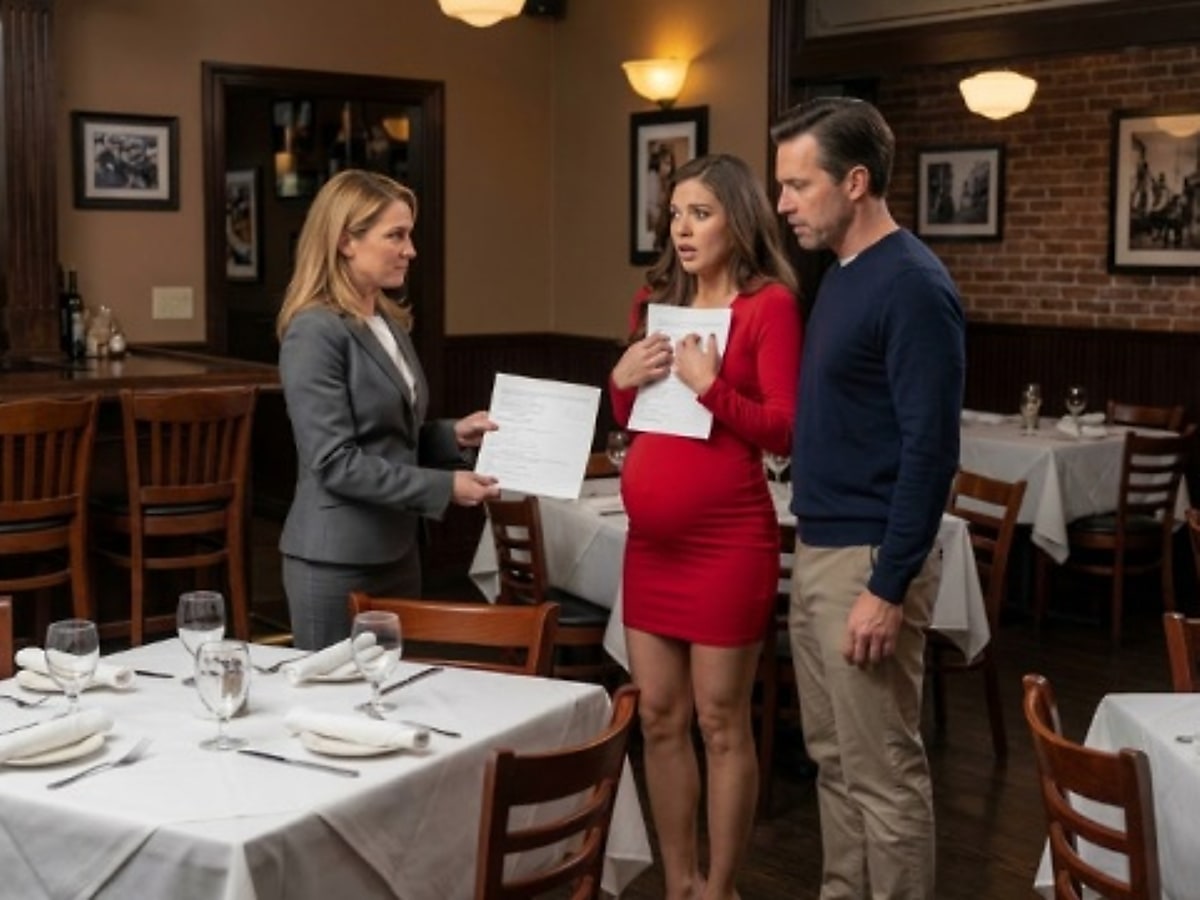
Part 1: The Slow Collapse
I married Michael Turner when I was twenty-six years old, in a small church on the North Side of Chicago, wearing my mother’s pearl earrings and a dress I had put on a credit card because I believed love made every risk reasonable.
Back then he seemed solid. Funny in a way that made rooms lighter. I figured I had found a partner for the long haul.
The early years looked fine from a distance. We settled into a brick house in Albany Park, painted the kitchen walls a pale blue, and spent Sundays near the lake with paper cups of coffee.
Sarah arrived first, and Michael cried holding her like glass.
James followed two years later, screaming from the start, and Michael joked the kid got my temper and his hunger.
We were broke and tired most nights, but I told myself that was normal for young parents.
Somewhere along the way, Michael stopped showing up the same.
Maybe he never was who I thought. Maybe kids and bills just took away whatever performance he’d been running for me.
It started small. One beer turned into a six-pack he’d finish on the porch while I handled bath time, lunches, and a mountain of laundry.
He called it unwinding.
Then the nights out began. He’d disappear toward River North or Wicker Park with coworkers, staying out until two or three in the morning while I lay awake wondering.
When I brought it up, he’d wave me off.
Relax, he’d say, like my concern was the actual problem in our house.
He picked cigarettes back up too, after swearing them off before the wedding. First it was social. Then I found ash on the driveway and gum wrappers in his glove box.
His comments got sharper. You’re always on me. You’re not my mother. Maybe I’d come home more if you weren’t so uptight.
I remember standing in the kitchen once at 11:30 p.m. with James burning at 102.4°F in my arms while Sarah cried upstairs from a bad dream. Michael strolled in reeking of liquor and acted wounded that I expected help.
I work too, I told him.
He laughed. Not like I do.
I did work, part time near Lincoln Square handling paperwork for a billing office, but in his head his salary outranked everything I did at home.
For years I tried different approaches. Patience first, telling myself he was maybe depressed or overwhelmed. He shut down any talk of counseling.
Then I tried being direct, laying out what I couldn’t live with. He’d apologize when caught, then repeat it the next weekend.
Eventually I tried softening myself, cooking what he liked, buying new sheets, wearing old perfume, hoping proximity might fix distance. He either didn’t notice or accused me of trying too hard.
So I stopped. Stopped waiting up, stopped asking about dinner, stopped hoping he’d notice my exhaustion.
I became something like a single parent sharing an address with a man who paid half the mortgage.
Still, I didn’t leave. The kids adored him, and divorce felt like a cliff I couldn’t see the bottom of. Custody, lawyers, insurance, the mortgage, all of it terrified me more than staying did.
Some buried part of me kept believing the man who wept in the delivery room was still in there.
Mostly I stayed because I hadn’t yet decided unhappiness alone was reason enough to walk.
That’s the trap nobody warns you about. You keep waiting for a moment dramatic enough to justify leaving, some clean betrayal everyone would understand.
Sometimes it’s just an average night that makes you realize the house has been raining on your kids for years.
My moment showed up in March. No yelling, no broken dishes, no tearful confession.
Just a phone buzzing that wasn’t mine.
Part 2: The Message on the Nightstand
It was a cold, damp Tuesday, that in between season Chicago does where winter refuses to fully let go.
Michael was showering, I was folding clothes on our bed, Sarah worked on spelling downstairs, and James kept rebuilding a Lego tower that fell every time out of spite.
His phone sat on the nightstand.
I wasn’t snooping. I was matching socks when the screen lit up bright enough to catch my eye.
An unsaved number had sent one line.
I’m pregnant. What are we going to do about this?
For a second my brain simply refused the sentence.
I stood frozen with a sock in my hand, hoping the words would rearrange into something less horrifying.
They didn’t.
I read it twice more.
Part of me wanted it to be spam, a scam text hunting for scared husbands. My body already knew better than my head wanted to admit.
My hands turned cold, my chest squeezed, and the room seemed to lean sideways even though nothing moved.
Water kept running down the hall. That mundane sound, my husband shampooing his hair while some stranger announced a baby, felt obscene.
I scribbled the number on a grocery receipt with a shaking hand, then tucked it into my jeans. I didn’t touch his phone again, and I said nothing when he walked out in a towel, unbothered.
What’s for dinner, he asked.
Spaghetti, I said.
He glanced at me. You good?
For one insane second I thought he’d figured it out. He hadn’t. He was just annoyed by my quiet.
I’m fine, I lied. First of many lies that week.
Once the kids were asleep and Michael had passed out in front of a muted highlight reel, I locked myself in the laundry room and dialed the number.
My pulse hammered in my ears through four rings.
A woman picked up, young sounding, nervous, breathy like she regretted answering already.
I kept my voice level. This is Rachel Turner. I’m Michael’s wife.
Dead silence on the line.
I saw your text, I continued. If you’re really pregnant, we need to sit down and talk.
She said something about us being basically separated, some line Michael had clearly fed her.
I nearly laughed. We share a house, joint taxes, two kids, and a bed he slept in last night. Not separated.
She asked what I wanted.
To meet somewhere public. Tomorrow.
She hesitated, then named a coffee shop off Michigan Avenue near the Water Tower. Eleven.
I’ll be there, I told her.
What’s your name again, she asked.
Rachel.
A pause. I’m Brittany.
There it was. A face for the shadow that had been living inside my marriage.
I barely slept. I lay next to Michael’s snoring, replaying every late night, every vague excuse, every time he’d called me controlling for noticing what he was hiding.
By sunrise I knew what I refused to do. No shouting in public. No pleading with a stranger for decency. No fighting over a man who’d made himself this available for shame.
I would gather facts first, then build a plan.
Parking downtown cost $32, an insult stacked on top of heartbreak. I sat by the window ten minutes early, watching the door.
Brittany walked in at 11:07.
Younger than I pictured, maybe twenty-two or twenty-three, blonde, heavy lashes, a tight pink sweater under a white puffer coat. A slight curve at her stomach that could’ve meant anything.
She clocked me instantly, probably because I looked exactly like the tired wife she expected.
She sat without asking. So you’re the wife.
And you’re Brittany, I answered.
She lifted her chin. I’m carrying Michael’s baby.
Delivered like a soap opera line. But her hand trembled slightly around her iced coffee, and her eyes darted too fast. Scared, lying, or both.
How far along, I asked.
Twelve weeks.
Seen a doctor?
Yes.
Documentation?
That’s private, she snapped.
So’s my marriage, I said. Here we are.
I set a folder on the table.
What’s that, she asked.
A plan, I said, which wasn’t quite true yet. It was the start of one.
She still had no idea I’d spend the rest of that day building the rest of it.
Part 3: Laying Out the Rules
That afternoon I sat in the Lincoln Park office of a family attorney named Linda Carver, above a candle boutique too fancy for anyone to actually burn its inventory.
I told her the whole tangled mess. The drinking, the disappearing nights, the kids, the text, the coffee shop, Brittany’s claim.
She listened without cutting in once.
When I finished, she asked something no one had asked me straight out before. Do you feel safe at home?
Physically, yes, I told her.
Threatened?
No, but he brings up money constantly, reminds me he earns more, acts like I’d fall apart without him.
She noted that. Financial pressure counts, she said. So does substance use if it’s affecting parenting.
I don’t know if I want a divorce, I admitted.
You don’t have to know that yet, she said. But you need facts.
She broke down Illinois divorce basics simply. No fault required, cheating doesn’t automatically swing property division, but spending patterns and reliability as a parent both matter. Support follows set guidelines, and custody decisions center on the kids.
She also corrected something I’d been wrong about. Don’t push for any invasive prenatal testing, she warned. That’s medical, and not something you get to demand for someone else. If paternity ever becomes a real legal question, there are proper channels for that.
I understand, I said.
You handled it right by refusing to let cash change hands and by routing this through counsel, she said. If the claim’s true, there’s a lawful path. If it’s false, paperwork protects you either way.
Relief and shame tangled together in my chest. Relief that I wasn’t overreacting. Shame that phrases like legal paternity determination now applied to my own household.
Linda helped me map out a plan. Not revenge, protection.
We’d pull together bank statements, credit cards, the mortgage, retirement accounts, tax filings, and anything showing where Michael’s money had actually gone. I’d log his drinking and absences honestly, no exaggeration needed.
I would not confront Brittany again on my own terms. Wouldn’t post about her, harass her, drain accounts, or drag the kids into any of it.
Stay calm, Linda told me.
I’m trying, I said.
Calm on paper is what matters, she clarified. Your real feelings can be a disaster in private. But anything written, emails, texts, filings, needs to stay clean.
Calm on paper became my mantra.
I retained her before leaving, wincing at the cost but reminding myself fear is more expensive when it runs the show.
That evening I dropped the kids at my mother’s place in Evanston, telling her only that Michael and I needed to hash something out. She read my face and didn’t push.
Take your time, she said.
Michael got home at 7:40 p.m., smelling like cold air and stale smoke.
Where are the kids, he asked.
With my mom.
Why?
We need to talk.
He set his keys down. About what?
Brittany.
His whole body locked up.
Who, he tried.
Don’t, I said.
What did she tell you, he asked, which told me he already knew exactly who she was.
She texted you last night while you were showering. I saw it. I called her. We met this morning.
His face drained. You did what?
I had coffee with your pregnant girlfriend.
She’s not my girlfriend.
That’s the detail you want to argue?
It happened once, he said. I was drunk after Ryan’s birthday party. She was at the bar. I don’t even know if it’s mine.
The words tumbled out fast, rehearsed sounding, like fear had been writing his script for weeks.
She probably wants money, he added. She kept saying she didn’t know what to do. I told her to leave me alone.
She clearly didn’t listen, I said.
I never answered, he insisted.
Michael, I said, I saw one message. Imagine what the rest look like.
His eyes flicked toward his pocket. There it was, the phone, the small device where men keep the parts of themselves that supposedly don’t count.
I want to see everything, I said.
That’s private, he said.
Our marriage was private too, before you dragged her into it.
He hesitated, anger flickering, the old version of him ready to call me dramatic or paranoid.
But the folder on the table changed something in the room.
What is that, he asked.
Your options, I said, and opened it in front of him.
Part 4: The Letter That Changed the Weather
Two days after that conversation, I mailed Brittany a single envelope, certified.
No insults inside. No dramatic speech about morals. Just one clean, factual page.
Linda had helped draft it, plain and careful enough that a judge could read it without me flinching.
It stated that Michael was married, that pregnancy and paternity claims needed to go through proper legal steps, and that any request for money required documentation and verification. It also made clear Michael would not be handing over private cash based on an unverified claim.
At the bottom I’d added one handwritten line. If this baby is his, prove it the right way, and if it isn’t, stop reaching out to my family.
Nothing about being a homewrecker, nothing personal, nothing that could later be twisted into ammunition against me in court.
Just an offer. Prove it properly, or stop.
Certified mail because Linda said proof of delivery would matter down the line.
She signed for it Friday at 2:18 p.m.
Then silence.
No lawyer contact, no medical paperwork, no reply to Michael, nothing.
For a couple of days I let myself wonder if she was simply gathering her thoughts, scared, maybe genuinely pregnant and taking the request seriously.
Monday passed with nothing. Then a full week. Then two.
Michael flinched at every buzz his phone made those first days. I didn’t rush to comfort him. Consequences teach better without a cushion.
By the third week it was obvious this had never been only about Brittany.
He knew it. I knew it. That letter hadn’t just tested her claim, it had punctured the fantasy where he could drink, cheat, lie, and still come home to me managing the wreckage quietly.
A month after the certified letter, Brittany was simply gone. Number disconnected, social media locked down and then deleted, no attorney, no filing, no follow up of any kind.
Later Michael admitted this hadn’t been the first time she’d asked him for cash. Not once, but repeatedly, starting small with rent help, then medical bills, then the pregnancy claim itself.
Each request had scared him enough to consider quietly paying her off just to make the problem disappear.
That detail nearly finished us right there, not because of her, but because of what it revealed about him.
You were going to spend our money hiding this from me, I asked.
I was scared, he said.
You should have told me the truth.
I thought I could make it vanish.
You thought money could keep me from ever finding out, I said.
He had nothing to say to that, which was its own confession.
I left the kitchen before I said something I’d regret. Upstairs, I locked the bathroom door and cried into a towel so the kids wouldn’t hear, the exhausted kind of crying that comes after adrenaline finally runs dry.
People assume steady women never break. We do. We just choose where.
That night Michael found me wrapped in a blanket on the back porch, cold enough to see my breath.
I called the counselor, he said. Appointment Thursday. There’s an AA meeting tomorrow too.
Are you doing this because you want to, or because you’re afraid I’ll leave, I asked.
Honestly, right now, because I’m afraid you’ll leave, he admitted.
At least it was true.
And now, I pushed.
I don’t know yet, he said. But I don’t like who I’ve become.
That was the first thing he’d said in years that actually meant something.
I didn’t forgive him that night. Didn’t promise to stay. Didn’t let him back into our room.
For three months he slept in the basement while I watched his actions instead of his words.
Part 5: What Was Left Standing
A year after Brittany vanished, Michael and I sat on the back steps watching the sky turn pink over the neighborhood rooftops.
It was late September, that short stretch when Chicago air cools without turning cruel yet. The kids were asleep upstairs after a long day at the Lincoln Park Zoo, where James had taken personal offense at a sleeping lion.
Michael had been sober nine months by then. Not flawless, sober.
He’d made amends clumsily but often sincerely, apologizing to the kids without excusing himself, sitting through therapy sessions he clearly hated, learning to hold shame without turning it back into anger at me.
We still went to couples counseling. Trust hadn’t returned all at once, it came back in small pieces. A truthful answer here, a kept promise there, a bank statement that matched what he’d told me.
Some mornings I still wanted out. Some mornings I watched him cutting Sarah’s sandwich diagonally the way she liked it and thought maybe people really can change once consequences finally land.
Both feelings were true at once.
That evening on the steps, he was quiet for a long stretch before speaking.
Thank you, he said.
For what, I asked.
For not giving up on me.
I let that sit before answering. I need you to understand something, I said. I didn’t stay because you earned it.
I know, he said.
I stayed because I wanted to see if you were still reachable. I stayed because you did the work once I set terms. I stayed because leaving was still possible, and knowing that made staying an actual choice.
His eyes welled up. I hate who I was.
You should, I said.
He laughed, pained. You don’t go easy anymore.
No, I said.
Good, he said, surprising me.
He looked out at the yard. When you kept softening things for me, I never had to feel the full weight of what I was doing.
That was never my responsibility, I told him.
No, he agreed, it wasn’t.
For once the apology felt like ownership, not bait.
I thought about Brittany sometimes, not with rage, more like distant disbelief.
I never learned for certain if she’d really been pregnant, or if Michael was actually the father, or if the whole thing was a scare tactic aimed at a guilty, foolish married man.
I might never know.
What I do know is that when asked to prove it through legal channels, she vanished completely.
That told me enough.
The letter alone didn’t fix my marriage. It didn’t erase the drinking, the cruelty, the lonely years, the nights I cried alone so the kids wouldn’t hear.
But it shifted the balance of power.
For years everyone else had made the messes and I’d quietly cleaned them. Michael drank, I explained it away. He stayed out, I covered for him. He lied, I doubted myself instead of him.
When Brittany’s text landed, some old version of me almost surfaced, the panicked wife ready to scream, to beg a stranger, to fight for scraps of a marriage that had already been eaten hollow.
I didn’t become her.
I became someone quieter. Colder in the moment, but clear. Not cruel, just strategic.
I gave Brittany paper instead of a scene. I gave Michael consequences instead of another empty warning. I gave myself permission to walk away if staying kept costing me my dignity.
That permission was the real turning point, not the letter itself.
Afterward, people noticed changes in me without knowing why. My mother said I looked taller. My friend Dana said my voice had shifted. Sarah’s teacher mentioned she seemed calmer at school, which made me cry in the parking lot.
Kids feel the climate of a house even when nobody explains the forecast.
Our home got quieter, not flawless, quieter. Michael and I still argued, but the shape of it changed. He stopped getting away with relax or you’re overreacting. If he tried, I simply ended the conversation and revisited it in therapy later.
I learned boundaries aren’t punishment. They’re instructions for how someone gets to stay in your life.
He followed them, mostly. Struggled sometimes. So did I, since part of me had been trained for years to measure love by how much I could silently absorb.
My therapist, Dr. Anita Rao, helped me unlearn that. Endurance isn’t the same thing as devotion, she told me once. I wrote it down and kept it.
Eventually Michael moved back into our bedroom, not because everything was forgiven, but because enough had actually shifted that it felt like a decision instead of surrender.
That first night we lay there like nervous strangers.
Are you okay, he whispered.
I’m scared, I admitted.
Of me?
Of being foolish, I said.
You weren’t foolish, he said. You were loyal, and I took advantage of that. Those aren’t the same thing.
I cried, not because it fixed anything, but because it finally named something correctly.
Two years later, Michael still goes to meetings. He sponsors another guy now, which still surprises me sometimes. He carries a small sobriety coin in his dresser drawer and touches it before hard conversations.
We’re still married. I don’t offer that as advice to anyone else.
Not every betrayal deserves a second act. Some marriages should end, and some people only find peace once they stop waiting on someone else’s timeline. If Michael had refused help, lied again, or minimized any of it, I would have filed.
The papers were ready. Staying only worked because leaving was genuinely possible.
Not long ago I was cleaning out our home file cabinet, boring proof of an ordinary life, tax returns, appliance manuals, old insurance forms. Behind a folder marked Mortgage, I found the certified mail receipt and a copy of the letter I’d sent Brittany.
I sat on the floor holding it. One page, plain ink, no raised voice, no insults, just proof of who I’d chosen to become in that moment.
Michael walked in and saw it in my hands.
I remember that, he said quietly.
So do I, I said.
He sat down across from me. I was terrified of you back then.
Good, I said.
Not in a bad way, he added. I think I needed to be.
You were never scared of hurting me, I told him. You were scared of losing access to me after you did.
He shut his eyes. Yeah.
The honesty still stung, but it no longer broke me.
I do ever wonder what happened to her, he asked.
Sometimes, I said.
And?
I hope she stopped surviving by blowing up other people’s homes.
That’s kinder than I expected, he said.
It’s not kindness, I told him. It’s distance.
That’s what healing actually gave me. Distance, not just from Brittany, but from the version of myself who thought saving a marriage meant tolerating anything thrown at her.
From the woman who thought a bigger paycheck excused disrespect. From the mother who believed her kids needed two parents in the house no matter the emotional cost.
I know better now. Kids don’t need a flawless marriage. They need adults who tell the truth, keep them safe, and actually do the work instead of letting pain leak from room to room.
Sometimes that means leaving. Sometimes it means staying with real boundaries. Sometimes it just means handing someone a single piece of paper and letting their story fall apart under its own weight.
That paper made Brittany disappear. More importantly, it brought me back.
The version of me who could think clearly under pressure. Who could protect her kids without setting herself on fire in the process.
Who could look her husband in the eye and say this changes now or I walk, and actually mean it.
I don’t think staying calm was smarter simply because calm sounds noble. Anger has its place, it points straight at the wound. Tears rinse out truths you’ve been too afraid to say out loud.
But strategy gave my anger somewhere useful to go. Instead of torching my own life in one dramatic scene, I built a door.
Michael could walk through it toward accountability, or I could walk through it toward my own freedom.
Brittany chose not to walk through it at all, and that told me everything I needed.
So if anyone asks what actually saved my marriage, I won’t say fear, and I won’t even say love.
I’ll say the truth finally got written down. And once it existed on paper, nobody could talk me out of what I’d already seen with my own eyes.
That was the day I stopped waiting for someone else to decide my future.
That was the day I decided it myself.
Names have been changed and this story is dramatized for entertainment purposes.
