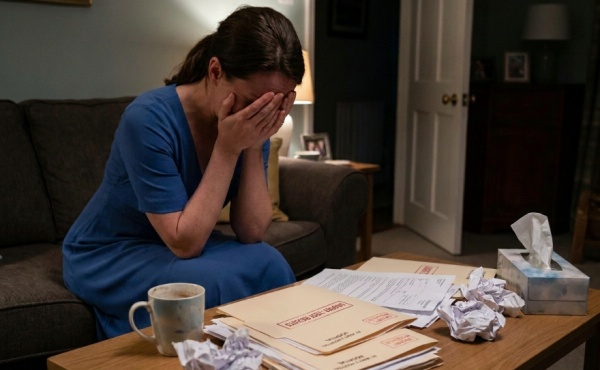
Ten Minutes After I Learned I Had Cancer, My Husband Told Me His Mistress Was Pregnant—and That He Had to “Be There for the Baby,” as if I wasn’t sitting right beside him holding my cancer diagnosis. For years, he had carefully crafted the image of a devoted husband and compassionate leader. Now, he’s left with nothing but bitter regret…
Part 1: The Diagnosis
The doctor had barely left the room when my husband’s secret life stepped into mine.
For thirty-seven seconds, I sat there staring at the folder in my lap, the one with my name printed neatly on a white label: Eleanor Whitaker, Patient ID 48291. Inside were words I had heard other women say in hushed tones at church luncheons and charity galas, words I had secretly believed belonged to other families, other kitchens, other marriages.
Cancer.
Not “a concerning mass.” Not “something we should keep an eye on.” Not “probably nothing.” Just cancer, spoken gently by a woman in a white coat who looked young enough to still call her mother when her day went badly.
My husband, Richard, sat in the chair beside me, one ankle crossed over the other, his navy suit still crisp from the morning board meeting he had insisted he could not miss. His phone was face down on his knee, but every few seconds, his thumb tapped against the black screen like it was knocking from the inside.
I remember the smell of the room most clearly. Lemon disinfectant, stale coffee, latex gloves, and the faint lavender lotion the nurse had used after washing her hands. I remember thinking it was strange that the world could smell so ordinary while mine was falling apart.
Dr. Kline had explained the plan in calm, careful sentences. More scans. A surgical consult. Possible chemotherapy. She said we had caught it early enough to be hopeful, but not early enough to be careless.
Hopeful.
That word landed in the room like a guest no one knew whether to invite to dinner.
When she left, she touched my shoulder and said, “Take a few minutes. I know this is a lot.”
A few minutes.
I had been married to Richard for twenty-two years. We had raised two children in a brick house outside Columbus, Ohio, hosted Thanksgiving dinners for his staff, smiled through political fundraisers, church breakfasts, school auctions, and hospital benefit dinners where he introduced me as “the heart of our family.”
Ten minutes after I learned I had cancer, the heart of our family heard her husband clear his throat.
“Ellie,” he said.
I looked at him, expecting comfort. Maybe not perfect comfort, because Richard had never been a man who handled messy emotions well. But I expected something human.
His eyes were not on my face. They were on the blinds behind me, half-open to the parking lot below, where people were walking to their cars with paper cups and appointment cards, unaware that my life had just split cleanly into before and after.
“There’s something I need to tell you,” he said.
I almost laughed. Not because anything was funny, but because the timing was so cruel it felt theatrical. Like some badly written TV drama where the writers did not trust the audience to understand suffering unless they piled more suffering on top of it.
“Now?” I asked.
He swallowed. “I didn’t know when else to say it.”
That was Richard’s gift. He could turn his cowardice into a scheduling problem.
I closed the folder slowly. “Say what?”
His phone lit up against his knee. A name flashed on the screen before he flipped it over with the speed of a teenager hiding a text from his mother.
Madison.
I did not know any Madison. Not from our church. Not from the hospital board. Not from the accounting firm where Richard was managing partner. Not from the nonprofit committees where he collected admiration like polished silver.
“There’s someone,” he said.
I stared at him.
“She’s pregnant.”
The words did not make sense at first. They arrived in pieces, like mail delivered to the wrong address. Someone. Pregnant. Richard.
“My God,” I whispered.
He flinched, but not enough.
“I know the timing is awful,” he said.
I looked down at the cancer folder in my lap. “The timing?”
“She’s due in March,” he continued, as if I had asked. “And I have to be there for the baby.”
For the baby.
He said it with the grave nobility of a man announcing he was leaving for war, not confessing that he had betrayed his wife while she was scheduling biopsies and pretending not to notice blood on tissues folded into bathroom trash.
I felt a coldness spread through me so clean and sharp it was almost peaceful.
“How long?” I asked.
“Ellie—”
“How long, Richard?”
He rubbed his forehead. “About a year.”
A year.
A year meant Christmas. A year meant my fifty-first birthday, when he had given me diamond earrings in front of our friends and kissed my cheek while everyone clapped. A year meant our anniversary trip to Charleston, where I had walked along King Street holding his hand and feeling guilty for being tired.
A year meant he had watched me lose weight, watched me sleep more, watched me say, “Something feels wrong,” and still found time to create a second life.
“Who is she?” I asked.
“She works with the foundation.”
Of course she did.
The Whitaker Family Health Foundation was Richard’s favorite mirror. He loved standing behind podiums talking about dignity, compassion, early detection, community care. He loved shaking hands with doctors and donors and saying my wife and I believe health is the foundation of every family.
My wife and I.
That morning, I had worn the pearl earrings he bought me for our twentieth anniversary. I touched one now, not because it comforted me, but because I suddenly understood it as evidence. A prop in his performance.
“Does she know about me?” I asked.
His face tightened. “She knows I’m married.”
“How generous of you to disclose that.”
“She didn’t plan this.”
I smiled then. It was not a kind smile. “Did you?”
He looked offended, which almost impressed me.
“You’re making this harder than it has to be,” he said quietly.
Something inside me stood up.
Not my body. My body was still in a beige chair in an oncology office, holding a folder full of medical facts and marital wreckage. But some other part of me, some buried, patient part, rose to its feet and looked Richard Whitaker directly in the soul.
“Harder for whom?” I asked.
He opened his mouth, then closed it.
For years, people had told me how lucky I was.
Lucky to have a husband like Richard. Successful, polished, generous. A man who remembered birthdays, wrote checks to the food bank, mentored young professionals, and never raised his voice in public.
They did not see him at home.
They did not see the way every room rearranged itself around his moods. They did not see how he could punish silence with more precision than some men used shouting. They did not see how every apology in our marriage somehow ended with me comforting him.
But I had seen.
And because I had seen, I had kept things.
Not because I planned to use them. At least, that was what I told myself. I kept receipts because Richard was careless with money and careful with lies. I kept bank statements because he dismissed my questions. I kept screenshots because he made me doubt my memory.
At first, it was survival. Later, it became habit.
Every hotel charge he claimed was a client dinner. Every late-night Venmo payment with a vague label. Every “foundation expense” that lined up with weekends he said he was in Cincinnati or Indianapolis. Every message preview that appeared on the family iPad before he changed the password.
I had kept them all.
Richard didn’t know that.
He thought I was the kind of woman who cried quietly and forgave publicly. He thought illness would make me smaller. He thought his confession, wrapped in the language of responsibility, would leave me too broken to ask for anything.
He did not understand that when a woman has already been handed her mortality in a manila folder, she stops being afraid of many things.
I stood up.
My knees trembled, but I stood.
“Where are you going?” he asked.
“To schedule my next appointment.”
“We need to talk about this.”
I looked at him. “No, Richard. You needed to talk ten minutes ago because your mistress is pregnant and you wanted to manage the damage before I had time to breathe.”
His face drained.
I picked up my purse, my folder, and the coat I had worn because Ohio had refused to decide whether it was still winter. At the door, I turned back.
“You should go be there for the baby,” I said. “And I’m going to be here for myself.”
Then I walked out into the hallway, past the nurses’ station, past the aquarium full of bright fish moving in circles, past a woman in a pink knit hat holding her husband’s hand.
By the time I reached the elevator, my phone was ringing.
Richard.
I declined the call.
Then another name appeared on the screen.
My daughter, Claire.
I answered with a voice I barely recognized.
“Mom?” she said. “How did it go?”
I closed my eyes.
In that moment, I wanted to be the mother I had always been. Strong, warm, reassuring. The one who said everything was fine even while carrying five grocery bags and a fever.
But I was done lying to protect other people’s comfort.
“Honey,” I said, “I need you to come home.”
Part 2: The House on Maple Ridge
Our house on Maple Ridge Lane looked perfect from the outside.
That had always been the point.
Red brick, black shutters, two white rocking chairs on the porch, hydrangeas that bloomed blue every June because I learned how to treat the soil. In December, Richard paid a service to hang warm white lights along the roofline, and neighbors slowed their cars to admire the tasteful glow.
Inside, perfection was more expensive.
The kitchen had marble counters I never wanted because Richard said laminate looked “temporary.” The dining room table seated fourteen because he liked people to imagine we hosted important conversations there. The family room shelves displayed photographs in silver frames: Claire in her cap and gown at Ohio State, our son Benjamin holding a soccer trophy, Richard and me smiling at a black-tie hospital gala.
In every picture, I looked happy.
That afternoon, I stood in the laundry room with my coat still on and listened to the dryer thump a load of towels in slow circles. I had driven home alone. Richard had texted eight times before I turned my phone off.
We need to be adults.
Please don’t make this ugly.
I know you’re hurt.
Madison is scared.
I stared at that one for a long time.
Madison is scared.
Not Ellie is sick. Not Ellie, I’m sorry. Not Ellie, what can I do?
Madison is scared.
I laughed once, a small sound that startled me. Then I took a cardboard storage box down from the top shelf above the washer.
The box was labeled Christmas Garland in black marker.
Inside was no garland.
Inside were twelve years of Richard’s loose threads.
Receipts. Printed emails. Bank statements. Credit card summaries. Photos of charges, dates, hotel names, restaurant bills, cash withdrawals. Copies of foundation reimbursement forms he had signed with the casual confidence of a man no one questioned.
I had not understood everything when I started collecting them. I only knew that money kept disappearing into places Richard claimed I misunderstood. When I asked about a $612 dinner in Chicago, he said it was a donor meeting. When I asked why the hotel receipt had two breakfasts, he said room service made mistakes.
“You’re looking for problems,” he told me once.
Maybe I was.
Eventually, I found them.
At 4:18 p.m., Claire walked into the laundry room without knocking, because children never really stop believing their parents’ house belongs to them.
She was twenty-six, wearing scrubs under a puffer jacket, her brown hair twisted into a knot. She worked as a pediatric nurse in Cincinnati and had driven nearly two hours after my call.
“Mom?” she said.
I turned around.
One look at my face, and she dropped her bag.
“Oh no.”
Those two words broke me more than the diagnosis had.
She crossed the room and wrapped her arms around me, and for the first time that day, I cried. Not delicately. Not with tissues folded neatly against my eyes. I cried like an animal that had been quiet too long.
Claire held me on the laundry room floor while the dryer buzzed and the winter light faded from the small window above the sink.
When I told her about the cancer, she became very still. Nurse still. Daughter terrified, nurse functioning. She asked what kind, what stage, what the doctor said, when the next appointment was.
When I told her about Madison, she pulled back slowly.
“What?” she said.
I nodded.
“Dad said that today?”
“Yes.”
“Today today?”
“Ten minutes after.”
For a moment, Claire looked like a child again, the same little girl who once stared at a broken snow globe and could not understand why shaking it harder would not put the glass back together.
Then her face changed.
“Where is he?” she asked.
“I don’t know.”
“Good.”
I almost smiled.
We were still sitting there when Benjamin arrived at 6:03.
He was twenty-three, a graduate student in Ann Arbor, all long limbs and restless energy. He burst through the back door with his backpack still on, saw Claire’s car in the driveway, saw me on the floor, and froze.
“What happened?”
Claire looked at me.
I told him.
Not every detail. Not yet. But enough.
Cancer. Affair. Pregnant mistress.
Benjamin took three steps backward and sat heavily on the mudroom bench, like his body had decided without consulting him.
“He told you that at the hospital?” he asked.
I nodded.
Benjamin covered his mouth with both hands.
Then he stood up and walked outside.
Through the laundry room window, I watched him pace the driveway in the cold, phone pressed to his ear. I could not hear what he said, but I saw enough. The sharp movements. The hand through his hair. The sudden stop.
Richard came home at 7:21.
I know because the kitchen clock ticked loudly in the silence after we heard the garage door rise.
He entered carrying his briefcase, looking cautious but not ashamed. Richard had always understood scenes. He knew how to perform regret in a way that made other people feel responsible for forgiving him.
Claire stood at the kitchen island with her arms crossed. Benjamin leaned against the sink, jaw tight. I sat at the table with a cup of tea I had not touched.
Richard looked from one child to the other.
“You called them,” he said.
It was not a question. It was an accusation.
“They’re our children,” I replied.
“This is between us.”
Claire laughed, but there was no humor in it. “You made it between all of us when you got someone pregnant.”
Richard’s face hardened. “Claire, you don’t understand the situation.”
“I understand enough.”
Benjamin stepped forward. “Who is she?”
“That is not your concern.”
“The hell it isn’t.”
“Benjamin.”
“No.” His voice cracked. “You don’t get to use the dad voice right now.”
Richard set his briefcase down slowly.
I had seen him negotiate million-dollar contracts with less calculation than he used in that kitchen. His eyes moved from Claire to Benjamin to me, measuring weakness, looking for the softest place to press.
He chose me.
“Ellie,” he said gently, “you’re overwhelmed. I know today was traumatic.”
There it was.
The pivot.
He would make my anger a symptom. My clarity a reaction. My refusal an illness-adjacent emotional state.
I put my cup down.
“Do not use my diagnosis to manage this conversation.”
Claire looked at me with something like pride.
Richard exhaled. “I’m not managing anything. I’m trying to keep this family from imploding.”
“Then you should have kept your pants zipped,” Benjamin said.
“Ben,” I said softly.
Not because Richard deserved protection. Because my son deserved not to become someone he hated in one night.
Richard’s phone buzzed.
No one moved.
It buzzed again.
Claire looked at it on the counter. “Is that her?”
Richard did not answer.
I reached for the phone.
He grabbed it first.
That was when Benjamin stepped toward him, and for one terrible second, I saw the possibility of something we could never undo.
“Stop,” I said.
Everyone stopped.
The room held its breath.
I stood, slower than I wanted to, because fatigue had settled into my bones like wet sand. I walked to the laundry room, picked up the Christmas Garland box, and carried it to the kitchen table.
Richard saw it, and for the first time that day, fear crossed his face.
“What is that?” Claire asked.
I opened the box.
Paper does not look dramatic when it tells the truth. It does not flash or thunder. It just sits there, patient and dry, waiting for someone to stop pretending.
I placed the first stack on the table.
Hotel receipts.
The second.
Credit card statements.
The third.
Foundation reimbursements.
Richard’s mouth opened, but no words came out.
“For years,” I said, “your father has told me I was confused, suspicious, emotional, forgetful, ungrateful, and unfair.”
Claire picked up a receipt from a boutique hotel in Nashville.
Benjamin picked up a restaurant bill from Miami Beach.
I looked at Richard.
“I was none of those things.”
His face went gray.
“You kept all this?” he asked.
“Yes.”
“Why?”
I almost felt sorry for him then. Not because he deserved it, but because he truly did not know. He believed the only reason to preserve truth was to weaponize it. He had no concept of keeping proof simply because someone else kept denying reality.
“Because you taught me to,” I said.
Part 3: Madison
Madison arrived two days later.
Not at my house. Richard was not foolish enough to bring her there. She appeared in my life through an email with the subject line: I think we should talk.
Her full name was Madison Bell. Twenty-nine years old. Development coordinator at the foundation. From a small town near Dayton, according to her staff bio. Brown hair, bright smile, the kind of professional headshot that said approachable but ambitious.
Her email was polite in the way people are polite when they are standing in a house they helped set on fire.
Eleanor,
I know I may be the last person you want to hear from. Richard told me about your diagnosis, and I’m truly sorry. I also know there are things you deserve to hear from me directly.
I’m not asking for forgiveness. I’m asking for a conversation.
Madison
I read it three times while sitting in the infusion education room at the hospital, waiting for a nurse to explain medications, side effects, insurance authorizations, and the strange new vocabulary of survival.
Claire sat beside me with a notebook.
“Delete it,” she said when I showed her.
Maybe I should have.
But there are moments in life when pain becomes curiosity. Not forgiveness. Not mercy. Just the need to see the full shape of the thing that harmed you.
I replied with one sentence.
We can meet at Stauf’s Coffee on Grandview Avenue tomorrow at 10.
I chose a public place because I had no interest in drama. I chose morning because secrets look less romantic under fluorescent light with a parking meter running. I chose a table near the window because I wanted to remember I could leave.
Madison was already there when I arrived.
She stood too quickly, one hand instinctively moving toward her stomach. She was not visibly pregnant yet, or maybe I refused to look closely enough to tell. She wore a beige sweater, black leggings, ankle boots, and the expression of someone who had rehearsed humility in the mirror.
“Mrs. Whitaker,” she said.
“Eleanor.”
She nodded. “Thank you for meeting me.”
“I haven’t decided if I’m thankful yet.”
Color rose in her cheeks.
I ordered black coffee. She had tea. We sat across from each other while college students typed on laptops and a man in a Buckeyes hoodie argued softly into his phone about a delivery.
For a while, neither of us spoke.
Then Madison said, “He told me your marriage was over.”
I almost laughed again. It seemed I was becoming a woman who laughed at funerals.
“Did he?”
She nodded. “He said you were living separate lives. That you knew. That you stayed together for appearances.”
“That sounds convenient.”
“I know.”
“Do you?”
Her eyes filled with tears, but she blinked them back. I appreciated that. Tears from Madison would have felt like a bill sent to the wrong address.
“He said you didn’t love him anymore,” she continued. “He said the foundation was the only place he felt seen.”
Seen.
How many disasters had begun because a grown man wanted to be seen by someone who had not watched him leave socks beside the hamper for twenty years?
“When did you find out I didn’t know?” I asked.
She looked down.
“Madison.”
“Last month.”
I sat back.
Last month, I had been undergoing tests. Last month, Richard had been telling me I worried too much. Last month, Madison had known I existed not as a technicality, not as a cold wife in a dead marriage, but as an actual woman being deceived.
“And you stayed,” I said.
She swallowed. “I was scared.”
“There seems to be a lot of that going around.”
She flinched. “I’m not proud of it.”
“No one ever is when the consequences arrive.”
Outside, a delivery truck blocked traffic, and someone honked. Life, inconsiderate as always, continued.
Madison reached into her bag and pulled out a folder.
“I brought these.”
I did not touch it.
“What are they?”
“Emails. Texts. Some documents Richard asked me to process. Reimbursement forms. Donor schedules. Travel arrangements.”
My hand tightened around my coffee cup.
“Why are you giving me this?”
“Because he lied to me too.”
There it was.
The oldest bridge between women harmed by the same man, built not from friendship but from wreckage.
“He told me he would leave after the holidays,” she said. “Then after your son finished finals. Then after the gala. Then when the timing was better. When I found out I was pregnant, he said we had to be careful because of his reputation.”
“His reputation,” I repeated.
“He said if people misunderstood, it could hurt the foundation.”
For years, Richard had used noble nouns as hiding places. Family. Charity. Responsibility. Reputation. Legacy.
Madison pushed the folder toward me.
“I don’t want money from you,” she said quickly. “I don’t want to hurt you more. But I’m not going to let him tell the story like this just happened to him.”
I studied her face.
She was young, but not innocent. Hurt, but not blameless. Afraid, but still capable of choosing what kind of person she would be next.
That, at least, I understood.
“Are you keeping the baby?” I asked.
Her hand moved again to her stomach.
“Yes.”
I nodded.
The baby had done nothing wrong. That fact complicated my anger in ways I resented but could not deny.
“Then you need a lawyer,” I said.
She blinked. “What?”
“You need your own lawyer. Not Richard’s. Not someone from the foundation. Yours.”
“I can’t afford—”
“There are legal aid clinics. Payment plans. Family law attorneys who do consultations. You need to understand child support, custody, medical expenses, everything.”
She stared at me like I had handed her a coat in a storm.
“Why are you helping me?”
“I’m not,” I said. “I’m refusing to let Richard be the only adult in the room.”
Her mouth trembled.
I stood and picked up the folder.
“Madison, I will never be your friend.”
“I know.”
“And I will not carry your guilt for you.”
“I know.”
“But I won’t punish a child for existing.”
She nodded, tears finally sliding down her face.
I left her there with her tea and her consequences.
In the parking lot, I sat in my Subaru for a long time before turning the key. My hands shook so badly I had to press them against the steering wheel and breathe the way the nurse had taught me.
In for four.
Hold for four.
Out for six.
Cancer had made my body unfamiliar. Richard had made my marriage unfamiliar. Madison had made my anger unfamiliar.
I had expected to hate her cleanly.
Instead, I hated Richard more.
That evening, I opened Madison’s folder at the kitchen table while Claire and Benjamin sat beside me. Page by page, the public image of Richard Whitaker began to rot.
There were hotel rooms booked under foundation travel.
Flights labeled donor outreach.
Dinners charged to community engagement.
Messages where Richard told Madison not to worry because “Ellie doesn’t look at the accounts closely anymore.”
That one made Claire swear.
Another message made Benjamin leave the room.
It was Richard writing: She’s been tired and dramatic lately. Doctors are running tests. I’ll handle her.
I’ll handle her.
I read those words until they blurred.
Then I placed them into a new folder labeled Attorney.
The next morning, I called one.
Part 4: The Gala
The Whitaker Family Health Foundation gala was scheduled for Saturday night at the Westin downtown.
For months, I had helped plan it.
I chose the floral arrangements. I approved the menu. I wrote handwritten notes to major donors because Richard said my personal touch made people feel valued. I even helped draft the speech he would give about resilience, family, and the courage of patients facing difficult diagnoses.
That was before I became one of those patients.
That was before Madison.
That was before the Christmas Garland box became an attorney’s evidence file.
My lawyer, Dana Morales, was a compact woman with silver hair, red glasses, and the emotional temperature of a locked bank vault. She specialized in family law and high-asset divorce, and she listened to my story without once making the sympathetic noises people use when they are uncomfortable.
When I finished, she said, “First, take care of your health. Second, do not move out of the house unless we discuss it. Third, do not threaten him. Fourth, do not post about this online.”
“I wasn’t planning to.”
“Good. People ruin strong cases with weak Facebook posts every day.”
That almost made me smile.
Dana reviewed the documents I had gathered. She reviewed Madison’s folder. She asked precise questions about accounts, retirement funds, property, insurance, and the foundation.
Then she looked at me and said, “You understand this may become public.”
“Yes.”
“Do you want it to?”
I thought about that.
For years, Richard had lived publicly and harmed privately. Part of me wanted to stand on the Westin ballroom stage and read every receipt into the microphone while the donors choked on their salmon.
But another part of me, the part newly aware of time and energy as finite resources, wanted something else.
“I want the truth protected,” I said. “I don’t need it performed.”
Dana nodded. “That distinction will save you money.”
Richard, meanwhile, was unraveling in expensive fabric.
He came home late. He slept in the guest room. He sent texts that swung between apology and accusation.
I made a mistake.
You’re trying to destroy me.
I love you.
You’re poisoning the kids against me.
Madison is under a lot of stress.
Please think about the foundation.
I forwarded everything to Dana.
On Friday night, Richard stood in the doorway of the kitchen while I made soup I could barely taste.
“Are you coming tomorrow?” he asked.
“To the gala?”
“Yes.”
I stirred the pot. “Do you want me there?”
He hesitated too long.
“I think it would be best,” he said carefully, “for appearances.”
There it was again.
Appearances.
The third person in our marriage.
I turned off the burner.
“Richard, I have cancer. You have a pregnant mistress. Our children are furious. Your foundation records may have problems. And you’re worried about appearances?”
His jaw tightened. “You don’t understand what’s at stake.”
“I understand exactly what’s at stake. That’s why I’m not going to stand next to you and smile.”
“You helped build this foundation.”
“Yes,” I said. “And you used it.”
His eyes flashed. “Be careful.”
The room went very quiet.
Not because he had shouted. Richard almost never shouted. That was part of what made him dangerous in polite rooms. He could put menace inside ordinary words and trust that no one else would hear it.
I picked up my phone and placed it on the counter.
“Say that again,” I said.
He looked at the phone.
Then at me.
Then he walked away.
The next evening, I did not attend the gala.
I stayed home in soft pajamas with Claire and Benjamin. We ordered chicken noodle soup, watched an old Meg Ryan movie, and ignored every call from people asking where I was.
At 8:42 p.m., my phone buzzed with a text from a woman named Susan Miller, who chaired the foundation’s donor committee.
Thinking of you tonight. Richard said you weren’t feeling well. Sending prayers.
I stared at the message.
Richard said you weren’t feeling well.
Technically true. Morally bankrupt.
I replied: Thank you, Susan. I’m focusing on my health and my family right now.
That was all.
No accusations. No details. No public scene.
At 9:15, Claire’s phone began lighting up.
“Oh my God,” she said.
Benjamin leaned over. “What?”
Claire looked at me. “Madison is there.”
My body went cold.
“What?”
“At the gala. Someone posted an Instagram story.”
She turned the phone toward me.
There was Madison, standing near the silent auction table in a black dress, one hand resting protectively near her abdomen. Beside her was Richard, smiling too hard at a donor with a glass of white wine in his hand.
For several seconds, I could not speak.
He had invited her into the room where I had written place cards. Into the room funded by the reputation of our marriage. Into the room where people were being told I was absent because I was unwell.
Claire whispered, “Mom.”
I stood up.
“Where are you going?” Benjamin asked.
“To change.”
Dana had told me not to create a scene. Dana had not told me to disappear.
I put on a black dress, low heels, pearl earrings, and lipstick the color of dried roses. My hands shook as I fastened my necklace, but my reflection did not look broken.
It looked awake.
Claire drove. Benjamin sat in the back seat, silent and furious.
The Westin ballroom glowed gold when we arrived.
A registration volunteer recognized me and smiled with relief. “Mrs. Whitaker! We heard you weren’t feeling well.”
“I’m well enough,” I said.
The room shifted when I entered.
Not dramatically at first. Just a ripple. A glance, then another. Whispers moving faster than waiters with trays of appetizers.
Richard saw me from near the stage.
His smile collapsed.
Madison saw me next.
To her credit, she did not run.
Susan Miller rushed over and took both my hands. “Eleanor, sweetheart, are you all right?”
“I’m getting there,” I said.
Richard reached us seconds later.
“Ellie,” he said under his breath, “what are you doing?”
“Attending the event I helped plan.”
“This isn’t the time.”
I looked around the ballroom. Donors, board members, local officials, hospital executives, women from church, men from Richard’s firm. All the people who had admired the painting without ever looking behind the frame.
“You’re right,” I said. “It wasn’t the time at the doctor’s office either.”
His face tightened.
Susan looked between us. “Is everything okay?”
Richard opened his mouth.
I spoke first.
“No,” I said calmly. “But tonight is about patients and families who deserve support, so I won’t take attention from them.”
That was the truth.
It was also a blade.
Richard knew it. Madison knew it. Claire and Benjamin, standing behind me like witnesses, knew it.
When the program began, Richard walked to the podium.
I sat at a table near the front because Susan insisted. Madison stood near the back wall, pale and still. Claire held my hand under the table.
Richard began his speech.
He thanked sponsors. He thanked the hospital. He thanked the volunteers. His voice regained its familiar warmth, the one that made strangers trust him.
Then he said, “Most of all, I want to thank my beautiful wife, Eleanor, whose strength and compassion have always guided this work.”
The room turned toward me.
Applause began.
I stood.
Not fast. Not angry. Just stood.
The applause grew uncertain.
Richard froze.
I looked at him, then at the room.
“Thank you,” I said, loud enough to carry. “Please continue supporting the patients this foundation was meant to serve.”
Then I sat down.
It was not an accusation.
It was not a confession.
It was a boundary.
Richard finished his speech in six minutes less than planned.
The next morning, three board members called me.
By Monday, Dana received a request from Richard’s attorney.
By Wednesday, the foundation announced an internal financial review.
By Friday, Richard moved out.
He took three suits, two watches, a leather duffel bag, and the framed photo from his office of him shaking hands with the governor. He did not take the family pictures.
I watched from the upstairs window as he loaded his car.
For twenty-two years, I had feared the day he might leave.
When it finally came, the house felt bigger.
Not emptier.
Bigger.
Part 5: Receipts
Treatment began on a Tuesday.
That seemed unfair. Life-changing things should happen on dramatic days, not Tuesdays when the trash cans are still at the curb and the neighbor’s dog won’t stop barking.
The infusion center had recliners lined up near windows, warm blankets stacked in cabinets, and nurses who knew how to be cheerful without lying. Claire came with me to the first appointment. Benjamin drove down for the second.
By the third, I went alone.
Not because no one offered. Because I needed to learn that I could.
I brought a tote bag with peppermint candies, lip balm, a novel I did not read, and a notebook where I wrote things I was afraid to say out loud.
I am scared.
I am angry.
I miss the marriage I thought I had.
I do not miss the marriage I actually had.
That sentence stayed with me.
Grief is strange that way. You can mourn the illusion even after you discover the truth. You can miss a man who never existed because you spent half your life setting a place for him at dinner.
Richard tried to come back twice.
The first time, he appeared on the porch with flowers from Kroger and a face arranged into remorse.
“I made terrible choices,” he said.
I stood behind the storm door wearing a knit cap Claire had bought me.
“Yes,” I said.
“I want to support you through treatment.”
“No.”
His eyes widened. “Ellie.”
“You can communicate through Dana.”
“I’m still your husband.”
“Legally, for now.”
He looked wounded, and for once, I did not rush to bandage him.
The second time, he sent a letter.
Four pages, handwritten on expensive stationery, full of memories he had neglected while making them and feelings he had discovered only after consequences arrived. He wrote about our first apartment, the kids as babies, summer trips to Lake Michigan, the way I used to dance barefoot in the kitchen.
At the end, he wrote: I don’t know who I am without you.
I almost replied.
Then I realized that was still not love.
It was dependency wearing perfume.
Madison had her baby in March, a boy named Oliver.
I learned this from Claire, who learned it from someone at the hospital, because Columbus is a city large enough to get lost in and small enough that news finds you anyway. Richard’s name appeared on no smiling announcement, no polished LinkedIn post, no foundation newsletter.
The divorce took eleven months.
Dana was worth every dollar.
The financial review did not send Richard to prison, despite what some people whispered and others hoped. Real life is not always that clean. But it did force repayment, resignation, and the quiet collapse of his carefully built image.
He left the foundation.
He left the firm.
He moved into a condo twelve miles away with gray walls and rented furniture, close enough to remind us he existed but far enough to stop shaping the weather in my house.
I kept the house.
Not because I wanted the symbol. Because I wanted the hydrangeas.
That spring, after surgery and treatment and more scans than I could count, Dr. Kline used the word remission with cautious optimism. She warned me about follow-ups, recurrence risks, lifestyle changes, and the importance of not treating good news like a finish line.
I listened.
Then I went home and sat on the porch.
The hydrangeas had begun to leaf out, small green promises pushing through old wood.
Claire came over with takeout from a Thai place I loved. Benjamin arrived with a ridiculous cake that said CONGRATS ON BEING STUBBORN in blue frosting. We ate straight from cartons at the kitchen island because the dining room table still felt too formal for real happiness.
Later that night, after the kids left, I walked through the house turning off lights.
For years, I had believed peace would arrive loudly. With vindication. With apologies. With everyone finally understanding what I had endured.
But peace came quietly.
It came in clean sheets. In medical bills organized in a folder. In my name alone on the utilities. In a Saturday morning with no one criticizing how I loaded the dishwasher.
It came when I stopped waiting for Richard to admit the full truth.
Because I had receipts.
Not just the paper kind.
I had the receipt of my daughter holding me on the laundry room floor. The receipt of my son learning anger did not have to become violence. The receipt of Madison sitting across from me in a coffee shop, young and frightened and finally honest.
I had the receipt of every morning I woke up and chose treatment.
Every appointment.
Every signature.
Every boundary.
Every time I did not answer the phone.
A year after the diagnosis, I hosted Thanksgiving.
Not the old kind with three kinds of stuffing because Richard liked to impress people. Not the kind where I cooked for fourteen and sat down last. Just Claire, Benjamin, two close friends, Susan Miller from the foundation, and my neighbor Mrs. Alvarez, who brought flan and told everyone my turkey was too dry but my courage was excellent.
We laughed so hard I had to sit down.
After dinner, Claire found the Christmas Garland box in the laundry room.
“Mom,” she called, “do you still need this?”
I walked in and saw it on the floor, worn at the corners, ordinary and ugly.
For a moment, I remembered the woman who had hidden evidence in a holiday box because she did not trust her own life. I wanted to hug her. I wanted to tell her she was not crazy. I wanted to tell her that one day, the truth would stop feeling like a weapon and start feeling like a door.
“No,” I said. “I don’t need it anymore.”
Benjamin helped me carry it to the fire pit in the backyard.
We did not burn anything legal or necessary. Dana had copies. The court had copies. The foundation had what it needed.
What we burned were duplicates.
Old receipts. Printed screenshots. Hotel bills. The paper trail of a marriage that had already ended long before anyone admitted it.
The flames caught slowly at first, curling the edges black.
Claire stood beside me with her hands in her coat pockets. Benjamin poked the fire with a stick like he was ten again. The November air smelled like smoke and cold leaves.
“Are you okay?” Claire asked.
I watched a receipt from a Nashville hotel fold into ash.
“I think so,” I said.
And I meant it.
A week later, I ran into Richard at the grocery store.
Of course it was Kroger. Of course I was buying bananas and oat milk, wearing leggings and a sweatshirt from Benjamin’s college. Of course he looked older, because life enjoys small ironies.
He saw me near the produce section and stopped.
“Ellie,” he said.
“Richard.”
He looked at my cart, then at my face, searching for something he still believed he had the right to find.
“You look good,” he said.
“I’m doing well.”
“I heard about your scans.”
I nodded. “Good news so far.”
“That’s wonderful.”
For a moment, he looked like the man from the photographs. Handsome, composed, almost kind if viewed from the right distance.
Then he said, “I wish things had happened differently.”
There it was. The apology that avoided a subject. The regret with no fingerprints.
I picked up a bag of oranges.
“Things didn’t happen, Richard. You did them.”
His face tightened, but only briefly.
“You’re still angry.”
“No,” I said.
And the surprising thing was, it was true.
“I’m not angry the way I used to be. I’m just no longer available for the version of events that protects you.”
He looked away.
I placed the oranges in my cart.
“How is the baby?” I asked.
That startled him.
“He’s good,” Richard said softly. “Oliver. He’s… he’s good.”
“I’m glad.”
“I made a mess of everything.”
“Yes.”
He almost smiled. “You don’t soften anything anymore.”
“I do,” I said. “Just not for you.”
I walked away before he could answer.
In the parking lot, snow began to fall, light and early, melting as soon as it touched the pavement. I loaded my groceries into the Subaru and sat behind the wheel for a moment, watching people hurry through the cold with carts and kids and lists.
My life was not perfect.
Cancer had taught me not to trust perfect.
My body still carried scars. My bank account had lawyer-shaped bruises. My children still navigated the complicated love and disappointment of having Richard as their father. Somewhere across town, a little boy named Oliver would one day grow old enough to ask difficult questions about adults who failed each other before he was born.
But my house was quiet now.
My name was my own.
My future, uncertain as it was, belonged to me.
For twenty-two years, Richard Whitaker had built a public image as a devoted husband and compassionate leader. He thought the performance was the life. He thought if enough people applauded, truth would stay backstage.
He was wrong.
Because while he collected admiration, I collected evidence.
While he rehearsed speeches, I learned silence.
While he built a life he could show the world, I survived the one he hid from it.
And ten minutes after I learned I had cancer, when he told me about his pregnant mistress, he thought he was handing me the end of my story.
He wasn’t.
He was handing me the first honest page.
